Anabasis setifera
Anabasis setifera · Accepted scientific name
Scientific literature: Very Sparse (4 studies) · ★☆☆☆☆
Anabasis setifera, scientifically known as Anabasis setifera, is a resilient, succulent shrub native to the arid regions of the Mediterranean and Middle East. Renowned for its specialized adaptations to saline soils, this plant is studied for its unique phytochemical properties and potential therapeutic applications in traditional medicinal practices.
- Family
- Amaranthaceae
- Native range
- Africa
- Parts used
- Not available
- Common names
- Not available
- Scientific synonyms
- Seidlitzia Lanigera · Salsola Lutea
Names and Synonyms
Scientific Names
Accepted name
Anabasis setiferaSynonyms
- Seidlitzia lanigera
- Salsola lutea
Sources: Wikidata, Catalogue of Life
Taxonomical Classification
This plant, known as Anabasis setifera, belongs to the kingdom Plantae and the phylum Streptophyta. Within the class Equisetopsida and subclass Magnoliidae, it is classified under the order Caryophyllales and the family Amaranthaceae. Finally, it is categorized under the genus Anabasis.
| Rank | Classification |
|---|---|
| Kingdom | Plantae |
| Phylum | Streptophyta |
| Class | Equisetopsida |
| Subclass | Magnoliidae |
| Order | Caryophyllales |
| Family | Amaranthaceae |
| Genus | Anabasis |
Sources: The World Checklist of Vascular Plants (WCVP)
Distribution
This plant exhibits a diverse geographical distribution spanning across multiple regions of Africa and Asia. In Northern Africa, its presence is specifically documented within the borders of Egypt. Moving into Northeast Tropical Africa, the species can be found throughout Sudan and South Sudan. Its range extends into Western Asia, where it inhabits the territories of Afghanistan and Iran. Additionally, the plant is also distributed across the landscape of Iraq.
| Region | Area |
|---|---|
| Northern Africa | Egypt |
| Northeast Tropical Africa | Sudan-South Sudan |
| Western Asia | Afghanistan |
| Western Asia | Iran |
| Western Asia | Iraq |
| Western Asia | Lebanon-Syria |
| Western Asia | Palestine |
| Western Asia | Sinai |
| Arabian Peninsula | Gulf States |
| Arabian Peninsula | Kuwait |
Sources: The World Checklist of Vascular Plants (WCVP)
Botanical Identification
Ecology
The ecology of Anabasis setifera is defined by its specific altitudinal distribution, as it typically inhabits environments ranging from a minimum elevation of 400 m AMSL to a maximum elevation of 800 m AMSL. Within this specific vertical range, the plant occupies niches characterized by these mid-to-low altitude gradients, which influence the local microclimates and soil conditions it encounters. This elevational positioning dictates the thermal and moisture availability to which the species must adapt to thrive within its natural habitat.
- Elevational range max:
- 800 m AMSL
- Elevational range min:
- 400 m AMSL
Life history
The life history of Anabasis setifera is characterized by its classification as a perennial species, allowing the plant to persist through multiple growing seasons. As a perennial, it establishes a robust presence within its ecological niche, undergoing cycles of vegetative growth and reproductive phases over an extended lifespan. This life cycle enables the plant to endure environmental fluctuations and accumulate resources, ensuring its long-term survival and ability to contribute to the population through successive flowering and seeding events.
- Lifecycle :
- perennial
Morphology
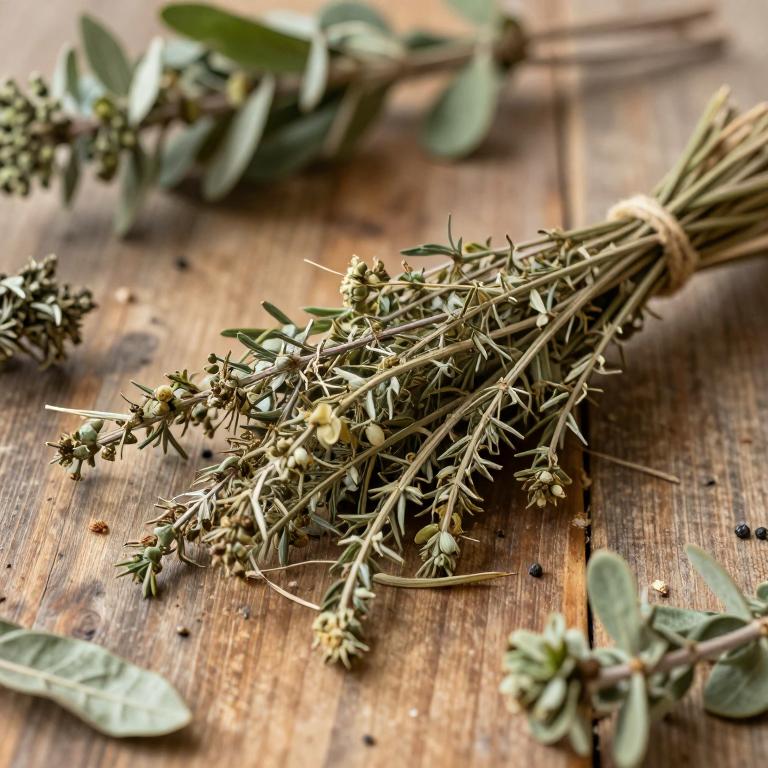
The morphology of Anabasis setifera is characterized by a versatile growth habit that spans aquatic, semiaquatic, and terrestrial environments. Structurally, the plant manifests as a woody subshrub that maintains a self-supporting architecture, rather than acting as a climber. It functions as an independent organism, lacking any parasitic relationship with host plants. The physical build is defined by its woody texture, which supports its development as a low-growing, perennial subshrub.
- Aquatic :
- terrestrial
- Climber :
- self-supporting
- Growth form :
- shrub
- Growth form :
- subshrub
- Parasite :
- independent
- Woodiness :
- woody
Physiology
The physiology of Anabasis setifera is characterized by a highly specialized metabolic framework designed to facilitate survival in arid and semi-arid environments. Most notably, the plant utilizes a C4 photosynthetic pathway, a physiological adaptation that allows it to concentrate carbon dioxide around the enzyme Rubisco, thereby minimizing photorespiration and maximizing water-use efficiency. This C4 mechanism enables the species to maintain high rates of carbon fixation even under intense solar radiation and elevated temperatures, where traditional C3 plants might struggle with metabolic inefficiency. By decoupling the initial CO2 fixation from the Calvin cycle through specialized bundle sheath cells, the plant can keep its stomata partially closed to conserve moisture while still sustaining robust photosynthetic activity, providing a significant competitive advantage in water-limited ecosystems.
- Photosynthetic pathway :
- C4
Reproduction
The reproduction of Anabasis setifera is characterized by a specific seasonal flowering cycle that dictates its reproductive success. The plant enters its flowering phase during the month of August, marking the commencement of its reproductive period. This period continues through the late summer and autumn months, eventually reaching its conclusion in November. Because the onset and duration of these stages can be subject to environmental factors, the exact timing of the flowering window remains variable within this seasonal range.
- Flowering time :
- Aug
- Flowering time :
- Nov
Sources: Global Inventory of Floras and Traits (GIFT)
Chemicals
Anabasis setifera has 3 reported phytochemicals identified across 0 scientific publications and several other databases. The most consistently reported chemicals include Betavulgaroside IV, Myricitrin, Spinacoside C.
| Chemical | Supporting sources | Consensus |
|---|---|---|
| Betavulgaroside IV | 1 supporting sources | ★☆☆☆☆ |
| Myricitrin | 1 supporting sources | ★☆☆☆☆ |
| Spinacoside C | 1 supporting sources | ★☆☆☆☆ |
Betavulgaroside IV
- RSC advances
Myricitrin
- Archives of pharmacal research
Spinacoside C
- RSC advances
Conditions
Anabasis setifera has 1 reported investigations on conditions identified across 0 scientific publications and several other databases. The most consistently reported conditions include inflammation.
| Condition | Supporting sources | Consensus |
|---|---|---|
| Inflammation | 1 supporting sources | ★☆☆☆☆ |
Inflammation
- Archives of pharmacal research