broomweed
Amphiachyris dracunculoides · Accepted scientific name
Scientific literature: Very Sparse (3 studies) · ★☆☆☆☆
Broomweed, scientifically known as Amphiachyris dracunculoides, is a rare medicinal plant native to specific Australian habitats. Renowned for its unique botanical characteristics, it has historically been utilized in traditional healing practices. Understanding its phytochemical properties is essential for exploring its potential therapeutic applications in modern herbal medicine and pharmacology.
- Family
- Asteraceae
- Native range
- Northern America
- Parts used
- Not available
- Common names
- Broomweed
- Scientific synonyms
- Gutierrezia Dracunculoides · Xanthocephalum Dracunculoides · 5 more
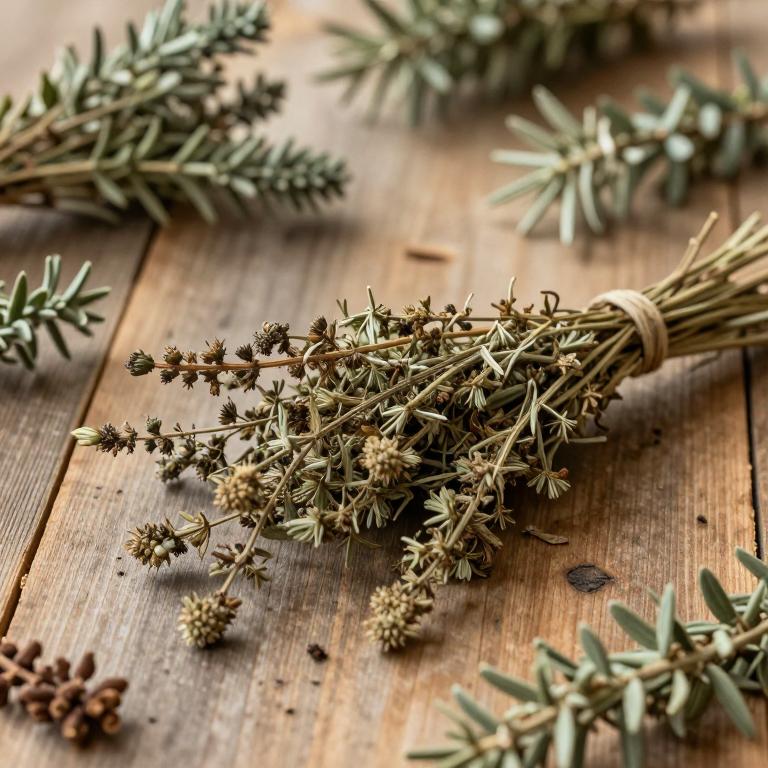
Names and Synonyms
Common Names
- broomweed
Scientific Names
Accepted name
Amphiachyris dracunculoidesSynonyms
- Gutierrezia dracunculoides
- Xanthocephalum dracunculoides
- Xanthocephalum amoenum var. intermedium
- Brachyris dracunculoides
- Brachyris dracunculoides var. angustissima
- Brachyris ramosissima
- Gutierrezia lindheimeriana
Regional and Traditional Names
French:
- Amphiachyre des prairies
Sources: Wikidata, Catalogue of Life
Taxonomical Classification
This plant belongs to the kingdom Plantae and is classified under the phylum Streptophyta and class Equisetopsida. Within the subclass Magnoliidae, it is further categorized under the order Asterales and the family Asteraceae. Ultimately, it is identified by its specific genus, Amphiachyris, and its species name, dracunculoides.
| Rank | Classification |
|---|---|
| Kingdom | Plantae |
| Phylum | Streptophyta |
| Class | Equisetopsida |
| Subclass | Magnoliidae |
| Order | Asterales |
| Family | Asteraceae |
| Genus | Amphiachyris |
Sources: The World Checklist of Vascular Plants (WCVP)
Distribution
This plant, Amphiachyris dracunculoides, exhibits a specific range within the North-Central United States. Its distribution is primarily concentrated across several key Midwestern states. Specifically, it can be found growing in the landscapes of Illinois and Iowa. The species also extends its presence into the territories of Kansas and Missouri. Finally, its geographical reach includes the state of Nebraska.
| Region | Area |
|---|---|
| North-Central U.S.A. | Illinois |
| North-Central U.S.A. | Iowa |
| North-Central U.S.A. | Kansas |
| North-Central U.S.A. | Missouri |
| North-Central U.S.A. | Nebraska |
| North-Central U.S.A. | Oklahoma |
| Northeastern U.S.A. | Indiana |
| Northeastern U.S.A. | New York |
| Northeastern U.S.A. | Ohio |
| Northeastern U.S.A. | Pennsylvania |
Sources: The World Checklist of Vascular Plants (WCVP)
Botanical Identification
Life history
The life history of Amphiachyris dracunculoides is characterized by an annual lifecycle, meaning the plant completes its entire biological progression—from germination and vegetative growth to flowering and seed production—within a single growing season. As an annual species, it does not attempt to survive through dormant periods as a mature individual, instead focusing its metabolic energy on rapid development and prolific seed dispersal to ensure the continuation of the next generation. This seasonal rhythm dictates its presence in the ecosystem, where it emerges following favorable environmental triggers, matures during the optimal period for pollination, and ultimately expires once its reproductive cycle is finalized, leaving behind seeds that await the next cycle of growth.
- Lifecycle :
- annual
Morphology
The morphology of Amphiachyris dracunculoides is characterized by its growth form as a non-woody herb, specifically classified as a forb. This plant exhibits a self-supporting habit, functioning without the need for climbing structures such as lianas or vines, as it does not act as an obligatory or facultative climber. It maintains an independent life cycle, showing no parasitic behavior, and is strictly a terrestrial organism rather than an epiphyte. Despite its name suggesting certain environmental affinities, its physical structure is adapted for life on land, ranging from terrestrial to semiaquatic or aquatic habitats depending on the specific niche, though its primary morphological expression is that of a non-woody, self-supporting terrestrial forb.
- Aquatic :
- terrestrial
- Climber :
- self-supporting
- Epiphyte :
- terrestrial
- Growth form :
- herb
- Growth form :
- forb
- Parasite :
- independent
- Woodiness :
- non-woody
Reproduction
The reproduction of Amphiachyris dracunculoides is characterized by the production of remarkably small seeds, which play a critical role in its dispersal and survival strategies. Quantitative analysis of its reproductive output reveals a highly uniform seed profile, with no variation observed across different specimens. Specifically, the seed mass maintains a consistent mean value of 0.00067 g. This uniformity is absolute, as both the maximum and minimum recorded seed mass values are identical at 0.00067 g. Such minute and standardized seed dimensions suggest a highly specialized reproductive mechanism optimized for the specific environmental conditions in which the species thrives.
- Seed mass mean:
- 0.00067 g
Sources: Global Inventory of Floras and Traits (GIFT)
Chemicals
Amphiachyris dracunculoides has 1 reported phytochemicals identified across 0 scientific publications and several other databases. The most consistently reported chemicals include Gutierolide.
| Chemical | Supporting sources | Consensus |
|---|---|---|
| Gutierolide | 1 supporting sources | ★☆☆☆☆ |
Gutierolide
- Journal of natural products