Ambrosia peruviana
Ambrosia peruviana · Accepted scientific name
Scientific literature: Very Sparse (4 studies) · ★☆☆☆☆
, scientifically known as Ambrosia peruviana, is a remarkable medicinal plant native to the lush landscapes of Peru. Renowned for its potent bioactive compounds, it has long been utilized in traditional healing practices to treat various ailments, offering a natural approach to wellness and significant potential in modern pharmacology.
- Family
- Asteraceae
- Native range
- Northern America
- Parts used
- Not available
- Common names
- Not available
- Scientific synonyms
- Ambrosia Paniculata Var. Cumanensis · Ambrosia Cumanensis · 5 more
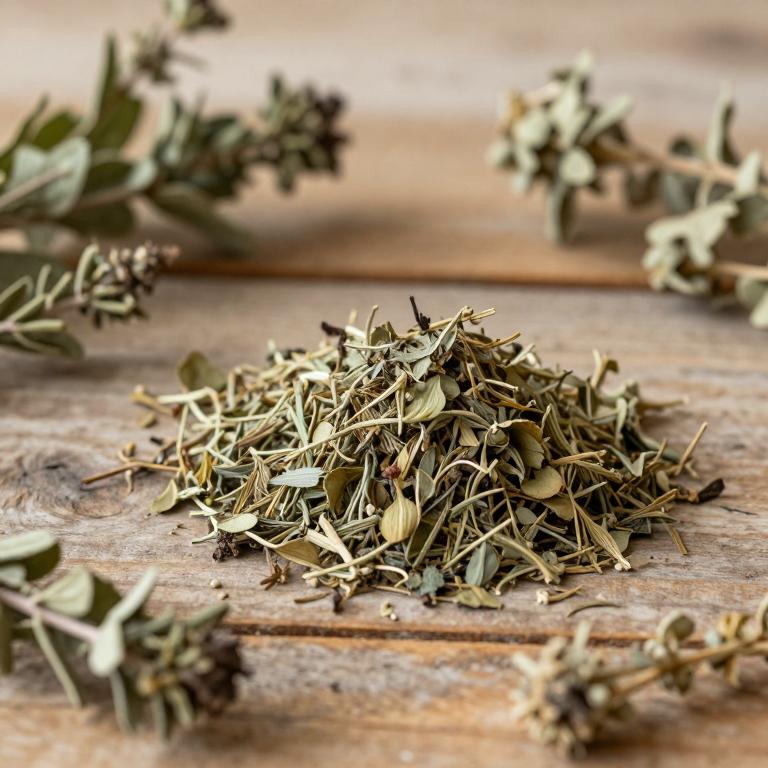
Names and Synonyms
Scientific Names
Accepted name
Ambrosia peruvianaSynonyms
- Ambrosia paniculata var. cumanensis
- Ambrosia cumanensis
- Ambrosia orobanchifera
- Ambrosia paniculata f. dissecta
- Ambrosia paniculata f. litoralis
- Ambrosia paniculata var. peruviana
- Ambrosia artemisiifolia var. trinitensis
Sources: Wikidata
Taxonomical Classification
This plant belongs to the kingdom Plantae and the phylum Streptophyta, specifically within the class Equisetopsida and subclass Magnoliidae. It is further classified under the order Asterales and the family Asteraceae. Ultimately, Ambrosia peruvians is categorized under the genus Ambrosia.
| Rank | Classification |
|---|---|
| Kingdom | Plantae |
| Phylum | Streptophyta |
| Class | Equisetopsida |
| Subclass | Magnoliidae |
| Order | Asterales |
| Family | Asteraceae |
| Genus | Ambrosia |
Sources: The World Checklist of Vascular Plants (WCVP)
Distribution
This plant exhibits a diverse presence across several key regions within the country of Mexico. Its range extends through the central territories, specifically throughout Mexico Central. Additionally, the species can be found inhabiting the areas of Mexico Northeast and Mexico Gulf. The distribution continues into the western parts of the country, covering Mexico Northwest. Finally, its geographical footprint encompasses the southern reaches of Mexico Southwest.
| Region | Area |
|---|---|
| Mexico | Mexico Central |
| Mexico | Mexico Northeast |
| Mexico | Mexico Gulf |
| Mexico | Mexico Northwest |
| Mexico | Mexico Southwest |
| Mexico | Mexico Southeast |
| Central America | Belize |
| Central America | Costa Rica |
| Central America | El Salvador |
| Central America | Guatemala |
Sources: The World Checklist of Vascular Plants (WCVP)
Botanical Identification
Morphology
The morphology of Ambrosia peruviana is characterized by its growth form as a non-woody herb. This plant exhibits a self-supporting structure, functioning as a self-supporting climber rather than an obligatory or facultative vine or liana. It is categorized as a terrestrial organism, existing across aquatic, semiaquatic, and terrestrial habitats, though it primarily maintains a terrestrial presence. Furthermore, it does not exhibit epiphytic behavior, remaining strictly terrestrial rather than acting as a holoepiphyte, hemiepiphyte, or any other epiphytic form. As an independent organism, it lacks parasitic tendencies, functioning entirely through its own metabolic processes without being an obligatory or facultative parasite.
- Aquatic :
- terrestrial
- Climber :
- self-supporting
- Epiphyte :
- terrestrial
- Growth form :
- herb
- Parasite :
- independent
- Woodiness :
- non-woody
Sources: Global Inventory of Floras and Traits (GIFT)
Chemicals
Ambrosia peruviana has 4 reported phytochemicals identified across 0 scientific publications and several other databases. The most consistently reported chemicals include Confertin, Damsin, Plagiochiline A, Plagiochiline R.
| Chemical | Supporting sources | Consensus |
|---|---|---|
| Confertin | 1 supporting sources | ★☆☆☆☆ |
| Damsin | 1 supporting sources | ★☆☆☆☆ |
| Plagiochiline A | 1 supporting sources | ★☆☆☆☆ |
| Plagiochiline R | 1 supporting sources | ★☆☆☆☆ |
Confertin
- Planta medica
Damsin
- Planta medica
Plagiochiline A
- Planta medica
Plagiochiline R
- Planta medica
Preparations
Ambrosia peruviana has 2 reported preparations identified across 0 scientific publications and several other databases. The most consistently reported preparations include ethanol extract, methanolic extracts.
| Preparation | Supporting sources | Consensus |
|---|---|---|
| Ethanol extract | 1 supporting sources | ★☆☆☆☆ |
| Methanolic extracts | 1 supporting sources | ★☆☆☆☆ |
Ethanol extract
- Planta medica
Methanolic extracts
- Natural product research