Coastal Ragweed
Ambrosia hispida · Accepted scientific name
Scientific literature: Very Sparse (41 studies) · ★☆☆☆☆
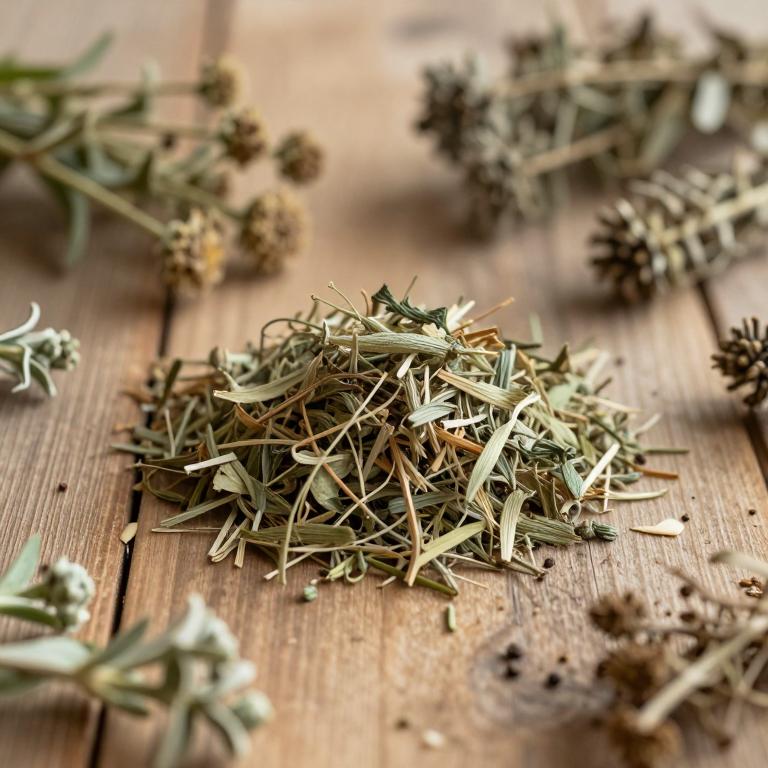
Coastal Ragweed, scientifically known as Ambrosia hispida, is a perennial herb native to the sandy soils of coastal regions. While often recognized as a potent allergen, it holds historical significance in traditional medicine. This plant is characterized by its hairy stems and serves as a vital component of coastal ecosystems.
- Family
- Asteraceae
- Native range
- Northern America
- Parts used
- Leaf
- Common names
- Coastal Ragweed
- Scientific synonyms
- Ambrosia Crithmifolia
Names and Synonyms
Common Names
- Coastal Ragweed
Scientific Names
Accepted name
Ambrosia hispidaSynonyms
- Ambrosia crithmifolia
Sources: Wikidata, Catalogue of Life
Taxonomical Classification
This plant, known scientifically as Ambrosia hispidula, belongs to the kingdom Plantae and the phylum Streptophyta. Within the class Equisetopsida and subclass Magnoliidae, it is classified under the order Asterales. Finally, it is a member of the family Asteraceae and falls under the genus Ambrosia.
| Rank | Classification |
|---|---|
| Kingdom | Plantae |
| Phylum | Streptophyta |
| Class | Equisetopsida |
| Subclass | Magnoliidae |
| Order | Asterales |
| Family | Asteraceae |
| Genus | Ambrosia |
Sources: The World Checklist of Vascular Plants (WCVP)
Distribution
This plant is primarily distributed throughout the Southeastern United States, with a notable presence in Florida. Its range extends southward into Mexico, specifically inhabiting the Gulf region and the southeastern portions of the country. Moving into Central America, the species can be found within the borders of Belize. Additionally, its geographical reach includes the territory of Honduras. Together, these areas define the natural habitat where this medicinal plant thrives.
| Region | Area |
|---|---|
| Southeastern U.S.A. | Florida |
| Mexico | Mexico Gulf |
| Mexico | Mexico Southeast |
| Central America | Belize |
| Central America | Honduras |
| Caribbean | Bahamas |
| Caribbean | Cayman Is. |
| Caribbean | Cuba |
| Caribbean | Dominican Republic |
| Caribbean | Haiti |
Sources: The World Checklist of Vascular Plants (WCVP)
Botanical Identification
Life history
The life history of Ambrosia hispida is characterized by its classification as a perennial species, although its growth patterns can exhibit variable tendencies depending on environmental conditions. As a perennial, the plant maintains a long-term presence in its habitat, often utilizing underground structures to persist through unfavorable seasons. While it can function across different temporal scales—ranging from annual or biennial cycles under specific stress or resource limitations—its fundamental biological strategy is centered on a multi-year lifespan. This lifecycle allows the plant to establish robust root systems that support repeated reproductive efforts, enabling it to colonize disturbed sites and maintain stability within its ecological niche over successive growing seasons.
- Lifecycle :
- perennial
Morphology
The morphology of Ambrosia hispida is characterized by its growth form as a self-supporting herb and forb, which lacks any climbing or liana-like tendencies. It functions as an independent organism, neither acting as a parasite nor as an epiphyte, maintaining a primarily terrestrial existence across its habitat. Regarding its structural composition, the plant exhibits variable woodiness, ranging from non-woody to more substantial textures depending on environmental conditions and developmental stages.
- Aquatic :
- terrestrial
- Climber :
- self-supporting
- Epiphyte :
- terrestrial
- Growth form :
- herb
- Growth form :
- forb
- Parasite :
- independent
- Woodiness :
- variable
Reproduction
The reproduction of Ambrosia hispidula involves complex dispersal mechanisms that utilize multiple vectors to ensure the spread of its progeny. The plant exhibits a diverse dispersal syndrome, characterized primarily as being zoochorous, though its methods are multifaceted and include anemochorous, autochorous, hydrochorous, and unspecialized strategies. Specifically, it employs an epizoochorous dispersal syndrome, where seeds or reproductive structures are transported externally by animals, alongside other modes such as anthropochorous, endozoochorous, myrmecocorous, and unspecialized dispersal. This combination of strategies allows the species to navigate various environmental landscapes by leveraging wind, water, animal movement, and human activity to facilitate effective colonization.
- Dispersal syndrome :
- zoochorous
- Dispersal syndrome :
- epizoochorous
Sources: Global Inventory of Floras and Traits (GIFT)
Plant Parts
Ambrosia hispida has 1 reported plant parts identified across 1 scientific publications and several other databases that are studied for medicinal purposes. The most consistently reported plant part include leaf.
| Plant part | Supporting sources | Consensus |
|---|---|---|
| Leaf | 1 supporting sources | ★☆☆☆☆ |
Leaf
- BMC complementary and alternative medicine
Chemicals
Ambrosia hispida has 9 reported phytochemicals identified across 1 scientific publications and several other databases. The most consistently reported chemicals include Ambrosin, Anhydrocoronopilin, Damsin, Damsinic acid, Flavonoids.
| Chemical | Supporting sources | Consensus |
|---|---|---|
| Ambrosin | 2 supporting sources | ★☆☆☆☆ |
| Anhydrocoronopilin | 1 supporting sources | ★☆☆☆☆ |
| Damsin | 1 supporting sources | ★☆☆☆☆ |
| Damsinic acid | 1 supporting sources | ★☆☆☆☆ |
| Flavonoids | 1 supporting sources | ★☆☆☆☆ |
| Hispidulin | 1 supporting sources | ★☆☆☆☆ |
| Pedalitin | 1 supporting sources | ★☆☆☆☆ |
| STIGMASTEROL | 1 supporting sources | ★☆☆☆☆ |
| ent-Kaur-16-en-19-oic acid | 1 supporting sources | ★☆☆☆☆ |
Ambrosin
- Dr. Duke
- Journal of ethnopharmacology
Anhydrocoronopilin
- Dr. Duke
Damsin
- Dr. Duke
Damsinic acid
- Dr. Duke
Flavonoids
- Journal of infection in developing countries
Hispidulin
- Dr. Duke
Pedalitin
- Dr. Duke
STIGMASTEROL
- Dr. Duke
ent-Kaur-16-en-19-oic acid
- Dr. Duke
Activities
Ambrosia hispida has 22 reported activities identified across 1 scientific publications and several other databases. The most consistently reported activities include Antioxidant, Allergenic, Antiaggregant, Antidiabetic, Antihepatotoxic.
| Activity | Supporting sources | Consensus |
|---|---|---|
| Antioxidant | 2 supporting sources | ★☆☆☆☆ |
| Allergenic | 1 supporting sources | ★☆☆☆☆ |
| Antiaggregant | 1 supporting sources | ★☆☆☆☆ |
| Antidiabetic | 1 supporting sources | ★☆☆☆☆ |
| Antihepatotoxic | 1 supporting sources | ★☆☆☆☆ |
| Antiinflammatory | 1 supporting sources | ★☆☆☆☆ |
| Antinociceptive | 1 supporting sources | ★☆☆☆☆ |
| Antiophidic | 1 supporting sources | ★☆☆☆☆ |
| Antiperoxidant | 1 supporting sources | ★☆☆☆☆ |
| Antiradicular | 1 supporting sources | ★☆☆☆☆ |
Antioxidant
- Dr. Duke
- Tissue & cell
Allergenic
- Dr. Duke
Antiaggregant
- Dr. Duke
Antidiabetic
- BMC complementary and alternative medicine
Antihepatotoxic
- Dr. Duke
Antiinflammatory
- Dr. Duke
Antinociceptive
- Dr. Duke
Antiophidic
- Dr. Duke
Antiperoxidant
- Dr. Duke
Antiradicular
- Dr. Duke
Preparations
Ambrosia hispida has 4 reported preparations identified across 1 scientific publications and several other databases. The most consistently reported preparations include aerial part, crude extracts, ethanolic and aqueous extracts of the leaves, whole dry.
| Preparation | Supporting sources | Consensus |
|---|---|---|
| Aerial part | 1 supporting sources | ★☆☆☆☆ |
| Crude extracts | 1 supporting sources | ★☆☆☆☆ |
| Ethanolic and aqueous extracts of the leaves | 1 supporting sources | ★☆☆☆☆ |
| Whole dry | 1 supporting sources | ★☆☆☆☆ |
Aerial part
- BMC complementary and alternative medicine
Crude extracts
- Journal of ethnopharmacology
Ethanolic and aqueous extracts of the leaves
- BMC complementary and alternative medicine
Whole dry
- Journal of the Egyptian Society of Parasitology