thorny weed
Amaranthus · Accepted scientific name
Scientific literature: Very Sparse (25 studies) · ★☆☆☆☆
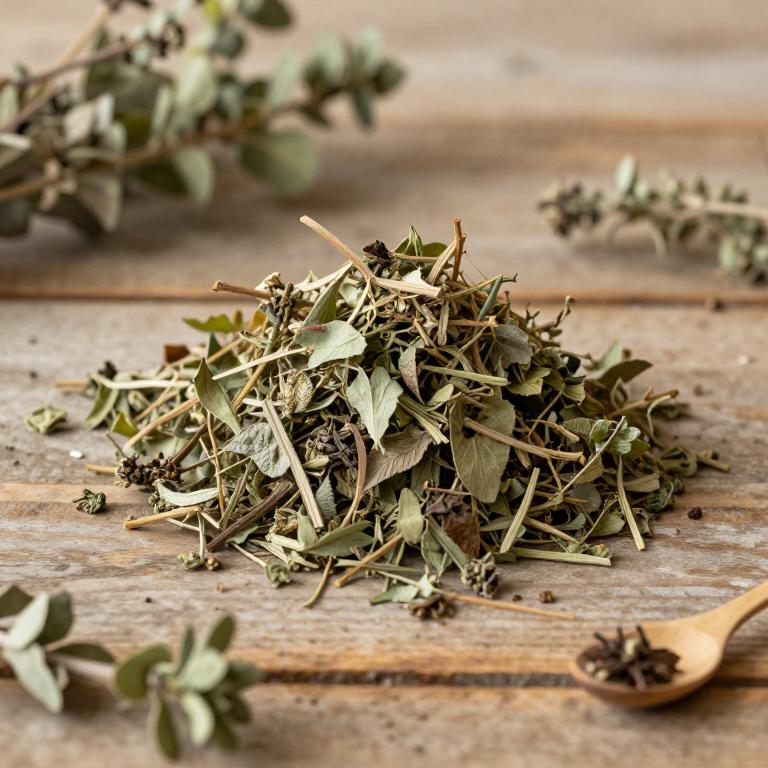
Thorny weed, scientifically known as Amaranthus, is a versatile plant celebrated in traditional medicine and nutrition. Often dismissed as a common garden pest, its nutrient-rich leaves and seeds offer significant health benefits. Rich in vitamins and antioxidants, it plays a vital role in supporting holistic wellness and dietary health.
Names and Synonyms
Common Names
- Pigweed
- amaranths
- Amaranth
Scientific Names
Accepted name
AmaranthusSynonyms
- Mengea
- Montelia
- Acnida
- Dimeiandra
- Amarantellus
- Acanthochiton
- Albersia
- Sarratia
- Goerziella
- Glomeraria
- Bajan
- Galliaria
- Amblogyna
- Scleropus
- Euxolus
- Pentrius
- Pyxidium
Regional and Traditional Names
Spanish:
- amaranta
- amarantos
- amaranto
- Amarantos
German:
- Amarant
- Amaranth
- Fuchsschwanz
- Fuchsschwanz
French:
- amarante
- amaranthe
- Amarantes
- amarantes
- amaranthes
- Amarante
Sources: Wikidata, Catalogue of Life
Taxonomical Classification
This plant belongs to the kingdom Plantae within the phylum Streptophyta and the class Equisetopsida. It is further classified under the subclass Magnoliidae and the order Caryophyllales. Finally, it is a member of the family Amaranthaceae and falls under the genus Amaranthus.
| Rank | Classification |
|---|---|
| Kingdom | Plantae |
| Phylum | Streptophyta |
| Class | Equisetopsida |
| Subclass | Magnoliidae |
| Order | Caryophyllales |
| Family | Amaranthaceae |
| Genus | Amaranthus |
Sources: The World Checklist of Vascular Plants (WCVP)
Distribution
This plant exhibits a specific presence across several regions within Northern Europe. Its distribution can be traced to the coastal and inland areas of Denmark. It is also documented to grow within the landscapes of Finland. Furthermore, the species is found throughout Great Britain and Ireland. Finally, its geographical range extends into the northern territories of Norway.
| Region | Area |
|---|---|
| Northern Europe | Denmark |
| Northern Europe | Finland |
| Northern Europe | Great Britain |
| Northern Europe | Ireland |
| Northern Europe | Norway |
| Northern Europe | Sweden |
| Middle Europe | Austria |
| Middle Europe | Belgium |
| Middle Europe | Czechia-Slovakia |
| Middle Europe | Germany |
Sources: The World Checklist of Vascular Plants (WCVP)
Plant Parts
Amaranthus has 1 reported plant parts identified across 1 scientific publications and several other databases that are studied for medicinal purposes. The most consistently reported plant part include seed.
| Plant part | Supporting sources | Consensus |
|---|---|---|
| Seed | 1 supporting sources | ★☆☆☆☆ |
Seed
- Insect biochemistry and molecular biology
Chemicals
Amaranthus has 11 reported phytochemicals identified across 1 scientific publications and several other databases. The most consistently reported chemicals include A1, A2, Albumin, Coumarins, Flavonoids.
| Chemical | Supporting sources | Consensus |
|---|---|---|
| A1 | 1 supporting sources | ★☆☆☆☆ |
| A2 | 1 supporting sources | ★☆☆☆☆ |
| Albumin | 1 supporting sources | ★☆☆☆☆ |
| Coumarins | 1 supporting sources | ★☆☆☆☆ |
| Flavonoids | 1 supporting sources | ★☆☆☆☆ |
| G1 | 1 supporting sources | ★☆☆☆☆ |
| Nitrates | 1 supporting sources | ★☆☆☆☆ |
| ascorbic acid | 1 supporting sources | ★☆☆☆☆ |
| polyphenols | 1 supporting sources | ★☆☆☆☆ |
| riboflavin | 1 supporting sources | ★☆☆☆☆ |
A1
- Journal of protein chemistry
A2
- Journal of protein chemistry
Albumin
- Journal of protein chemistry
Coumarins
- Journal of ethnopharmacology
Flavonoids
- Journal of ethnopharmacology
G1
- Journal of protein chemistry
Nitrates
- Journal of toxicology
ascorbic acid
- Plant foods for human nutrition (Dordrecht, Netherlands)
polyphenols
- Journal of ethnopharmacology
riboflavin
- Plant foods for human nutrition (Dordrecht, Netherlands)
Activities
Amaranthus has 3 reported activities identified across 1 scientific publications and several other databases. The most consistently reported activities include Antioxidant, Cytoprotective, Hepatoprotective.
| Activity | Supporting sources | Consensus |
|---|---|---|
| Antioxidant | 4 supporting sources | ★★☆☆☆ |
| Cytoprotective | 1 supporting sources | ★☆☆☆☆ |
| Hepatoprotective | 1 supporting sources | ★☆☆☆☆ |
Antioxidant
- Biochemical and biophysical research communications
- Fiziolohichnyi zhurnal (Kiev, Ukraine : 1994)
- Journal of food science
- Nutrients
Cytoprotective
- Fiziolohichnyi zhurnal (Kiev, Ukraine : 1994)
Hepatoprotective
- Biochemical and biophysical research communications
Conditions
Amaranthus has 5 reported investigations on conditions identified across 1 scientific publications and several other databases. The most consistently reported conditions include cancer, constipation, gastrointestinal diseases, gastrointestinal disorders, inflammation.
| Condition | Supporting sources | Consensus |
|---|---|---|
| Cancer | 1 supporting sources | ★☆☆☆☆ |
| Constipation | 1 supporting sources | ★☆☆☆☆ |
| Gastrointestinal diseases | 1 supporting sources | ★☆☆☆☆ |
| Gastrointestinal disorders | 1 supporting sources | ★☆☆☆☆ |
| Inflammation | 1 supporting sources | ★☆☆☆☆ |
Cancer
- Asian Pacific journal of cancer prevention : APJCP
Constipation
- Journal of ethnopharmacology
Gastrointestinal diseases
- Journal of ethnopharmacology
Gastrointestinal disorders
- Journal of ethnopharmacology
Inflammation
- PloS one
Preparations
Amaranthus has 5 reported preparations identified across 1 scientific publications and several other databases. The most consistently reported preparations include Amaranthus extracts, chloroplasts, extracts, polar extracts, seed extracts.
| Preparation | Supporting sources | Consensus |
|---|---|---|
| Amaranthus extracts | 1 supporting sources | ★☆☆☆☆ |
| Chloroplasts | 1 supporting sources | ★☆☆☆☆ |
| Extracts | 1 supporting sources | ★☆☆☆☆ |
| Polar extracts | 1 supporting sources | ★☆☆☆☆ |
| Seed extracts | 1 supporting sources | ★☆☆☆☆ |
Amaranthus extracts
- Journal of ethnopharmacology
Chloroplasts
- Archives of biochemistry and biophysics
Extracts
- Nutrients
Polar extracts
- Journal of ethnopharmacology
Seed extracts
- Insect biochemistry and molecular biology