Alsophila firma
Alsophila firma · Accepted scientific name
Scientific literature: Very Sparse (3 studies) · ★☆☆☆☆
, scientifically known as Alsophila firma, is a versatile medicinal plant revered in traditional healing practices. Renowned for its potent bioactive compounds, it is frequently utilized to address various ailments, including inflammatory conditions and infections. Understanding its pharmacological properties offers promising insights into developing natural therapeutic treatments for modern wellness.
- Family
- Cyatheaceae
- Native range
- Northern America
- Parts used
- Rhizome
- Common names
- Not available
- Scientific synonyms
- Cyathea Articulata · Cyathea Mexicana · 17 more
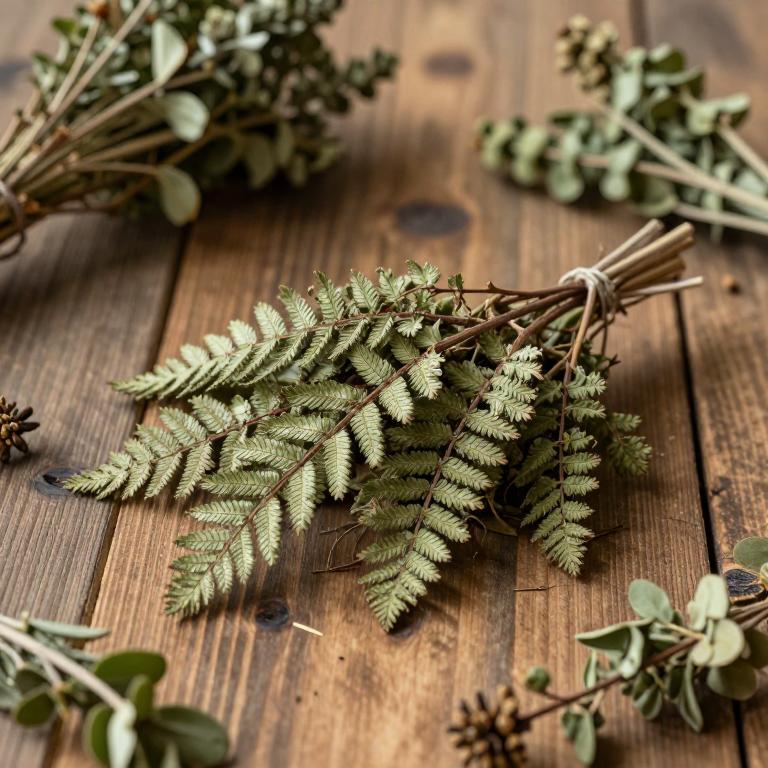
Names and Synonyms
Scientific Names
Accepted name
Alsophila firmaSynonyms
- Cyathea articulata
- Cyathea mexicana
- Nephelea mexicana
- Nephelea patellaris
- Nephelea tenerifrons
- Alsophila infesta var. vangeertii
- Alsophila vangeertii
- Alsophila furcata
- Cyathea gemmifera
- Cyathea arida
- Cyathea costalis
- Cyathea denudans
- Cyathea firmula
- Cyathea patellaris
- Cyathea tenerifrons
- Cyathea trejoi
- Hemitelia firma
- Alsophila costalis
- Alsophila tenerifrons
Regional and Traditional Names
Spanish:
- Helecho maquique
Sources: Wikidata, Catalogue of Life
Taxonomical Classification
This plant, Alsophila firma, belongs to the kingdom Plantae and the phylum Streptophyta. Within the class Equisetopsida and subclass Polypodiinae, it is categorized under the order Cyatheales. It is further classified under the family Cyatheaceae and falls within the genus Alsophila.
| Rank | Classification |
|---|---|
| Kingdom | Plantae |
| Phylum | Streptophyta |
| Class | Equisetopsida |
| Subclass | Polypodiinae |
| Order | Cyatheales |
| Family | Cyatheaceae |
| Genus | Alsophila |
Sources: The World Checklist of Vascular Plants (WCVP)
Distribution
This plant exhibits a broad presence across several distinct regions within the country of Mexico. It can be found growing throughout the central part of the nation, specifically in Mexico Central. Its distribution also extends into the northeastern territories, covering the area known as Mexico Northeast. Furthermore, the species is widely scattered across the coastal and interior regions of Mexico Gulf. Finally, its geographical range reaches into the southern reaches of the country, including both Mexico Southwest and Mexico Southeast.
| Region | Area |
|---|---|
| Mexico | Mexico Central |
| Mexico | Mexico Northeast |
| Mexico | Mexico Gulf |
| Mexico | Mexico Southwest |
| Mexico | Mexico Southeast |
| Central America | Belize |
| Central America | Costa Rica |
| Central America | El Salvador |
| Central America | Guatemala |
| Central America | Honduras |
Sources: The World Checklist of Vascular Plants (WCVP)
Botanical Identification
Ecology
The ecology of Alsophila firma is characterized by its distribution across a diverse altitudinal gradient, spanning from sea level up to an elevation of 2000 m AMSL. This species is primarily found within forest habitats, where it occupies specific ecological niches shaped by the varying environmental conditions found throughout its wide elevational range.
- Elevational range max:
- 2000 m AMSL
- Elevational range min:
- 0 m AMSL
- Habitat :
- forest
Life history
The life history of Alsephila firma is characterized by a resilient growth pattern that allows it to thrive in various tropical environments. Its vegetative lifecycle is defined by its foliage characteristics, where its deciduousness is notably variable; depending on the specific environmental conditions and local climate, the plant can exhibit evergreen, deciduous, or variable growth habits. This adaptability in leaf retention plays a crucial role in its survival strategy, enabling it to manage moisture levels and light absorption effectively. As the plant matures, it transitions through distinct developmental stages, moving from seedling establishment to a robust woody structure, eventually reaching reproductive maturity where it produces flowers and seeds to ensure the continuation of its lineage across its natural habitat.
- Deciduousness :
- evergreen
Morphology
The morphology of Alsophila firma is characterized by its growth form as a woody tree, reaching a maximum plant height of 5 meters. It is a terrestrial species, functioning as an independent organism without parasitic tendencies. In terms of its structural habit, the plant is self-supporting, rather than acting as an obligatory or facultative climber, liana, or vine. Furthermore, it is classified as a terrestrial plant rather than an epiphyte, maintaining its position in the soil substrate rather than growing upon other vegetation.
- Aquatic :
- terrestrial
- Climber :
- self-supporting
- Epiphyte :
- terrestrial
- Growth form :
- tree
- Parasite :
- independent
- Plant height max:
- 5 m
- Woodiness :
- woody
Physiology
The physiology of Achillea millefolium is characterized by complex metabolic processes and specialized structural adaptations that support its growth in diverse environments. As a perennial herb, its physiological activity is heavily influenced by seasonal changes, involving robust photosynthetic pathways to convert solar energy into chemical energy through its finely dissected, compound leaves. The plant exhibits significant secondary metabolic activity, particularly in the biosynthesis of essential oils, flavonoids, and sesquiterpene lactones, which serve as chemical defense mechanisms against herbivory and environmental stressors. In terms of nutrient acquisition and soil interaction, the plant does not possess the specialized symbiotic relationships required for biological nitrogen fixation; therefore, it is not a nitrogen fixer, and its nitrogen uptake is dependent on the availability of nitrates and ammonium within the soil matrix. Its physiological resilience is further bolstered by an extensive rhizomatous root system that facilitates efficient water absorption and nutrient transport, ensuring survival during periods of drought or nutrient fluctuation.
- Nitrogen fixer :
- no
Sources: Global Inventory of Floras and Traits (GIFT)
Plant Parts
Alsophila firma has 1 reported plant parts identified across 1 scientific publications and several other databases that are studied for medicinal purposes. The most consistently reported plant part include rhizome.
| Plant part | Supporting sources | Consensus |
|---|---|---|
| Rhizome | 1 supporting sources | ★☆☆☆☆ |
Rhizome
- Plants (Basel, Switzerland)
Chemicals
Alsophila firma has 1 reported phytochemicals identified across 1 scientific publications and several other databases. The most consistently reported chemicals include dihydroflavonols.
| Chemical | Supporting sources | Consensus |
|---|---|---|
| dihydroflavonols | 1 supporting sources | ★☆☆☆☆ |
dihydroflavonols
- Plants (Basel, Switzerland)
Conditions
Alsophila firma has 1 reported investigations on conditions identified across 1 scientific publications and several other databases. The most consistently reported conditions include Type 2 diabetes.
| Condition | Supporting sources | Consensus |
|---|---|---|
| Type 2 diabetes | 1 supporting sources | ★☆☆☆☆ |
Type 2 diabetes
- Plants (Basel, Switzerland)