Alpinia roxburghii
Alpinia roxburghii · Accepted scientific name
Scientific literature: Very Sparse (19 studies) · ★☆☆☆☆
Alpinia roxbrugii, scientifically known as Alpinia roxbrughii, is a perennial medicinal herb valued in traditional medicine. Native to subtropical regions, this plant features aromatic rhizomes used to treat digestive issues, inflammation, and respiratory ailments. Its bioactive compounds offer significant therapeutic potential in modern pharmacological research and herbal healing.
- Family
- Zingiberaceae
- Native range
- Asia-Temperate
- Parts used
- Seed · Rhizome
- Common names
- Not available
- Scientific synonyms
- Languas Blepharocalyx · Languas Blepharocalyx Var. Glabrior · 2 more
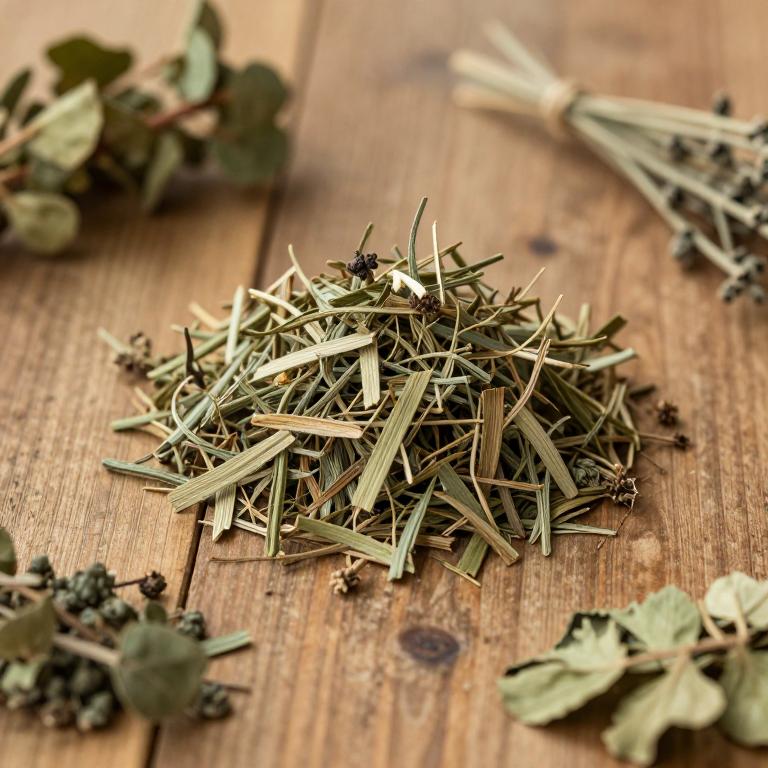
Names and Synonyms
Scientific Names
Accepted name
Alpinia roxburghiiSynonyms
- Languas blepharocalyx
- Languas blepharocalyx var. glabrior
- Alpinia blepharocalyx
- Alpinia blepharocalyx var. glabrior
Sources: Wikidata, Catalogue of Life
Taxonomical Classification
This plant, known scientifically as Alpinia roxburghii, belongs to the kingdom Plantae and the phylum Streptophyta. It is classified under the class Equisetopsida and the subclass Magnoliidae, falling within the order Zingiberales. Finally, it is a member of the Zingiberaceae family and the genus Alpinia.
| Rank | Classification |
|---|---|
| Kingdom | Plantae |
| Phylum | Streptophyta |
| Class | Equisetopsida |
| Subclass | Magnoliidae |
| Order | Zingiberales |
| Family | Zingiberaceae |
| Genus | Alpinia |
Sources: The World Checklist of Vascular Plants (WCVP)
Distribution
This plant exhibits a wide geographical range across several key regions in Asia. Within China, its distribution spans across the South-Central and Southeast territories. Moving toward the Indian Subcontinent, it is commonly found in the state of Assam. The species also inhabits the country of Bangladesh, contributing to its regional presence. Finally, its range extends into the mountainous terrain of the East Himalaya.
| Region | Area |
|---|---|
| China | China South-Central |
| China | China Southeast |
| Indian Subcontinent | Assam |
| Indian Subcontinent | Bangladesh |
| Indian Subcontinent | East Himalaya |
| Indian Subcontinent | India |
| Indian Subcontinent | Nepal |
| Indo-China | Laos |
| Indo-China | Myanmar |
| Indo-China | Thailand |
Sources: The World Checklist of Vascular Plants (WCVP)
Botanical Identification
Ecology
The ecology of Alpinia roxburghii is defined by its preference for specific montane environments, where it thrives within a distinct altitudinal gradient. This species is typically found inhabiting mid-to-high altitude zones, maintaining a specialized distribution that spans an elevational range from a minimum of 1250 m AMSL to a maximum of 2300 m AMSL. Within this vertical niche, the plant is adapted to the unique microclimates and moisture regimes characteristic of these subtropical or temperate mountain ecosystems, which influence its growth patterns and seasonal availability.
- Elevational range max:
- 2300 m AMSL
- Elevational range min:
- 1250 m AMSL
Life history
The life history of Alpinia roxburghii is characterized by its classification as a geophyte, a life form that relies on underground storage organs to survive unfavorable environmental conditions. As a perennial herb, it maintains its presence in its natural habitat through rhizomatous structures that remain dormant during periods of stress, allowing for rapid regeneration when conditions become optimal. This survival strategy ensures that the plant can persist across multiple seasons, periodically sending up leafy shoots and inflorescences from its subterranean base. The developmental cycle involves a vegetative growth phase driven by the nutrient reserves stored within the rhizome, followed by a reproductive phase where it produces flowers and seeds to facilitate dispersal. This cyclical pattern of underground dormancy and seasonal emergence is fundamental to its ecological resilience and its ability to thrive in specific forest understories or moist environments.
- Life form :
- geophyte
Morphology
The morphology of Alpinia roxburghii is characterized by its growth habit as a non-woody, herbaceous plant that lacks any woody tissue. It functions as a terrestrial species, growing directly in the soil rather than as an epiphyte, and it maintains a self-supporting structure without the need for external climbing supports, as it is neither an obligatory nor a facultative climber. Furthermore, the plant is entirely independent in its growth processes, exhibiting no parasitic behavior.
- Climber :
- self-supporting
- Epiphyte :
- terrestrial
- Parasite :
- independent
- Woodiness :
- non-woody
Sources: Global Inventory of Floras and Traits (GIFT)
Plant Parts
Alpinia roxburghii has 2 reported plant parts identified across 4 scientific publications and several other databases that are studied for medicinal purposes. The most consistently reported plant part include seed, rhizome.
| Plant part | Supporting sources | Consensus |
|---|---|---|
| Seed | 3 supporting sources | ★★☆☆☆ |
| Rhizome | 1 supporting sources | ★☆☆☆☆ |
Seed
- Journal of natural products
- Organic letters
- Biological & pharmaceutical bulletin
Rhizome
- Zhong yao cai = Zhongyaocai = Journal of Chinese medicinal materials
Chemicals
Alpinia roxburghii has 11 reported phytochemicals identified across 4 scientific publications and several other databases. The most consistently reported chemicals include epicalyxin F, 1,7-bis(4-hydroxyphenyl)-3-hydroxy-1,3-heptadien-5-one, 6-Hydroxycalyxin F, Blepharocalyxin B, Epicalyxin J.
| Chemical | Supporting sources | Consensus |
|---|---|---|
| epicalyxin F | 2 supporting sources | ★☆☆☆☆ |
| 1,7-bis(4-hydroxyphenyl)-3-hydroxy-1,3-heptadien-5-one | 1 supporting sources | ★☆☆☆☆ |
| 6-Hydroxycalyxin F | 1 supporting sources | ★☆☆☆☆ |
| Blepharocalyxin B | 1 supporting sources | ★☆☆☆☆ |
| Epicalyxin J | 1 supporting sources | ★☆☆☆☆ |
| beta-Sitosterol glucoside | 1 supporting sources | ★☆☆☆☆ |
| calyxin B | 1 supporting sources | ★☆☆☆☆ |
| calyxin I | 1 supporting sources | ★☆☆☆☆ |
| calyxin J | 1 supporting sources | ★☆☆☆☆ |
| calyxin K | 1 supporting sources | ★☆☆☆☆ |
epicalyxin F
- Organic letters
- Biological & pharmaceutical bulletin
1,7-bis(4-hydroxyphenyl)-3-hydroxy-1,3-heptadien-5-one
- Journal of natural products
6-Hydroxycalyxin F
- Biological & pharmaceutical bulletin
Blepharocalyxin B
- Biological & pharmaceutical bulletin
Epicalyxin J
- Biological & pharmaceutical bulletin
beta-Sitosterol glucoside
- Biological & pharmaceutical bulletin
calyxin B
- Biological & pharmaceutical bulletin
calyxin I
- Organic letters
calyxin J
- Biological & pharmaceutical bulletin
calyxin K
- Biological & pharmaceutical bulletin
Activities
Alpinia roxburghii has 2 reported activities identified across 4 scientific publications and several other databases. The most consistently reported activities include Antiplatelet, Antiproliferative.
| Activity | Supporting sources | Consensus |
|---|---|---|
| Antiplatelet | 1 supporting sources | ★☆☆☆☆ |
| Antiproliferative | 1 supporting sources | ★☆☆☆☆ |
Antiplatelet
- Journal of natural products
Antiproliferative
- Organic letters
Preparations
Alpinia roxburghii has 3 reported preparations identified across 4 scientific publications and several other databases. The most consistently reported preparations include 95% EtOH extract, EtOH extract, EtOH extract of the seeds of Alpinia blepharocalyx.
| Preparation | Supporting sources | Consensus |
|---|---|---|
| 95% etoh extract | 1 supporting sources | ★☆☆☆☆ |
| Etoh extract | 1 supporting sources | ★☆☆☆☆ |
| Etoh extract of the seeds of alpinia blepharocalyx | 1 supporting sources | ★☆☆☆☆ |
95% etoh extract
- Biological & pharmaceutical bulletin
Etoh extract
- Organic letters
Etoh extract of the seeds of alpinia blepharocalyx
- Journal of natural products