small shell ginger
Alpinia mutica · Accepted scientific name
Scientific literature: Very Sparse (5 studies) · ★☆☆☆☆
Small shell ginger, scientifically known as Alpinia mutica, is a striking perennial herb celebrated for its ornamental beauty and therapeutic potential. Characterized by lush foliage and unique, shell-like flowers, this plant is highly valued in traditional medicine for its diverse bioactive compounds and potent anti-inflammatory properties.
- Family
- Zingiberaceae
- Native range
- Asia-Tropical
- Parts used
- Not available
- Common names
- Small Shell Ginger
- Scientific synonyms
- Catimbium Muticum · Renealmia Mutica · 6 more
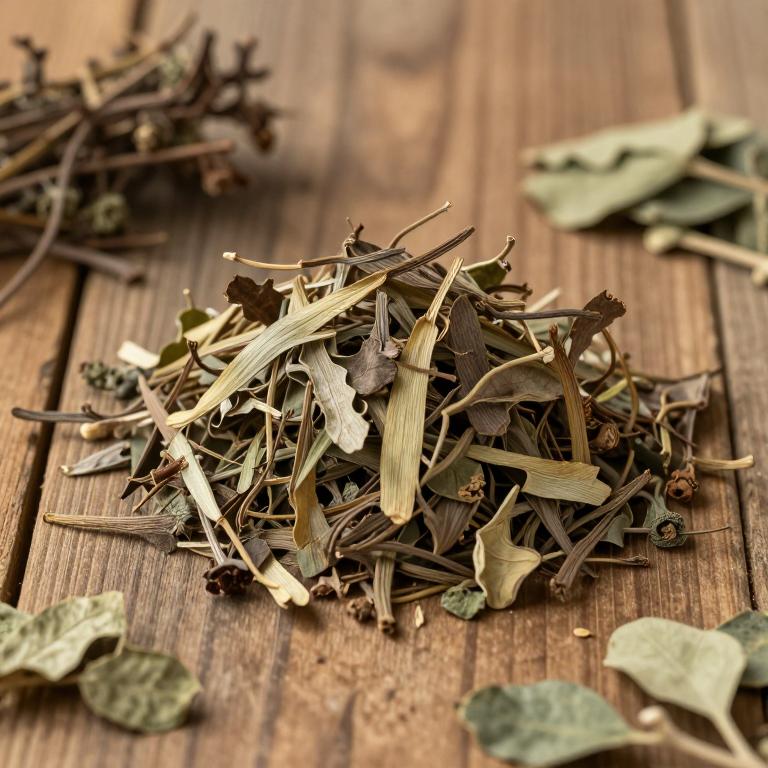
Names and Synonyms
Common Names
- small shell ginger
Scientific Names
Accepted name
Alpinia muticaSynonyms
- Catimbium muticum
- Renealmia mutica
- Alpinia mutica var. laxiflora
- Languas mutica
- Languas laxiflora
- Languas korthalsii
- Alpinia laxiflora
- Alpinia korthalsii
Sources: Wikidata, Catalogue of Life
Taxonomical Classification
This plant belongs to the kingdom Plantae and is classified within the phylum Streptophyta and the class Equisetopsida. Under the subclass Magnoliidae, it falls into the order Zingiberales and the family Zingiberaceae. It is specifically identified by the genus Alpinia.
| Rank | Classification |
|---|---|
| Kingdom | Plantae |
| Phylum | Streptophyta |
| Class | Equisetopsida |
| Subclass | Magnoliidae |
| Order | Zingiberales |
| Family | Zingiberaceae |
| Genus | Alpinia |
Sources: The World Checklist of Vascular Plants (WCVP)
Distribution
This plant exhibits a broad distribution across several key tropical regions in Asia. Within the Indian Subcontinent, it can be found growing in India. Its presence extends into Indo-China, where it inhabits Myanmar, Thailand, and Vietnam. Additionally, the species is located within the Malesia region, specifically on the island of Borneo. Collectively, these locations highlight the diverse habitats where the species thrives.
| Region | Area |
|---|---|
| Indian Subcontinent | India |
| Indo-China | Myanmar |
| Indo-China | Thailand |
| Indo-China | Vietnam |
| Malesia | Borneo |
| Malesia | Jawa |
| Malesia | Malaya |
| Malesia | Sulawesi |
| Southwestern Pacific | Fiji |
| North-Central Pacific | Hawaii |
Sources: The World Checklist of Vascular Plants (WCVP)
Botanical Identification
Life history
The life history of Alpinia mutica is characterized by its status as a perennial organism, ensuring its continued existence through multiple growing seasons. As a plant that survives unfavorable periods through underground structures, it is classified as a geophyte, relying on specialized organs such as rhizomes to persist. Furthermore, its biological classification identifies it as a cryptophyte, meaning its regenerative buds are protected below the soil surface during dormant phases, allowing it to emerge reliably when environmental conditions become favorable for growth.
- Life form :
- geophyte
- Life form :
- cryptophyte
- Lifecycle :
- perennial
Morphology
The morphology of Alpinia mutica is characterized by its growth form as a non-woody herb, specifically classified as a forb. This plant reaches an average height of approximately 1.5 m and maintains a self-supporting structure, functioning neither as a liana nor a vine. It is a terrestrial species, meaning it does not exhibit aquatic, semiaquatic, or epiphytic tendencies, growing independently rather than as a parasite or through any hemi-epiphytic life cycle.
- Aquatic :
- terrestrial
- Climber :
- self-supporting
- Epiphyte :
- terrestrial
- Growth form :
- herb
- Growth form :
- forb
- Parasite :
- independent
- Plant height mean:
- 1.5 m
- Woodiness :
- non-woody
Physiology
The physiology of Alpinia mutica is characterized by its specific metabolic and nutritional processes. This plant utilizes a C3 photosynthetic pathway, which involves the direct fixation of carbon dioxide through the Calvin cycle within the mesophyll cells, a common trait among many ginger species that thrive in shaded or understory environments. Regarding its nutrient acquisition, Alpinia mutica is not a nitrogen fixer, meaning it lacks the symbiotic relationship with nitrogen-fixing bacteria required to convert atmospheric nitrogen into organic forms, and instead relies on the uptake of nitrates and ammonium available in the soil substrate.
- Nitrogen fixer :
- no
- Photosynthetic pathway :
- C3
Sources: Global Inventory of Floras and Traits (GIFT)
Chemicals
Alpinia mutica has 4 reported phytochemicals identified across 0 scientific publications and several other databases. The most consistently reported chemicals include 5,6-Dehydrokawain, Flavokawin B, Pinocembrin, Pinostrobin.
| Chemical | Supporting sources | Consensus |
|---|---|---|
| 5,6-Dehydrokawain | 1 supporting sources | ★☆☆☆☆ |
| Flavokawin B | 1 supporting sources | ★☆☆☆☆ |
| Pinocembrin | 1 supporting sources | ★☆☆☆☆ |
| Pinostrobin | 1 supporting sources | ★☆☆☆☆ |
5,6-Dehydrokawain
- Pakistan journal of pharmaceutical sciences
Flavokawin B
- Pakistan journal of pharmaceutical sciences
Pinocembrin
- Pakistan journal of pharmaceutical sciences
Pinostrobin
- Pakistan journal of pharmaceutical sciences
Activities
Alpinia mutica has 1 reported activities identified across 0 scientific publications and several other databases. The most consistently reported activities include Antimicrobial.
| Activity | Supporting sources | Consensus |
|---|---|---|
| Antimicrobial | 1 supporting sources | ★☆☆☆☆ |
Antimicrobial
- Pakistan journal of pharmaceutical sciences