Alpinia jianganfeng
Alpinia jianganfeng · Accepted scientific name
Scientific literature: Very Sparse (6 studies) · ★☆☆☆☆
, scientifically known as Alpinia jianganfeng, is a remarkable medicinal plant valued in traditional herbalism. Renowned for its potent bioactive compounds, this species offers significant therapeutic potential. It is frequently studied for its anti-inflammatory and digestive benefits, serving as a vital natural resource in various holistic healing practices worldwide.
- Family
- Zingiberaceae
- Native range
- Asia-Temperate
- Parts used
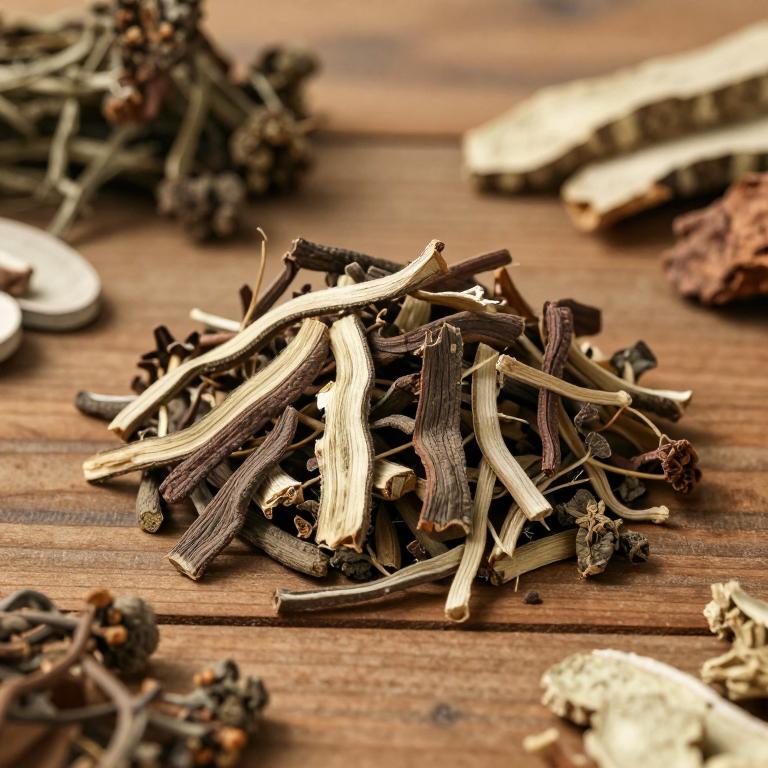
- Rhizome
- Common names
- Not available
- Scientific synonyms
- Not available
Names and Synonyms
Scientific Names
Accepted name
Alpinia jianganfengSources: Wikidata, Catalogue of Life
Taxonomical Classification
This plant belongs to the kingdom Plantae and is classified under the phylum Streptophyta and the class Equisetopsida. Within the subclass Magnoliidae, it is further organized under the order Zingiberales and the family Zingiberaceae. Finally, its specific taxonomic designation is found within the genus Alpinia.
| Rank | Classification |
|---|---|
| Kingdom | Plantae |
| Phylum | Streptophyta |
| Class | Equisetopsida |
| Subclass | Magnoliidae |
| Order | Zingiberales |
| Family | Zingiberaceae |
| Genus | Alpinia |
Sources: The World Checklist of Vascular Plants (WCVP)
Distribution
This plant is primarily distributed across specific regions within China. Its natural habitat includes the South-Central parts of the country. Additionally, it can be found growing in the Southeast regions of China. These two areas represent the core geographical range for the species. Consequently, its occurrence is concentrated within these particular southern provinces.
| Region | Area |
|---|---|
| China | China South-Central |
| China | China Southeast |
Sources: The World Checklist of Vascular Plants (WCVP)
Botanical Identification
Life history
The life history of Alpinia jianganfeng is characterized by its specialized survival strategies and distinct growth patterns within its ecological niche. As a perennial herb, its life form is classified primarily as a geophyte, meaning it relies on underground storage organs to persist through unfavorable environmental conditions. This strategy is further supported by its classification as a cryptophyte, indicating that its perennating buds are located safely beneath the soil surface, protected from external stressors such as temperature fluctuations or seasonal desiccation. This dual classification of being a geophyte and a cryptophyte ensures that the plant can enter periods of dormancy and rapidly re-emerge when seasonal conditions become optimal for vegetative growth and flowering.
- Life form :
- geophyte
- Life form :
- cryptophyte
Morphology
The morphology of Alpinia jianganfeng is characterized by its growth habit as a self-supporting plant, functioning without the need for external structural support. It is an independent organism that does not exhibit parasitic behavior, maintaining its own nutritional processes without relying on a host. Furthermore, it is a terrestrial plant, establishing its root systems and vegetative structures directly within the soil rather than growing as an epiphyte on other vegetation.
- Climber :
- self-supporting
- Epiphyte :
- terrestrial
- Parasite :
- independent
Sources: Global Inventory of Floras and Traits (GIFT)
Plant Parts
Alpinia jianganfeng has 1 reported plant parts identified across 2 scientific publications and several other databases that are studied for medicinal purposes. The most consistently reported plant part include rhizome.
| Plant part | Supporting sources | Consensus |
|---|---|---|
| Rhizome | 2 supporting sources | ★☆☆☆☆ |
Rhizome
- Planta medica
- Zhongguo Zhong yao za zhi = Zhongguo zhongyao zazhi = China journal of Chinese materia medica
Chemicals
Alpinia jianganfeng has 3 reported phytochemicals identified across 2 scientific publications and several other databases. The most consistently reported chemicals include BETA-SITOSTEROL, Docosanoic acid, Kaempferol 3-O-glucuronide.
| Chemical | Supporting sources | Consensus |
|---|---|---|
| BETA-SITOSTEROL | 1 supporting sources | ★☆☆☆☆ |
| Docosanoic acid | 1 supporting sources | ★☆☆☆☆ |
| Kaempferol 3-O-glucuronide | 1 supporting sources | ★☆☆☆☆ |
BETA-SITOSTEROL
- Zhongguo Zhong yao za zhi = Zhongguo zhongyao zazhi = China journal of Chinese materia medica
Docosanoic acid
- Zhongguo Zhong yao za zhi = Zhongguo zhongyao zazhi = China journal of Chinese materia medica
Kaempferol 3-O-glucuronide
- Zhongguo Zhong yao za zhi = Zhongguo zhongyao zazhi = China journal of Chinese materia medica
Conditions
Alpinia jianganfeng has 1 reported investigations on conditions identified across 2 scientific publications and several other databases. The most consistently reported conditions include rheumatism.
| Condition | Supporting sources | Consensus |
|---|---|---|
| Rheumatism | 1 supporting sources | ★☆☆☆☆ |
Rheumatism
- Planta medica
Preparations
Alpinia jianganfeng has 2 reported preparations identified across 2 scientific publications and several other databases. The most consistently reported preparations include Jian Gan Feng, rhizome.
| Preparation | Supporting sources | Consensus |
|---|---|---|
| Jian gan feng | 1 supporting sources | ★☆☆☆☆ |
| Rhizome | 1 supporting sources | ★☆☆☆☆ |
Jian gan feng
- Planta medica
Rhizome
- Zhongguo Zhong yao za zhi = Zhongguo zhongyao zazhi = China journal of Chinese materia medica