Soap Tree
Alphitonia excelsa · Accepted scientific name
Scientific literature: Very Sparse (34 studies) · ★☆☆☆☆
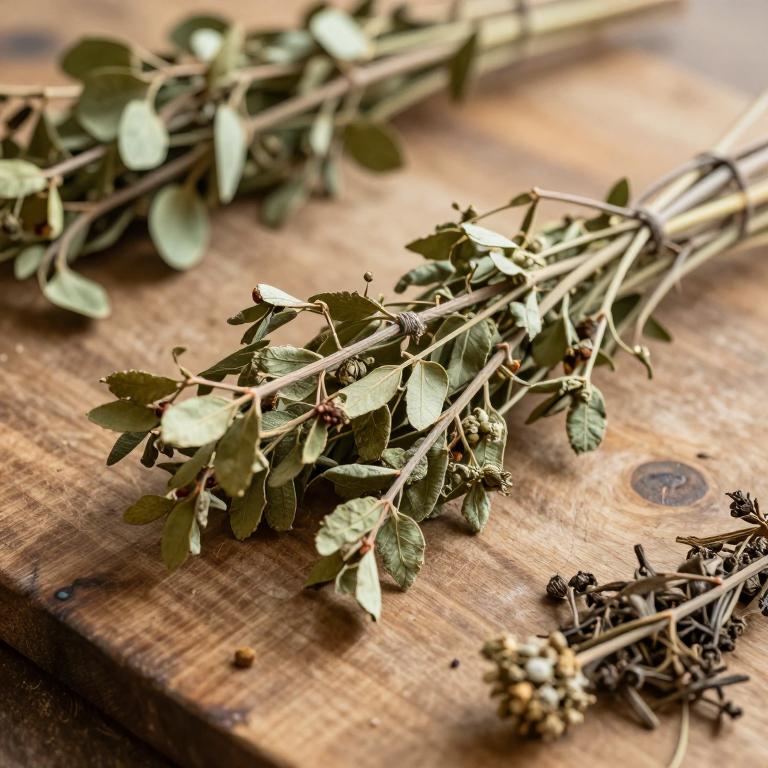
Soap Tree, scientifically known as Alphitonia excelsa, is a versatile evergreen tree native to tropical Africa. Renowned for its saponin-rich bark, it has long been used for traditional cleansing. Beyond its soap-like properties, this medicinal plant is valued in various cultures for treating skin ailments and digestive issues.
- Family
- Rhamnaceae
- Native range
- Asia-Tropical
- Parts used
- Not available
- Common names
- Not available
- Scientific synonyms
- Alphitonia Excelsa Var. Acutifolia · Colubrina Excelsa · 1 more
Names and Synonyms
Scientific Names
Accepted name
Alphitonia excelsaSynonyms
- Alphitonia excelsa var. acutifolia
- Colubrina excelsa
- Ceanothus excelsa
Regional and Traditional Names
Spanish:
- Colubrina excelsa
- Alphitonia excelsa var. acutifolia
- Ceanothus excelsa
Sources: Wikidata
Taxonomical Classification
This plant, Alphitonia excelsa, belongs to the kingdom Plantae and the phylum Streptophyta. It is further classified within the class Equisetopsida and the subclass Magnoliidae, falling under the order Rosales. Ultimately, it is a member of the family Rhamnaceae within the genus Alphitonia.
| Rank | Classification |
|---|---|
| Kingdom | Plantae |
| Phylum | Streptophyta |
| Class | Equisetopsida |
| Subclass | Magnoliidae |
| Order | Rosales |
| Family | Rhamnaceae |
| Genus | Alphitonia |
Sources: The World Checklist of Vascular Plants (WCVP)
Distribution
This plant is widely distributed across several distinct geographical regions in the Southern Hemisphere. In the Papuasia region, it can be found growing within New Guinea. Its range extends significantly into Australia, where it inhabits the state of New South Wales. Furthermore, the species is present in the Northern Territory and the tropical areas of Queensland. Finally, its distribution reaches as far as Western Australia, marking a broad continental presence.
| Region | Area |
|---|---|
| Papuasia | New Guinea |
| Australia | New South Wales |
| Australia | Northern Territory |
| Australia | Queensland |
| Australia | Western Australia |
Sources: The World Checklist of Vascular Plants (WCVP)
Botanical Identification
Life history
The life history of Alphitonia excelsa is characterized by its status as a perennial species, allowing the plant to persist in its environment through multiple growing seasons. As a long-lived woody plant, it follows a developmental trajectory that moves beyond the short-term cycles of annuals or biennials, establishing a stable presence within its ecological niche. This perennial lifecycle supports the development of its structural complexity, enabling the plant to invest in long-term survival and consistent reproductive potential over many years.
- Lifecycle :
- perennial
Morphology
The morphology of Alphitonia excelsa is characterized by its growth form as a woody tree, which reaches a significant plant height ranging from a minimum of 5 meters to a maximum of 10 meters. This species is classified as a terrestrial plant, functioning as an independent organism rather than a parasite or an epiphyte. In terms of its structural habit, it is a self-supporting plant, meaning it does not exhibit climbing tendencies such as being a liana or a vine, but instead maintains its own upright stature through its woody composition.
- Aquatic :
- terrestrial
- Climber :
- self-supporting
- Epiphyte :
- terrestrial
- Growth form :
- tree
- Parasite :
- independent
- Plant height max:
- 10 m
- Plant height min:
- 5 m
- Woodiness :
- woody
Physiology
The physiology of Alphitonia excelsa is characterized by a C3 photosynthetic pathway, which dictates its carbon fixation processes and metabolic efficiency. Morphologically, the plant's foliage exhibits specific dimensional ranges that support its physiological functions, with leaf lengths varying from a minimum of 5 cm to a maximum of 14 cm. Complementing these length variations, the leaf width fluctuates between a minimum of 2 cm and a maximum of 5 cm, contributing to the overall surface area available for gas exchange and light absorption necessary for its metabolic processes.
- Leaf length max:
- 14 cm
- Leaf length min:
- 5 cm
- Leaf width max:
- 5 cm
- Leaf width min:
- 2 cm
- Photosynthetic pathway :
- C3
Reproduction
The reproduction of Alphitonia excelsa is characterized by specific morphological attributes of its reproductive structures, particularly regarding its seed and fruit characteristics. The plant produces fruit that is classified as dry in texture. The seeds produced during the reproductive cycle exhibit highly uniform physical properties, with a consistent seed volume of 4.2 mm³, representing both the minimum, maximum, and mean values recorded. Furthermore, the seed mass is remarkably stable, maintaining a mean, minimum, and maximum value of 0.0220593 g, indicating a precise and standardized energy investment per seed during the maturation process.
- Fruit dryness :
- dry
- Seed mass mean:
- 0.0220593 g
- Seed volume max:
- 4.2 mm³
Sources: Global Inventory of Floras and Traits (GIFT)
Chemicals
Alphitonia excelsa has 2 reported phytochemicals identified across 0 scientific publications and several other databases. The most consistently reported chemicals include Betulin, betulinic acid.
| Chemical | Supporting sources | Consensus |
|---|---|---|
| Betulin | 1 supporting sources | ★☆☆☆☆ |
| betulinic acid | 1 supporting sources | ★☆☆☆☆ |
Betulin
- Dr. Duke
betulinic acid
- Dr. Duke
Activities
Alphitonia excelsa has 25 reported activities identified across 0 scientific publications and several other databases. The most consistently reported activities include Anthelmintic, AntiHIV, Antibacterial, Anticancer, Anticarcinomic.
| Activity | Supporting sources | Consensus |
|---|---|---|
| Anthelmintic | 1 supporting sources | ★☆☆☆☆ |
| AntiHIV | 1 supporting sources | ★☆☆☆☆ |
| Antibacterial | 1 supporting sources | ★☆☆☆☆ |
| Anticancer | 1 supporting sources | ★☆☆☆☆ |
| Anticarcinomic | 1 supporting sources | ★☆☆☆☆ |
| Antiedemic | 1 supporting sources | ★☆☆☆☆ |
| Antifeedant | 1 supporting sources | ★☆☆☆☆ |
| Antiflu | 1 supporting sources | ★☆☆☆☆ |
| Antiinflammatory | 1 supporting sources | ★☆☆☆☆ |
| Antileukemic | 1 supporting sources | ★☆☆☆☆ |
Anthelmintic
- Dr. Duke
AntiHIV
- Dr. Duke
Antibacterial
- Dr. Duke
Anticancer
- Dr. Duke
Anticarcinomic
- Dr. Duke
Antiedemic
- Dr. Duke
Antifeedant
- Dr. Duke
Antiflu
- Dr. Duke
Antiinflammatory
- Dr. Duke
Antileukemic
- Dr. Duke
Conditions
Alphitonia excelsa has 4 reported investigations on conditions identified across 0 scientific publications and several other databases. The most consistently reported conditions include childbirth, headache, inflammation, joint pain.
| Condition | Supporting sources | Consensus |
|---|---|---|
| Childbirth | 1 supporting sources | ★☆☆☆☆ |
| Headache | 1 supporting sources | ★☆☆☆☆ |
| Inflammation | 1 supporting sources | ★☆☆☆☆ |
| Joint pain | 1 supporting sources | ★☆☆☆☆ |
Childbirth
- Journal of ethnopharmacology
Headache
- Journal of ethnopharmacology
Inflammation
- Journal of ethnopharmacology
Joint pain
- Journal of ethnopharmacology