Aloysia trifida
Aloysia trifida · Accepted scientific name
Scientific literature: Very Sparse (42 studies) · ★☆☆☆☆
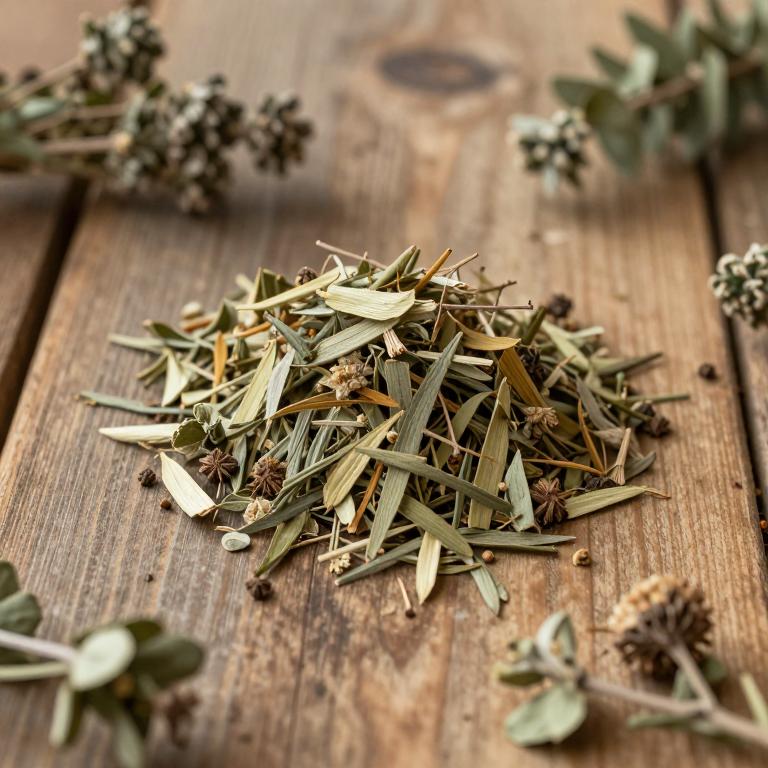
Aloysiia trifida, scientifically known as Aloysia trifida, is a fragrant, shrubby plant native to South America, most famously recognized as the source of lemon verbena. Prized for its aromatic leaves, it offers diverse medicinal benefits, including digestive support, calming effects, and antioxidant properties used in traditional herbal remedies.
- Family
- Verbenaceae
- Native range
- Southern America
- Parts used
- Leaf
- Common names
- Not available
- Scientific synonyms
- Acantholippia Trifida · Aloysia Foncki · 6 more
Names and Synonyms
Scientific Names
Accepted name
Aloysia trifidaSynonyms
- Acantholippia trifida
- Aloysia foncki
- Lippia foncki
- Lippia trifida var. gracilis
- Aloysia reichei
- Aloysia reichii var. trilobata
- Aloysia gracilis
- Acantholippia trifida var. reichei
Regional and Traditional Names
Spanish:
- Oreganillo
Sources: Wikidata, Catalogue of Life
Taxonomical Classification
This plant, known as Aloysiia trifida, belongs to the kingdom Plantae and the phylum Streptophyta. It is classified under the class Equisetopsida and subclass Magnoliidae, falling within the order Lamiales. Finally, it is a member of the family Verbenaceae and the genus Aloysia.
| Rank | Classification |
|---|---|
| Kingdom | Plantae |
| Phylum | Streptophyta |
| Class | Equisetopsida |
| Subclass | Magnoliidae |
| Order | Lamiales |
| Family | Verbenaceae |
| Genus | Aloysia |
Sources: The World Checklist of Vascular Plants (WCVP)
Distribution
This plant is primarily distributed across various regions of Southern South America. Specifically, its range extends into the Northwest region of Argentina. It can also be found growing throughout Central Chile. Furthermore, its presence is noted in the Northern part of Chile. These specific locations define the natural geographical footprint of Aloysiia trifida.
| Region | Area |
|---|---|
| Southern South America | Argentina Northwest |
| Southern South America | Chile Central |
| Southern South America | Chile North |
Sources: The World Checklist of Vascular Plants (WCVP)
Botanical Identification
Ecology
The ecology of Aloysiia trifida is characterized by its specific distribution within montane environments, where it thrives across a distinct altitudinal gradient. This species is primarily found in high-altitude habitats, occupying an elevational range that begins at 1500 m AMSL and extends up to a maximum of 2500 m AMSL. This vertical distribution suggests an adaptation to the unique climatic conditions found in these mid-to-high elevation zones, likely involving tolerance for cooler temperatures and specific moisture regimes associated with these mountain ranges.
- Elevational range max:
- 2500 m AMSL
- Elevational range min:
- 1500 m AMSL
Life history
The life history of Aloysiia trifida is characterized by its status as a perennial plant, allowing it to persist through multiple growing seasons. In terms of its growth habit and structural classification, it exhibits characteristics of both phanerophyte and nanophanerophyte life forms, indicating that its persistent buds and woody stems are positioned at varying heights above the soil surface.
- Life form :
- nanophanerophyte
- Life form :
- phanerophyte
- Lifecycle :
- perennial
Morphology
The morphology of Aloysiia trifida is characterized by a woody growth form, specifically classified as a shrub. As a terrestrial species, it does not exhibit aquatic or semiaquatic tendencies, nor does it function as an epiphyte, maintaining an independent existence rather than acting as a parasite. While it possesses a self-supporting structure, it does not exhibit the climbing habits associated with lianas or vines, instead maintaining a stable, upright shrubby architecture.
- Aquatic :
- terrestrial
- Climber :
- self-supporting
- Epiphyte :
- terrestrial
- Growth form :
- shrub
- Parasite :
- independent
- Woodiness :
- woody
Physiology
The physiology of Aloysiia trifida is characterized by its specialized metabolic processes, most notably its reliance on the C3 photosynthetic pathway for carbon fixation. As a C3 plant, it utilizes the enzyme RuBisCO to catalyze the initial carboxylation of CO2, leading to the direct formation of a three-carbon compound, 3-phosphoglycerate, during the Calvin cycle. This metabolic strategy implies that the plant conducts its photosynthetic activity primarily through open stomata during daylight hours, which facilitates gas exchange but also necessitates efficient water management to mitigate transpiration losses. The plant's energy production and biomass accumulation are intrinsically linked to this C3 mechanism, which governs its growth patterns and its ability to convert light energy into chemical energy within the chloroplasts.
- Photosynthetic pathway :
- C3
Reproduction
The reproduction of Aloysiia trifida is characterized by the production of highly uniform, minute seeds that facilitate its dispersal and establishment. Based on quantitative morphological data, the species exhibits exceptional consistency in its reproductive output, with no variation observed across its seed weight distribution. The seed mass remains constant, with a recorded mean, maximum, and minimum value of 0.00032 g. This precise and standardized seed mass suggests a highly specialized reproductive strategy where each individual seed is produced with identical resource allocation, ensuring a predictable dispersal pattern within its natural habitat.
- Seed mass mean:
- 0.00032 g
Sources: Global Inventory of Floras and Traits (GIFT)
Plant Parts
Aloysia trifida has 1 reported plant parts identified across 2 scientific publications and several other databases that are studied for medicinal purposes. The most consistently reported plant part include leaf.
| Plant part | Supporting sources | Consensus |
|---|---|---|
| Leaf | 2 supporting sources | ★☆☆☆☆ |
Leaf
- Journal of ethnopharmacology
- Acta tropica
Chemicals
Aloysia trifida has 10 reported phytochemicals identified across 2 scientific publications and several other databases. The most consistently reported chemicals include THYMOL, CARVACROL, P-CYMENE, Flavonoids, (E)-Caryophyllene.
| Chemical | Supporting sources | Consensus |
|---|---|---|
| THYMOL | 5 supporting sources | ★★★☆☆ |
| CARVACROL | 3 supporting sources | ★★☆☆☆ |
| P-CYMENE | 3 supporting sources | ★★☆☆☆ |
| Flavonoids | 2 supporting sources | ★☆☆☆☆ |
| (E)-Caryophyllene | 1 supporting sources | ★☆☆☆☆ |
| Caryophyllene oxide | 1 supporting sources | ★☆☆☆☆ |
| Isoorientin | 1 supporting sources | ★☆☆☆☆ |
| MYRCENE | 1 supporting sources | ★☆☆☆☆ |
| Orientin | 1 supporting sources | ★☆☆☆☆ |
| chloride ion | 1 supporting sources | ★☆☆☆☆ |
THYMOL
- Chemistry & biodiversity
- Phytomedicine : international journal of phytotherapy and phytopharmacology
- Journal of ethnopharmacology
- Acta tropica
- Veterinary parasitology
CARVACROL
- Chemistry & biodiversity
- Acta tropica
- Veterinary parasitology
P-CYMENE
- Chemistry & biodiversity
- Phytomedicine : international journal of phytotherapy and phytopharmacology
- Journal of ethnopharmacology
Flavonoids
- Chemistry & biodiversity
- Plants (Basel, Switzerland)
(E)-Caryophyllene
- Chemistry & biodiversity
Caryophyllene oxide
- Chemistry & biodiversity
Isoorientin
- Chemistry & biodiversity
MYRCENE
- Phytomedicine : international journal of phytotherapy and phytopharmacology
Orientin
- Chemistry & biodiversity
chloride ion
- Ecotoxicology and environmental safety
Activities
Aloysia trifida has 8 reported activities identified across 2 scientific publications and several other databases. The most consistently reported activities include Antioxidant, Analgesic, Antidermatophytic, Antimicrobial, Antinociceptive.
| Activity | Supporting sources | Consensus |
|---|---|---|
| Antioxidant | 2 supporting sources | ★☆☆☆☆ |
| Analgesic | 1 supporting sources | ★☆☆☆☆ |
| Antidermatophytic | 1 supporting sources | ★☆☆☆☆ |
| Antimicrobial | 1 supporting sources | ★☆☆☆☆ |
| Antinociceptive | 1 supporting sources | ★☆☆☆☆ |
| Antipyretic | 1 supporting sources | ★☆☆☆☆ |
| Antiseptic | 1 supporting sources | ★☆☆☆☆ |
| Sedative | 1 supporting sources | ★☆☆☆☆ |
Antioxidant
- Journal of ethnopharmacology
- Plants (Basel, Switzerland)
Analgesic
- Plants (Basel, Switzerland)
Antidermatophytic
- Acta tropica
Antimicrobial
- Acta tropica
Antinociceptive
- Journal of ethnopharmacology
Antipyretic
- Plants (Basel, Switzerland)
Antiseptic
- Acta tropica
Sedative
- Plants (Basel, Switzerland)
Preparations
Aloysia trifida has 4 reported preparations identified across 2 scientific publications and several other databases. The most consistently reported preparations include essential oils, essential oil, ethanolic extracts, oils.
| Preparation | Supporting sources | Consensus |
|---|---|---|
| Essential oils | 2 supporting sources | ★☆☆☆☆ |
| Essential oil | 1 supporting sources | ★☆☆☆☆ |
| Ethanolic extracts | 1 supporting sources | ★☆☆☆☆ |
| Oils | 1 supporting sources | ★☆☆☆☆ |
Essential oils
- Plants (Basel, Switzerland)
- Acta tropica
Essential oil
- Journal of ethnopharmacology
Ethanolic extracts
- Plants (Basel, Switzerland)
Oils
- Ticks and tick-borne diseases