Aloë
Aloe · Accepted scientific name
Scientific literature: Very Sparse (45 studies) · ★☆☆☆☆
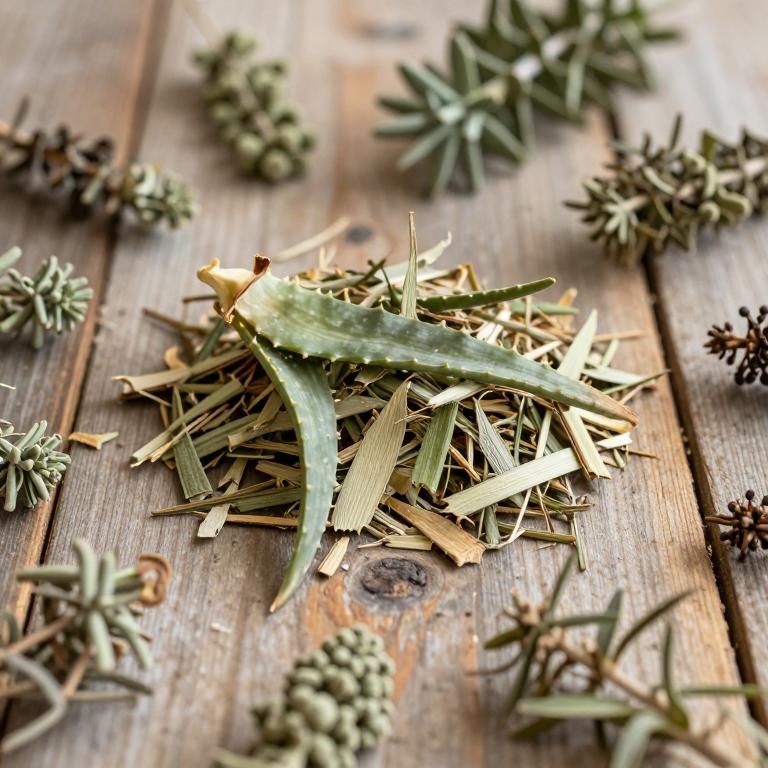
Aloë, scientifically known as Aloe, is a succulent plant renowned for its remarkable healing properties. Famous for its thick, gel-filled leaves, it has been used for centuries in traditional medicine. Primarily utilized to soothe skin irritations and burns, this versatile plant remains a staple in modern dermatological care.
- Family
- Asphodelaceae
- Native range
- Europe
- Parts used
- Leaf
- Common names
- Aloes
- Scientific synonyms
- × Chamaeleptaloe · Phylloma · 26 more
Names and Synonyms
Common Names
- Aloes
Scientific Names
Accepted name
AloeSynonyms
- × Chamaeleptaloe
- Phylloma
- Leptaloe
- × Leptaloinella
- × Bleckara
- × Aamaealoe
- Lemeea
- Agriodendron
- Guillauminia
- Chamaealoe
- Pachidendron
- Chortolirion
- × Allauminia
- Rhipidodendrum
- × Allemeea
- × Leminia
- × Alleptauminia
- × Lomataloe
- × Alamaealoe
- Lomatophyllum
- × Aleptoe
- × Alchamaloe
- × Aloella
- × Leptauminia
- Aloinella
- Atevala
- × Aloptaloe
- Busipho
Regional and Traditional Names
Spanish:
- X Alamaealoe
- Aloinella
- X Leptauminia
- X Allauminia
- Phylloma
- X Leptaloinella
- X Aloella
- X Allemeea
- Guillauminia
- × Alleptauminia
- X Alleptauminia
- × Leminia
- × Alchamaloe
- × Lomataloe
- × Allauminia
- × Aloella
- Aloes o sábilas
German:
- Aloen
- Leptaloe
- Ariodendron
- Phylloma
- Guillauminia
- Pachidendron
- Aloë
- Chamaealoe
- Ptyas
- Lomataloe
- Rhipidodendrum
- Agriodendron
- Succosaria
- Lemeea
- Busipho
- Lomatophyllum
- Aloen
French:
- Aloé
- Aloès
- Aloes
Sources: Wikidata, Catalogue of Life
Taxonomical Classification
This plant belongs to the kingdom Plantae within the phylum Streptophyta and the class Equisetopsida. As a member of the subclass Magnoliidae and the order Asparagales, it is further classified under the family Asphodelaceae. Ultimately, it is categorized under the genus Aloe.
| Rank | Classification |
|---|---|
| Kingdom | Plantae |
| Phylum | Streptophyta |
| Class | Equisetopsida |
| Subclass | Magnoliidae |
| Order | Asparagales |
| Family | Asphodelaceae |
| Genus | Aloe |
Sources: The World Checklist of Vascular Plants (WCVP)
Distribution
This plant exhibits a diverse range of habitats across several regions in Europe. In Middle Europe, its presence can be noted specifically within Austria. Moving toward the Mediterranean, it is found throughout various parts of Southwestern Europe. This distribution includes the islands of Baleares and Corse. Additionally, the species is widely established in both France and Portugal.
| Region | Area |
|---|---|
| Middle Europe | Austria |
| Southwestern Europe | Baleares |
| Southwestern Europe | Corse |
| Southwestern Europe | France |
| Southwestern Europe | Portugal |
| Southwestern Europe | Spain |
| Southeastern Europe | Greece |
| Southeastern Europe | Italy |
| Southeastern Europe | Kriti |
| Southeastern Europe | Sicilia |
Sources: The World Checklist of Vascular Plants (WCVP)
Plant Parts
Aloe has 1 reported plant parts identified across 11 scientific publications and several other databases that are studied for medicinal purposes. The most consistently reported plant part include leaf.
| Plant part | Supporting sources | Consensus |
|---|---|---|
| Leaf | 11 supporting sources | ★★★★★ |
Leaf
- Current drug delivery
- Planta medica
- Wiadomosci lekarskie (Warsaw, Poland : 1960)
- Pharmaceutical biology
- Progress in drug research. Fortschritte der Arzneimittelforschung. Progres des recherches pharmaceutiques
View 6 additional sources
- Journal of agricultural and food chemistry
- Phytotherapy research : PTR
- Heliyon
- Frontiers in pharmacology
- Likars'ka sprava
- International journal of radiation oncology, biology, physics
Chemicals
Aloe has 3 reported phytochemicals identified across 11 scientific publications and several other databases. The most consistently reported chemicals include aloin, Aloe emodin, gamma-Coniceine.
| Chemical | Supporting sources | Consensus |
|---|---|---|
| aloin | 3 supporting sources | ★★☆☆☆ |
| Aloe emodin | 1 supporting sources | ★☆☆☆☆ |
| gamma-Coniceine | 1 supporting sources | ★☆☆☆☆ |
aloin
- Molecules (Basel, Switzerland)
- Zhongguo Zhong yao za zhi = Zhongguo zhongyao zazhi = China journal of Chinese materia medica
- Phytotherapy research : PTR
Aloe emodin
- Molecules (Basel, Switzerland)
gamma-Coniceine
- Phytochemistry
Activities
Aloe has 6 reported activities identified across 11 scientific publications and several other databases. The most consistently reported activities include Antiinflammatory, Antioxidant, Antibacterial, Anticancer, Antimicrobial.
| Activity | Supporting sources | Consensus |
|---|---|---|
| Antiinflammatory | 2 supporting sources | ★☆☆☆☆ |
| Antioxidant | 2 supporting sources | ★☆☆☆☆ |
| Antibacterial | 1 supporting sources | ★☆☆☆☆ |
| Anticancer | 1 supporting sources | ★☆☆☆☆ |
| Antimicrobial | 1 supporting sources | ★☆☆☆☆ |
| Antiproliferative | 1 supporting sources | ★☆☆☆☆ |
Antiinflammatory
- Wiadomosci lekarskie (Warsaw, Poland : 1960)
- Phytotherapy research : PTR
Antioxidant
- Phytotherapy research : PTR
- Planta medica
Antibacterial
- Phytotherapy research : PTR
Anticancer
- Phytotherapy research : PTR
Antimicrobial
- Wiadomosci lekarskie (Warsaw, Poland : 1960)
Antiproliferative
- Planta medica
Conditions
Aloe has 2 reported investigations on conditions identified across 11 scientific publications and several other databases. The most consistently reported conditions include cancer, gastrointestinal disorders.
| Condition | Supporting sources | Consensus |
|---|---|---|
| Cancer | 2 supporting sources | ★☆☆☆☆ |
| Gastrointestinal disorders | 1 supporting sources | ★☆☆☆☆ |
Cancer
- Wiadomosci lekarskie (Warsaw, Poland : 1960)
- Planta medica
Gastrointestinal disorders
- Progress in drug research. Fortschritte der Arzneimittelforschung. Progres des recherches pharmaceutiques
Preparations
Aloe has 39 reported preparations identified across 11 scientific publications and several other databases. The most consistently reported preparations include gel, extract, topical, Aloe QDM complex, Aloe coarse polysaccharide.
| Preparation | Supporting sources | Consensus |
|---|---|---|
| Gel | 3 supporting sources | ★★☆☆☆ |
| Extract | 2 supporting sources | ★☆☆☆☆ |
| Topical | 2 supporting sources | ★☆☆☆☆ |
| Aloe qdm complex | 1 supporting sources | ★☆☆☆☆ |
| Aloe coarse polysaccharide | 1 supporting sources | ★☆☆☆☆ |
| Aloe extract | 1 supporting sources | ★☆☆☆☆ |
| Aloe gel | 1 supporting sources | ★☆☆☆☆ |
| Aloe oil | 1 supporting sources | ★☆☆☆☆ |
| Aloe oligosaccharides | 1 supporting sources | ★☆☆☆☆ |
| Aloe treatment | 1 supporting sources | ★☆☆☆☆ |
Gel
- The Journal of investigative dermatology
- Phytotherapy research : PTR
- Critical reviews in food science and nutrition
Extract
- Journal - Association of Official Analytical Chemists
- Phytomedicine : international journal of phytotherapy and phytopharmacology
Topical
- Breast disease
- Archives of dermatology
Aloe qdm complex
- Bioscience, biotechnology, and biochemistry
Aloe coarse polysaccharide
- Zhongguo Zhong yao za zhi = Zhongguo zhongyao zazhi = China journal of Chinese materia medica
Aloe extract
- Archives de l'Institut Pasteur de Madagascar
Aloe gel
- The Journal of investigative dermatology
Aloe oil
- Journal of environmental radioactivity
Aloe oligosaccharides
- The Journal of investigative dermatology
Aloe treatment
- The Journal of investigative dermatology