Fynbos aloe
Aloe succotrina · Accepted scientific name
Scientific literature: Very Extensive (1383 studies) · ★★★★★
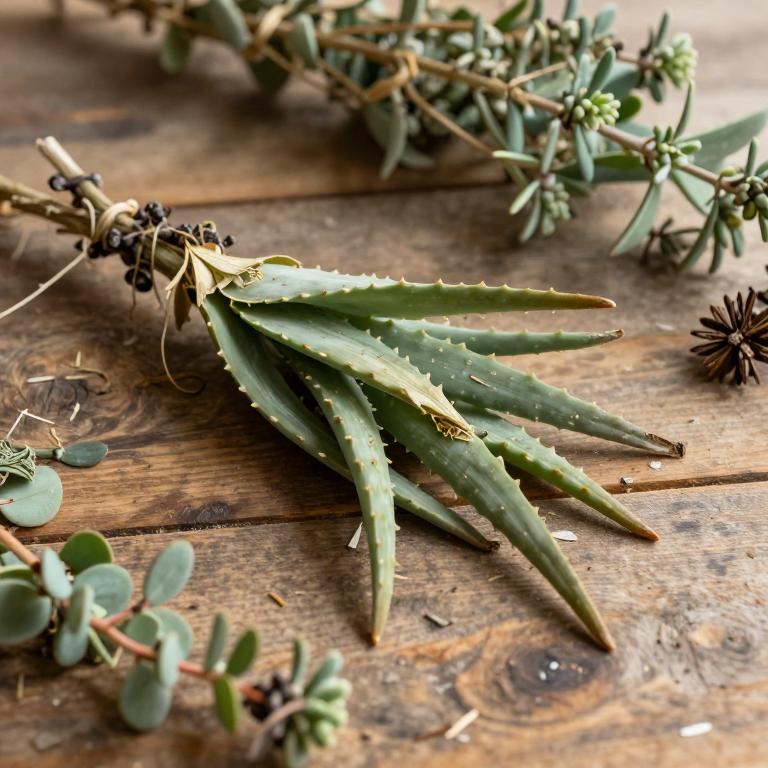
Fynbos aloe, scientifically known as Aloe succotrina, is a distinctive succulent native to South Africa. Renowned for its medicinal properties, this species is primarily cultivated for its high-quality bitter aloes. Extracted from its fleshy leaves, the resin serves as a potent natural laxative and is widely used in pharmacology.
Names and Synonyms
Common Names
- Aloe vera
- Aloe
- Barbados Aloes
- Common Aloes
- Barbados aloe
- Curaçao aloe
- West Indian aloe
- aloe vera
- true aloe
Scientific Names
Accepted name
Aloe succotrinaSynonyms
- Aloe perfoliata var. purpurascens
- Aloe perfoliata var. succotrina
- Aloe purpurascens
- Aloe succotrina var. purpurascens
- Aloe succotrina var. saxigena
- Aloe sinuata
Regional and Traditional Names
Spanish:
- Aloe perfoliata var purpurascens
- Aloe perfoliata var. purpurascens
- Aloe purpurascens
- Aloe perfoliata var. succotrina
- Aloe soccotorina
- Aloe soccotrina
- Aloe perfoliata var succotrina
- Aloe sinuata
- Aloe vera
- Aloe vulgaris
- Aloe flava
- Aloe chinensis
- Aloe de Barbados
- Aloe perfoliata var. vera
- Aloe elongata
- Aloe barbadensis var chinensis
- Aloe perfoliata var. barbadensis
- Aloe de Curazao
- Aloe barbadensis
- Aloe perfoliata var vera
- Aloe lanzae
- Aloe perfoliata var barbadensis
- Aloe rubescens
- Aloe barbadensis var. chinensis
- Savila
- Sávila
- acibar
- sávila
German:
- Echte Aloe
- Curacao-Aloe
- Aloe vera
- Aloe barbadensis
- Wüstenlilie
- echte Aloe
French:
- Aloe vera
- Aloé Vera
- Aloès vera
- Aloe Vera
- aloès vulgaire
Sources: Wikidata, Catalogue of Life
Taxonomical Classification
This plant belongs to the kingdom Plantae and is classified under the phylum Streptophyta within the class Equisetopsida. As a member of the subclass Magnoliidae and the order Asparagales, it falls under the family Asphodelaceae. Ultimately, its taxonomic identity is defined by its placement within the genus Aloe.
| Rank | Classification |
|---|---|
| Kingdom | Plantae |
| Phylum | Streptophyta |
| Class | Equisetopsida |
| Subclass | Magnoliidae |
| Order | Asparagales |
| Family | Asphodelaceae |
| Genus | Aloe |
Sources: The World Checklist of Vascular Plants (WCVP)
Distribution
This plant exhibits a specific geographical distribution across several distinct regions. In Southwestern Europe, it can be found growing within the borders of France. It also maintains a presence in Spain, which is part of the same European region. Moving to a different continent, the species is located in Southern Africa. Specifically, it thrives within the Cape Provinces of that area.
| Region | Area |
|---|---|
| Southwestern Europe | France |
| Southwestern Europe | Spain |
| Southern Africa | Cape Provinces |
Sources: The World Checklist of Vascular Plants (WCVP)
Botanical Identification
Ecology
The ecology of Aloe succotrina is characterized by its ability to thrive in open habitats, where it occupies a broad altitudinal spectrum. This plant is found across a significant elevational range, with its distribution extending from as low as 0 m AMSL to a maximum height of 2600 m AMSL. While its presence is documented at various levels, including specific localized ranges between 330 m and 900 m AMSL, its mean elevational range is situated at approximately 1150 m AMSL. To survive within these diverse environments, the species employs active biological defense mechanisms, allowing it to persist in the exposed conditions of its typical open-ground habitat.
- Defense :
- yes
- Elevational range max:
- 900 m AMSL
- Elevational range max:
- 2600 m AMSL
- Elevational range mean:
- 1150 m AMSL
- Elevational range min:
- 0 m AMSL
- Elevational range min:
- 330 m AMSL
- Habitat :
- open
Life history
The life history of Aloe succotrina is characterized by its status as a perennial plant, ensuring long-term survival and stability within its ecosystem. It exhibits a complex life form classification, manifesting as both a chamaephyte and a hemicryptophyte, which reflects its ability to maintain its growing points near or just below the soil surface to endure environmental stressors. This resilience is further supported by its evergreen deciduousness, meaning the plant retains its fleshy, succulent foliage throughout the year without shedding its leaves seasonally.
- Deciduousness :
- evergreen
- Life form :
- chamaephyte
- Life form :
- hemicryptophyte
- Lifecycle :
- perennial
Morphology
The morphology of Aloe succotrina is characterized by a diverse growth habit that can range from a herbaceous forb to a shrubby form. As a terrestrial plant, it is neither aquatic nor semiaquatic, functioning as an independent organism without parasitic or epiphytic requirements. The plant is self-supporting rather than a climber, and its structural composition varies between non-woody and woody textures depending on the specific specimen's development. In terms of stature, the plant exhibits significant height variability: while some instances are smaller, reaching a minimum height of 0.5 m, others can grow as tall as 1 m or 2 m, with a mean plant height typically observed around 0.8 m.
- Aquatic :
- terrestrial
- Climber :
- self-supporting
- Epiphyte :
- terrestrial
- Growth form :
- shrub
- Growth form :
- herb
- Growth form :
- forb
- Parasite :
- independent
- Plant height max:
- 2 m
- Plant height mean:
- 0.8 m
- Plant height min:
- 1 m
- Plant height min:
- 0.5 m
- Woodiness :
- woody
- Woodiness :
- non-woody
Physiology
The physiology of Aloe succotrina is characterized by specialized adaptations for water conservation and efficient resource management in arid environments. The plant utilizes a CAM (Crassulacean Acid Metabolism) photosynthetic pathway, which allows it to fix carbon dioxide at night to minimize transpirational water loss during the heat of the day. This metabolic efficiency is supported by a high degree of succulence, enabling the plant to store significant quantities of water within its specialized tissues. Morphologically, the plant features a rosette leaf arrangement, with leaves that typically range from a minimum length of 15 cm to a mean length of 25 cm, though they can reach a maximum length of 60 cm. These leaves possess a width varying between a minimum of 4 cm and a maximum of 7 cm. Furthermore, the plant does not function as a nitrogen fixer, relying instead on the availability of nutrients within its immediate substrate.
- Leaf arrangement :
- rosette
- Leaf length max:
- 60 cm
- Leaf length mean:
- 25 cm
- Leaf length min:
- 15 cm
- Leaf width max:
- 7 cm
- Leaf width min:
- 4 cm
- Nitrogen fixer :
- no
- Photosynthetic pathway :
- CAM
- Succulence :
- yes
Reproduction
The reproduction of Aloe succotrina is characterized by a flowering period that is highly variable, potentially spanning the entire year from January through December. During this time, the plant produces distinctive yellow flowers that typically measure between 2.5 cm and 3 cm in length. These flowers are arranged in an inflorescence that reaches a minimum length of 0.5 m and a maximum of 0.8 m. Regarding the movement of its offspring, the species exhibits an unspecialized dispersal syndrome, supplemented by anthropochorous dispersal, indicating that its seeds or propagules may be spread through various natural means as well as human activity.
- Dispersal syndrome :
- unspecialized
- Dispersal syndrome :
- anthropochorous
- Flower colour :
- yellow
- Flower length max:
- 3 cm
- Flower length min:
- 2.5 cm
- Flowering time :
- Jan
- Flowering time :
- Dec
- Inflorescence length max:
- 0.8 m
- Inflorescence length min:
- 0.5 m
Sources: Global Inventory of Floras and Traits (GIFT)
Plant Parts
Aloe succotrina has 3 reported plant parts identified across 49 scientific publications and several other databases that are studied for medicinal purposes. The most consistently reported plant part include leaf, root, flower.
| Plant part | Supporting sources | Consensus |
|---|---|---|
| Leaf | 42 supporting sources | ★★★★★ |
| Root | 5 supporting sources | ★★★☆☆ |
| Flower | 2 supporting sources | ★☆☆☆☆ |
Leaf
- Natural product research
- Food chemistry
- Zhong yao cai = Zhongyaocai = Journal of Chinese medicinal materials
- Plants (Basel, Switzerland)
- Avicenna journal of phytomedicine
View 37 additional sources
- Frontiers in chemistry
- Phytomedicine : international journal of phytotherapy and phytopharmacology
- PeerJ
- Antibiotics (Basel, Switzerland)
- Iranian journal of medical sciences
- Journal of AOAC International
- Oxidative medicine and cellular longevity
- Biological trace element research
- Journal of ethnopharmacology
- BMC genomics
- Frontiers in veterinary science
- Phytotherapy research : PTR
- International journal of biological macromolecules
- Endocrine, metabolic & immune disorders drug targets
- Tropical animal health and production
- Natural product communications
- Frontiers in pharmacology
- Enzyme & protein
- Biochemistry international
- Planta medica
- The Indian journal of medical research
- Journal of the science of food and agriculture
- Drug and chemical toxicology
- Fitoterapia
- Combinatorial chemistry & high throughput screening
- Environmental and experimental botany
- International journal of immunopharmacology
- Immunopharmacology
- Frontiers in plant science
- International journal of mycobacteriology
- Iranian journal of biotechnology
- Critical reviews in food science and nutrition
- Central-European journal of immunology
- Tropical medicine and health
- International journal of environmental research and public health
- Toxicologic pathology
- Veterinary medicine and science
Root
- PloS one
- BMC genomics
- Environmental and experimental botany
- Frontiers in plant science
- Veterinary medicine and science
Flower
- Journal of ethnopharmacology
- Molecules (Basel, Switzerland)
Chemicals
Aloe succotrina has 312 reported phytochemicals identified across 49 scientific publications and several other databases. The most consistently reported chemicals include aloin, Aloe emodin, Flavonoids, Anthraquinones, Acemannan.
| Chemical | Supporting sources | Consensus |
|---|---|---|
| aloin | 17 supporting sources | ★★★★★ |
| Aloe emodin | 14 supporting sources | ★★★★★ |
| Flavonoids | 12 supporting sources | ★★★★★ |
| Anthraquinones | 11 supporting sources | ★★★★★ |
| Acemannan | 10 supporting sources | ★★★★★ |
| Saponins | 8 supporting sources | ★★★★☆ |
| Aloin A | 6 supporting sources | ★★★☆☆ |
| ANTHRAQUINONE | 5 supporting sources | ★★★☆☆ |
| Polysaccharide | 5 supporting sources | ★★★☆☆ |
| Tannins | 5 supporting sources | ★★★☆☆ |
aloin
- Dr. Duke
- Scientific reports
- Journal of AOAC International
- Polish journal of pharmacology and pharmacy
- Langmuir : the ACS journal of surfaces and colloids
View 12 additional sources
- Reviews on recent clinical trials
- Journal of Asian natural products research
- European journal of pharmacology
- Toxicon : official journal of the International Society on Toxinology
- Naunyn-Schmiedeberg's archives of pharmacology
- Journal of the science of food and agriculture
- Environmental and experimental botany
- PloS one
- Molecules (Basel, Switzerland)
- Chemico-biological interactions
- Talanta
- Biochemical pharmacology
Aloe emodin
- Dr. Duke
- RSC medicinal chemistry
- Free radical research
- Scientific reports
- PloS one
View 9 additional sources
- European journal of medicinal chemistry
- Advanced healthcare materials
- Toxicon : official journal of the International Society on Toxinology
- Molecules (Basel, Switzerland)
- Archiv der Pharmazie
- Journal of molecular recognition : JMR
- Chemico-biological interactions
- Journal of ethnopharmacology
- Biochemical pharmacology
Flavonoids
- Scientific reports
- Frontiers in nutrition
- Open life sciences
- Progress in drug research. Fortschritte der Arzneimittelforschung. Progres des recherches pharmaceutiques
- Frontiers in veterinary science
View 7 additional sources
- Indian journal of pharmaceutical sciences
- Advances in pharmacological and pharmaceutical sciences
- Journal of ethnopharmacology
- Phytomedicine : international journal of phytotherapy and phytopharmacology
- Frontiers in plant science
- Food science & nutrition
- Brazilian journal of biology = Revista brasleira de biologia
Anthraquinones
- Dr. Duke
- Scientific reports
- Revista brasileira de farmacognosia : orgao oficial da Sociedade Brasileira de Farmacognosia
- Frontiers in nutrition
- Phytotherapy research : PTR
View 6 additional sources
- Journal of pharmacy & bioallied sciences
- Fitoterapia
- Progress in drug research. Fortschritte der Arzneimittelforschung. Progres des recherches pharmaceutiques
- Journal of ethnopharmacology
- Phytomedicine : international journal of phytotherapy and phytopharmacology
- Journal of the American Podiatric Medical Association
Acemannan
- Dr. Duke
- Journal of agricultural and food chemistry
- Scientific reports
- Natural product communications
- Molecules (Basel, Switzerland)
View 5 additional sources
- PloS one
- Immunopharmacology
- Critical reviews in food science and nutrition
- International journal of radiation oncology, biology, physics
- Carbohydrate polymers
Saponins
- Dr. Duke
- Scientific reports
- Open life sciences
- Frontiers in veterinary science
- Indian journal of pharmaceutical sciences
View 3 additional sources
- Journal of ethnopharmacology
- Antibiotics (Basel, Switzerland)
- Fitoterapia
Aloin A
- Dr. Duke
- Molecules (Basel, Switzerland)
- Naunyn-Schmiedeberg's archives of pharmacology
- Journal of the science of food and agriculture
- Journal of chromatography. A
View 1 additional sources
- Journal of ethnopharmacology
ANTHRAQUINONE
- Journal of the American Podiatric Medical Association
- BMC genomics
- Shi yan sheng wu xue bao
- Plants (Basel, Switzerland)
- Frontiers in microbiology
Polysaccharide
- Dr. Duke
- Current drug delivery
- Antibiotics (Basel, Switzerland)
- Planta medica
- Archives of pharmacal research
Tannins
- Dr. Duke
- Frontiers in veterinary science
- Indian journal of pharmaceutical sciences
- Food science & nutrition
- Journal of ethnopharmacology
Activities
Aloe succotrina has 572 reported activities identified across 49 scientific publications and several other databases. The most consistently reported activities include Antioxidant, Antimicrobial, Antibacterial, Anticancer, Antidiabetic.
| Activity | Supporting sources | Consensus |
|---|---|---|
| Antioxidant | 22 supporting sources | ★★★★★ |
| Antimicrobial | 14 supporting sources | ★★★★★ |
| Antibacterial | 13 supporting sources | ★★★★★ |
| Anticancer | 7 supporting sources | ★★★★☆ |
| Antidiabetic | 7 supporting sources | ★★★★☆ |
| Antiinflammatory | 6 supporting sources | ★★★☆☆ |
| Antiviral | 6 supporting sources | ★★★☆☆ |
| Hepatoprotective | 6 supporting sources | ★★★☆☆ |
| Antifungal | 5 supporting sources | ★★★☆☆ |
| Analgesic | 4 supporting sources | ★★☆☆☆ |
Antioxidant
- Dr. Duke
- Anti-cancer agents in medicinal chemistry
- Current drug targets
- BMC complementary and alternative medicine
- BMC chemistry
View 17 additional sources
- Revista brasileira de farmacognosia : orgao oficial da Sociedade Brasileira de Farmacognosia
- Frontiers in nutrition
- Iranian journal of medical sciences
- Free radical research
- Pharmaceutical biology
- BMC complementary medicine and therapies
- Journal of ethnopharmacology
- Journal of Asian natural products research
- Antioxidants (Basel, Switzerland)
- Phytotherapy research : PTR
- Naunyn-Schmiedeberg's archives of pharmacology
- Current pharmaceutical biotechnology
- Inflammopharmacology
- Evidence-based complementary and alternative medicine : eCAM
- Phytomedicine : international journal of phytotherapy and phytopharmacology
- Biomedicine & pharmacotherapy = Biomedecine & pharmacotherapie
- Animals : an open access journal from MDPI
Antimicrobial
- BMC complementary and alternative medicine
- Journal of oral science
- Chemotherapy research and practice
- Dose-response : a publication of International Hormesis Society
- Current pharmaceutical design
View 9 additional sources
- Antibiotics (Basel, Switzerland)
- Molecules (Basel, Switzerland)
- Phytomedicine : international journal of phytotherapy and phytopharmacology
- Fish & shellfish immunology
- Inflammopharmacology
- Archiv der Pharmazie
- Journal of traditional and complementary medicine
- Foods (Basel, Switzerland)
- Journal of periodontology
Antibacterial
- Dr. Duke
- Current drug targets
- Frontiers in nutrition
- Journal of the American Academy of Dermatology
- Iranian journal of medical sciences
View 8 additional sources
- Archives of Razi Institute
- Chemotherapy research and practice
- Drug design, development and therapy
- Antibiotics (Basel, Switzerland)
- Current pharmaceutical biotechnology
- Fitoterapia
- Natural product communications
- Journal of traditional and complementary medicine
Anticancer
- Dr. Duke
- RSC medicinal chemistry
- Chemotherapy research and practice
- Phytomedicine : international journal of phytotherapy and phytopharmacology
- Journal of ethnopharmacology
View 2 additional sources
- Archiv der Pharmazie
- Journal of traditional and complementary medicine
Antidiabetic
- Dr. Duke
- Journal of oral science
- Chemotherapy research and practice
- Phytomedicine : international journal of phytotherapy and phytopharmacology
- Phytotherapy research : PTR
View 2 additional sources
- Journal of ethnopharmacology
- Journal of traditional and complementary medicine
Antiinflammatory
- Dr. Duke
- Phytotherapy research : PTR
- Journal of ethnopharmacology
- Indian journal of experimental biology
- Current pharmaceutical biotechnology
View 1 additional sources
- Phytomedicine : international journal of phytotherapy and phytopharmacology
Antiviral
- Dr. Duke
- Natural product communications
- Phytomedicine : international journal of phytotherapy and phytopharmacology
- Archiv der Pharmazie
- Foods (Basel, Switzerland)
View 1 additional sources
- Journal of clinical and diagnostic research : JCDR
Hepatoprotective
- Dr. Duke
- Phytotherapy research : PTR
- Food and chemical toxicology : an international journal published for the British Industrial Biological Research Association
- Phytomedicine : international journal of phytotherapy and phytopharmacology
- Critical reviews in food science and nutrition
View 1 additional sources
- Archiv der Pharmazie
Antifungal
- Journal of the American Academy of Dermatology
- Iranian journal of medical sciences
- Natural product communications
- Foods (Basel, Switzerland)
- Journal of clinical and diagnostic research : JCDR
Analgesic
- Dr. Duke
- Journal of Indian Society of Periodontology
- Phytotherapy research : PTR
- Journal of burn care & research : official publication of the American Burn Association
Preparations
Aloe succotrina has 154 reported preparations identified across 49 scientific publications and several other databases. The most consistently reported preparations include aloe vera gel, Aloe vera gel, gel, Aloe vera extract, extracts.
| Preparation | Supporting sources | Consensus |
|---|---|---|
| Aloe vera gel | 11 supporting sources | ★★★★★ |
| Aloe vera gel | 10 supporting sources | ★★★★★ |
| Gel | 10 supporting sources | ★★★★★ |
| Aloe vera extract | 6 supporting sources | ★★★☆☆ |
| Extracts | 6 supporting sources | ★★★☆☆ |
| Extract | 5 supporting sources | ★★★☆☆ |
| Aloe gel | 4 supporting sources | ★★☆☆☆ |
| Aqueous extract | 4 supporting sources | ★★☆☆☆ |
| A. vera gel | 3 supporting sources | ★★☆☆☆ |
| Aloe vera leaf gel | 3 supporting sources | ★★☆☆☆ |
Aloe vera gel
- Oncology nursing forum
- International journal of radiation oncology, biology, physics
- Nutrition (Burbank, Los Angeles County, Calif.)
- Archives of facial plastic surgery
- Obstetrics and gynecology
View 6 additional sources
- Saudi journal of gastroenterology : official journal of the Saudi Gastroenterology Association
- Carbohydrate polymers
- World journal of gastroenterology
- Journal of the Medical Association of Thailand = Chotmaihet thangphaet
- The Journal of dermatologic surgery and oncology
- Canadian journal of physiology and pharmacology
Aloe vera gel
- Journal of oral science
- Journal of pharmacy & bioallied sciences
- Iranian journal of medical sciences
- Biomedicine & pharmacotherapy = Biomedecine & pharmacotherapie
- Journal of ethnopharmacology
View 5 additional sources
- Recent patents on food, nutrition & agriculture
- Food and chemical toxicology : an international journal published for the British Industrial Biological Research Association
- Drug and chemical toxicology
- Immunopharmacology
- Ultrasound in medicine & biology
Gel
- Planta medica
- Oral surgery, oral medicine, oral pathology, oral radiology, and endodontics
- Frontiers in plant science
- Critical reviews in food science and nutrition
- Toxicon : official journal of the International Society on Toxinology
View 5 additional sources
- Antibiotics (Basel, Switzerland)
- The Journal of dermatologic surgery and oncology
- Journal of Indian Society of Periodontology
- Biomedicine & pharmacotherapy = Biomedecine & pharmacotherapie
- Animals : an open access journal from MDPI
Aloe vera extract
- Oxidative medicine and cellular longevity
- Phytotherapy research : PTR
- Iranian journal of reproductive medicine
- Zhongguo Zhong yao za zhi = Zhongguo zhongyao zazhi = China journal of Chinese materia medica
- Pakistan journal of biological sciences : PJBS
View 1 additional sources
- Journal of ethnopharmacology
Extracts
- The British journal of dermatology
- Pharmaceutics
- Marine drugs
- Evidence-based complementary and alternative medicine : eCAM
- Fish physiology and biochemistry
View 1 additional sources
- Brazilian journal of biology = Revista brasleira de biologia
Extract
- Iranian journal of basic medical sciences
- Recent patents on food, nutrition & agriculture
- Ceska a Slovenska farmacie : casopis Ceske farmaceuticke spolecnosti a Slovenske farmaceuticke spolecnosti
- Evidence-based complementary and alternative medicine : eCAM
- International journal of nanomedicine
Aloe gel
- Tropical animal health and production
- Journal of the American Podiatric Medical Association
- Journal of ethnopharmacology
- Immunopharmacology
Aqueous extract
- Avicenna journal of phytomedicine
- Oxidative medicine and cellular longevity
- Journal of ethnopharmacology
- Antibiotics (Basel, Switzerland)
A. vera gel
- Current drug delivery
- Journal of ethnopharmacology
- Chemotherapy research and practice
Aloe vera leaf gel
- Endocrine, metabolic & immune disorders drug targets
- International journal of biological macromolecules
- Journal of ethnopharmacology