Aloe sinkatana
Aloe sinkatana · Accepted scientific name
Scientific literature: Very Sparse (1 studies) · ★☆☆☆☆
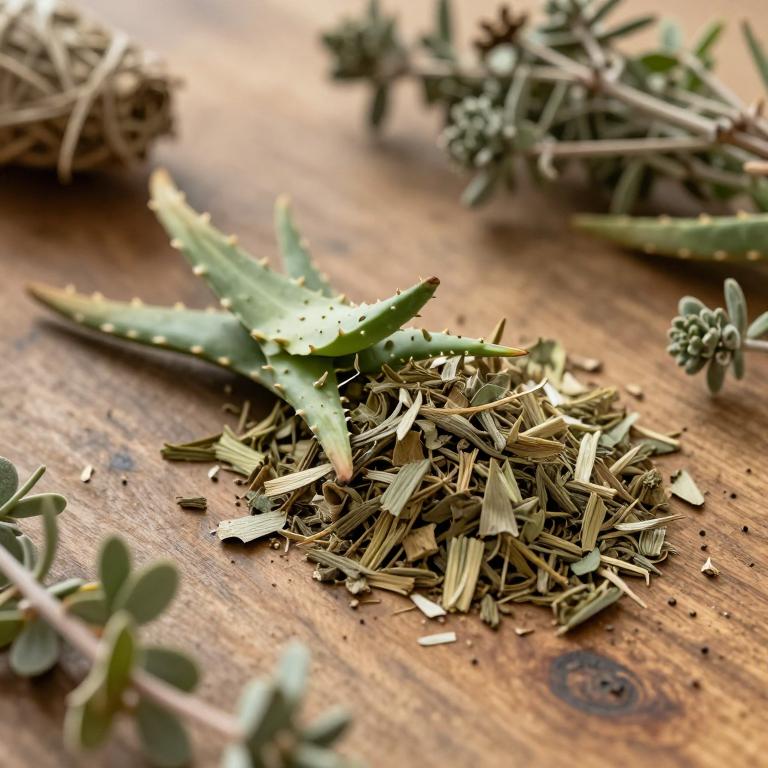
Aloe sinkatanana, scientifically known as Aloe sinkatanana, is a remarkable succulent prized for its therapeutic properties. Native to specific arid regions, this resilient plant offers potent medicinal benefits, particularly for skin healing and digestive health. Its unique bioactive compounds make it a vital resource in traditional herbal medicine.
- Family
- Asphodelaceae
- Native range
- Africa
- Parts used
- Not available
- Common names
- Not available
- Scientific synonyms
- Not available
Names and Synonyms
Scientific Names
Accepted name
Aloe sinkatanaSources: Wikidata
Taxonomical Classification
This plant, Aloe sinkatanana, belongs to the kingdom Plantae and the phylum Streptophyta. Within the class Equisetopsida and subclass Magnoliidae, it is categorized under the order Asparagales. It is further classified into the family Asphodelaceae and the genus Aloe.
| Rank | Classification |
|---|---|
| Kingdom | Plantae |
| Phylum | Streptophyta |
| Class | Equisetopsida |
| Subclass | Magnoliidae |
| Order | Asparagales |
| Family | Asphodelaceae |
| Genus | Aloe |
Sources: The World Checklist of Vascular Plants (WCVP)
Distribution
This plant is specifically located within the Northeast Tropical Africa region. Its natural habitat is confined to the territories of Sudan and South Sudan. Within these specific countries, the species occupies a unique ecological niche. Because its range is so limited, it is considered a geographically restricted species. Understanding this specific distribution is essential for the conservation of the plant.
| Region | Area |
|---|---|
| Northeast Tropical Africa | Sudan-South Sudan |
Sources: The World Checklist of Vascular Plants (WCVP)
Botanical Identification
Life history
The life history of Aloe sinkatanana is characterized by its nature as a perennial plant, allowing it to persist through multiple growing seasons rather than completing its life cycle in a single year. As a hemicryptophyte, its perennating buds are located at or just below the soil surface, which provides a level of protection against environmental stressors. The species maintains an evergreen habit, ensuring that its photosynthetic tissues remain functional and green throughout the year without a regular period of leaf shedding. This combination of a long-lived lifecycle and a steady vegetative presence allows the plant to effectively occupy its ecological niche.
- Deciduousness :
- evergreen
- Life form :
- hemicryptophyte
- Lifecycle :
- perennial
Morphology
The morphology of Aloe sinkatanana is characterized by its growth form as a herb, exhibiting a non-woody structure throughout its vegetative development. As a terrestrial species, it grows directly in the soil rather than as an epiphyte, maintaining an independent lifestyle without any parasitic relationship to other plants. While it does not possess a climbing habit, its structural integrity is self-supporting, allowing it to maintain its upright, herbaceous posture without the need for external assistance.
- Climber :
- self-supporting
- Epiphyte :
- terrestrial
- Growth form :
- herb
- Parasite :
- independent
- Woodiness :
- non-woody
Physiology
The physiology of Aloe sinkatana is characterized by a specialized Crassulacean Acid Metabolism (CAM) pathway, which allows the plant to optimize water-use efficiency by fixing carbon dioxide at night through the enzyme phosphoenolpyruvate carboxylase. This nocturnal CO2 uptake minimizes transpirational water loss during the heat of the day, as the stomata remain closed while the plant utilizes stored malic acid for photosynthesis under sunlight. The plant's metabolic processes are supported by a highly succulent leaf structure designed for significant water storage within large parenchymatous cells. In terms of nutrient cycling and symbiotic associations, Aloe sinkatana does not function as a nitrogen fixer; it lacks the physiological mechanisms or specialized root nodules required for biological nitrogen fixation, meaning it relies on the uptake of available nitrogenous compounds from the surrounding soil substrate.
- Nitrogen fixer :
- no
Sources: Global Inventory of Floras and Traits (GIFT)
Chemicals
Aloe sinkatana has 1 reported phytochemicals identified across 0 scientific publications and several other databases. The most consistently reported chemicals include Anthraquinones.
| Chemical | Supporting sources | Consensus |
|---|---|---|
| Anthraquinones | 1 supporting sources | ★☆☆☆☆ |
Anthraquinones
- Journal of biomolecular structure & dynamics