Aloe rigens
Aloe rigens · Accepted scientific name
Scientific literature: Very Sparse (2 studies) · ★☆☆☆☆
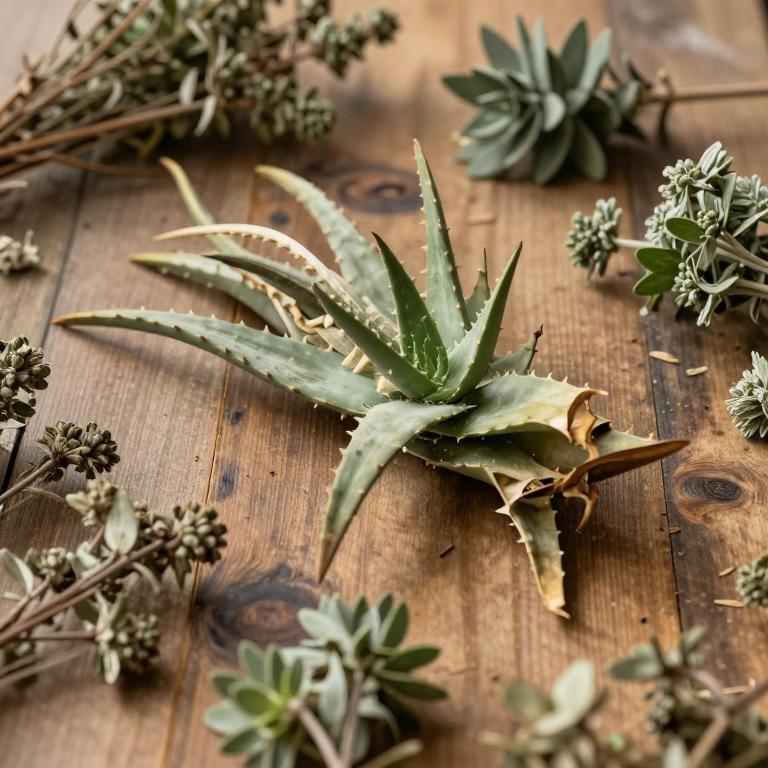
Aloe rigens, scientifically known as Aloe rigens, is a resilient succulent native to the arid landscapes of Southern Africa. Characterized by its fleshy, pointed leaves and striking orange flowers, this hardy species is highly valued in traditional medicine for its soothing, healing properties and its ability to thrive in drought.
- Family
- Not available
- Native range
- Africa
- Parts used
- Leaf
- Common names
- Not available
- Scientific synonyms
- Not available
Names and Synonyms
Scientific Names
Accepted name
Aloe rigensSources: Wikidata
Distribution
This plant is primarily found within the specific regions of Northeast Tropical Africa. Its natural habitat encompasses the arid landscapes of Djibouti. Additionally, the species extends its range into the territory of Somalia. These two countries represent the core geographical distribution for this medicinal succulent. Consequently, its presence is highly localized to these particular East African nations.
| Region | Area |
|---|---|
| Northeast Tropical Africa | Djibouti |
| Northeast Tropical Africa | Somalia |
Sources: The World Checklist of Vascular Plants (WCVP)
Botanical Identification
Life history
The life history of Aloe rigens is characterized by its classification as a hemicryptophyte, a growth habit where the perennating buds are located at or just below the soil surface, allowing the plant to survive seasonal environmental stressors. As a perennial succulent, its developmental cycle involves the slow accumulation of biomass within fleshy, water-storing leaves that form a compact rosette. This life form strategy ensures resilience in its native arid or semi-arid habitats, where the ability to protect vital meristematic tissue at the soil level provides a significant survival advantage against drought and temperature fluctuations. Throughout its life cycle, the plant maintains a steady growth pattern, periodically producing inflorescences to facilitate sexual reproduction, while its hemicryptophytic nature allows it to persist through unfavorable periods by relying on protected underground or near-surface structures.
- Life form :
- hemicryptophyte
Morphology
The morphology of Aloe rigens is characterized by its growth habit as a self-supporting climber, meaning it does not rely on external structures for stability but instead maintains its own upright or spreading form. It functions as an independent organism rather than a parasite, maintaining its own metabolic processes without deriving nutrients from a host plant. Furthermore, it is strictly terrestrial in its ecological positioning, growing in soil rather than existing as an epiphyte on other vegetation.
- Climber :
- self-supporting
- Epiphyte :
- terrestrial
- Parasite :
- independent
Sources: Global Inventory of Floras and Traits (GIFT)
Plant Parts
Aloe rigens has 1 reported plant parts identified across 1 scientific publications and several other databases that are studied for medicinal purposes. The most consistently reported plant part include leaf.
| Plant part | Supporting sources | Consensus |
|---|---|---|
| Leaf | 1 supporting sources | ★☆☆☆☆ |
Leaf
- Journal of ethnopharmacology
Conditions
Aloe rigens has 1 reported investigations on conditions identified across 1 scientific publications and several other databases. The most consistently reported conditions include malaria.
| Condition | Supporting sources | Consensus |
|---|---|---|
| Malaria | 1 supporting sources | ★☆☆☆☆ |
Malaria
- Journal of ethnopharmacology
Preparations
Aloe rigens has 1 reported preparations identified across 1 scientific publications and several other databases. The most consistently reported preparations include ethyl acetate extracts.
| Preparation | Supporting sources | Consensus |
|---|---|---|
| Ethyl acetate extracts | 1 supporting sources | ★☆☆☆☆ |
Ethyl acetate extracts
- Journal of ethnopharmacology