Aloe rabaiensis
Aloe rabaiensis · Accepted scientific name
Scientific literature: Very Sparse (3 studies) · ★☆☆☆☆
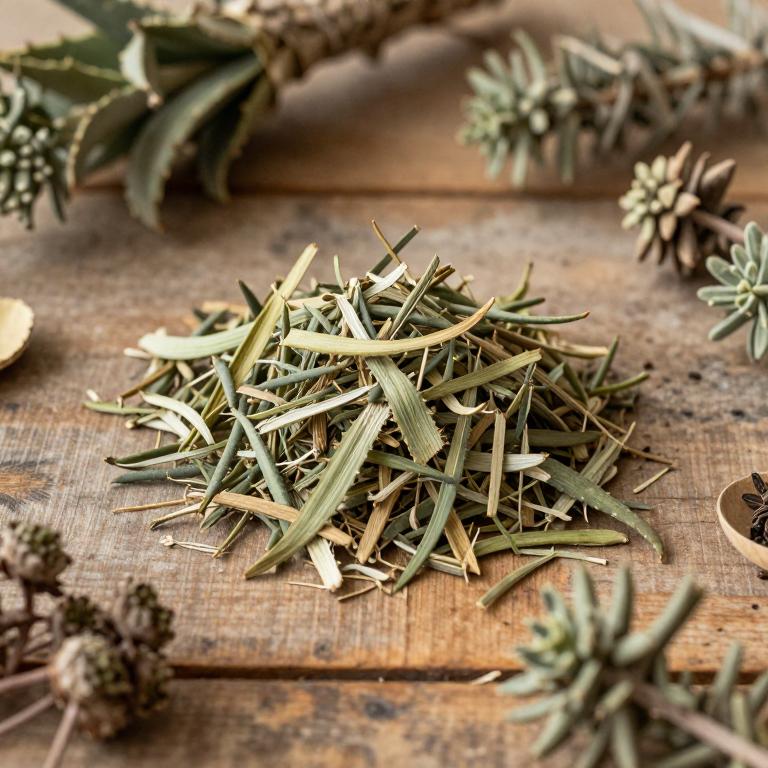
Aloe rabaienensis, scientifically known as Aloe rabaienensis, is a distinctive succulent native to Madagascar. Characterized by its fleshy, pointed leaves and unique growth habit, this medicinal plant is valued in traditional practices. It offers significant botanical interest for its potential therapeutic properties and its role in local ecosystems.
- Family
- Asphodelaceae
- Native range
- Africa
- Parts used
- Leaf
- Common names
- Not available
- Scientific synonyms
- Not available
Names and Synonyms
Scientific Names
Accepted name
Aloe rabaiensisSources: Wikidata
Taxonomical Classification
This plant, known scientifically as Aloe rabaienensis, belongs to the kingdom Plantae within the phylum Streptophyta. It is classified under the class Equisetopsida and subclass Magnoliidae, following the order Asparagales. Furthermore, it is a member of the family Asphodelaceae and falls under the genus Aloe.
| Rank | Classification |
|---|---|
| Kingdom | Plantae |
| Phylum | Streptophyta |
| Class | Equisetopsida |
| Subclass | Magnoliidae |
| Order | Asparagales |
| Family | Asphodelaceae |
| Genus | Aloe |
Sources: The World Checklist of Vascular Plants (WCVP)
Distribution
This plant is found within specific regions of the African continent. Its geographical range extends into Northeast Tropical Africa, where it can be found in Somalia. Furthermore, the species is distributed across East Tropical Africa. Within this eastern zone, it inhabits the territories of both Kenya and Tanzania. Consequently, its natural habitat is concentrated in these specific tropical locales.
| Region | Area |
|---|---|
| Northeast Tropical Africa | Somalia |
| East Tropical Africa | Kenya |
| East Tropical Africa | Tanzania |
Sources: The World Checklist of Vascular Plants (WCVP)
Botanical Identification
Ecology
The ecology of Aloe rabaienensis is defined by its specialized adaptation to rocky bushland environments. Within these rugged landscapes, the plant thrives in niches characterized by stony substrates and intermittent moisture, where its root systems are adapted to anchor firmly amidst rock crevices. This specific habitat provides a unique microclimate that balances necessary sunlight exposure with the structural protection offered by surrounding scrub vegetation. By occupying these rocky bushland territories, Aloe rabaienensis effectively utilizes the drainage patterns and thermal properties of the rocky terrain to support its growth cycles.
- Habitat :
- rocky bushland
Life history
The life history of Aloe rabaienensis is characterized by its status as a perennial species, allowing it to persist through multiple growing seasons. In terms of its structural growth and ecological positioning, it exhibits a dual classification of life forms; it functions as a phanerophyte, maintaining its shoot system above the ground, while also demonstrating characteristics of a nanophanerophyte. Throughout its existence, the plant maintains an evergreen deciduousness, ensuring that its foliage remains functional and green across different seasonal cycles rather than shedding leaves annually.
- Deciduousness :
- evergreen
- Life form :
- nanophanerophyte
- Life form :
- phanerophyte
- Lifecycle :
- perennial
Morphology
The morphology of Aloe rabaienensis is characterized by its stature as a shrubby plant with a mean height of approximately 1.75 m. It exhibits a woody structure and functions as a self-supporting organism, rather than a climber. As a terrestrial species, it does not inhabit aquatic or semiaquatic environments, nor does it grow as an epiphyte. The plant operates as an independent organism, showing no parasitic tendencies.
- Aquatic :
- terrestrial
- Climber :
- self-supporting
- Epiphyte :
- terrestrial
- Growth form :
- shrub
- Parasite :
- independent
- Plant height mean:
- 1.75 m
- Woodiness :
- woody
Physiology
The physiology of Aloe rabaienensis is characterized by specialized metabolic processes adapted for survival in arid environments, primarily driven by Crassulacean Acid Metabolism (CAM). This photosynthetic pathway allows the plant to conserve water by opening its stomata at night to uptake carbon dioxide, which is then stored as malic acid, and processing it through the Calvin cycle during the day while stomata remain closed. The plant's internal structure features large, water-storing parenchymatous cells within its succulent leaves, which facilitate osmotic regulation and maintain turgor pressure during prolonged dry periods. Regarding its nutrient acquisition and symbiotic relationships, Aloe rabaienensis is not a nitrogen fixer; it lacks the specialized root nodules or symbiotic associations with diazotrophic bacteria required to convert atmospheric nitrogen into biologically available forms, relying instead on the uptake of nitrates and ammonium from the surrounding soil substrate.
- Nitrogen fixer :
- no
Reproduction
Reproduction in Aloe rabaienis is primarily achieved through the production of seeds, which play a critical role in the dispersal and colonization of new habitats. The seeds produced by this species are characterized by extreme uniformity in their physical dimensions, specifically regarding their weight. Quantitative analysis of the seed mass reveals a highly consistent profile, with a mean seed mass of 9e-04 g. This consistency is reflected in the extreme values of the dataset, as both the maximum and minimum recorded seed masses are also 9e-04 g, indicating a lack of significant variation in mass among the individual seeds. This precise measurement suggests a highly regulated reproductive process aimed at producing standardized offspring for successful germination within its ecological niche.
- Seed mass mean:
- 9e-04 g
Sources: Global Inventory of Floras and Traits (GIFT)
Plant Parts
Aloe rabaiensis has 1 reported plant parts identified across 1 scientific publications and several other databases that are studied for medicinal purposes. The most consistently reported plant part include leaf.
| Plant part | Supporting sources | Consensus |
|---|---|---|
| Leaf | 1 supporting sources | ★☆☆☆☆ |
Leaf
- Veterinary medicine international
Chemicals
Aloe rabaiensis has 1 reported phytochemicals identified across 1 scientific publications and several other databases. The most consistently reported chemicals include ETHYL ACETATE.
| Chemical | Supporting sources | Consensus |
|---|---|---|
| ETHYL ACETATE | 1 supporting sources | ★☆☆☆☆ |
ETHYL ACETATE
- Veterinary medicine international
Activities
Aloe rabaiensis has 1 reported activities identified across 1 scientific publications and several other databases. The most consistently reported activities include Antimicrobial.
| Activity | Supporting sources | Consensus |
|---|---|---|
| Antimicrobial | 1 supporting sources | ★☆☆☆☆ |
Antimicrobial
- Veterinary medicine international
Preparations
Aloe rabaiensis has 2 reported preparations identified across 1 scientific publications and several other databases. The most consistently reported preparations include leaf ethyl acetate (ArLEA), leaf methanolic (ArM).
| Preparation | Supporting sources | Consensus |
|---|---|---|
| Leaf ethyl acetate (arlea) | 1 supporting sources | ★☆☆☆☆ |
| Leaf methanolic (arm) | 1 supporting sources | ★☆☆☆☆ |
Leaf ethyl acetate (arlea)
- Veterinary medicine international
Leaf methanolic (arm)
- Veterinary medicine international