Aloe purpurea
Aloe purpurea · Accepted scientific name
Scientific literature: Very Sparse (9 studies) · ★☆☆☆☆
Aloe purpurea, scientifically known as Aloe purpurea, is a striking succulent native to South Africa. Distinguished by its fleshy, serrated leaves and vibrant, bell-shaped pink flowers, this medicinal plant is valued for its unique properties. It is traditionally utilized in herbal remedies to support skin health and digestive wellness.
- Family
- Asphodelaceae
- Native range
- Africa
- Parts used
- Leaf
- Common names
- Not available
- Scientific synonyms
- Lomatophyllum Saundersii · Aloe Rufocincta · 10 more
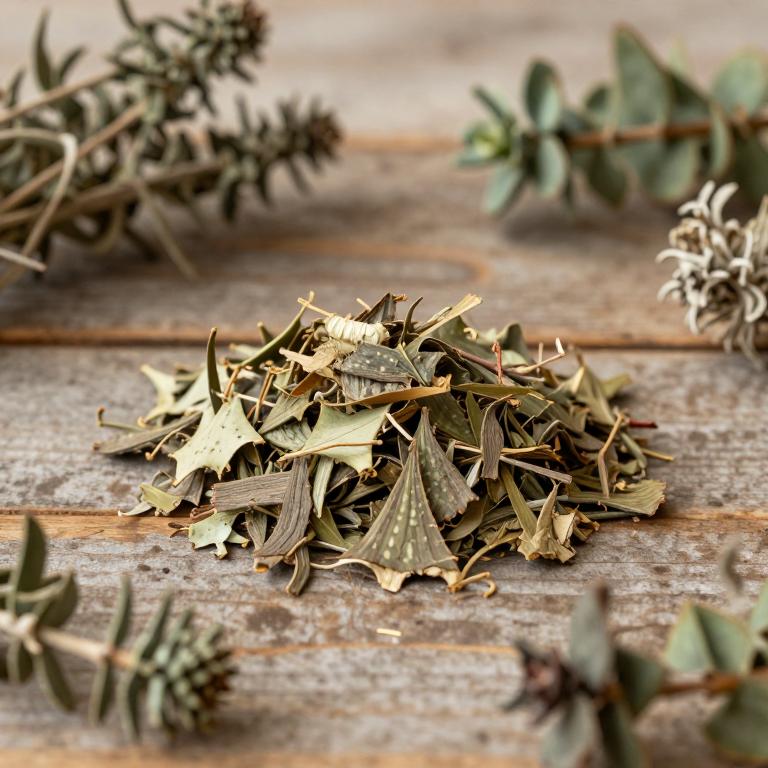
Names and Synonyms
Scientific Names
Accepted name
Aloe purpureaSynonyms
- Lomatophyllum saundersii
- Aloe rufocincta
- Lomatophyllum marginatum
- Drakaina marginata
- Lomatophyllum aloiflorum
- Dracaena foetida
- Lomatophyllum borbonicum
- Lomatophyllum purpureum
- Lomatophyllum rufocinctum
- Phylloma rufocinctum
- Phylloma aloiflorum
- Phylloma borbonicum
Regional and Traditional Names
French:
- Aloès pourpre
- Socotrine du pays
- Aloès pourpre
Sources: Wikidata, Catalogue of Life
Taxonomical Classification
This plant belongs to the kingdom Plantae and is classified under the phylum Streptophyta and the class Equisetopsida. Within the subclass Magnoliidae, it falls under the order Asparagales and the family Asphodelaceae. Finally, it is specifically categorized under the genus Aloe.
| Rank | Classification |
|---|---|
| Kingdom | Plantae |
| Phylum | Streptophyta |
| Class | Equisetopsida |
| Subclass | Magnoliidae |
| Order | Asparagales |
| Family | Asphodelaceae |
| Genus | Aloe |
Sources: The World Checklist of Vascular Plants (WCVP)
Distribution
This plant is found within the specific ecological zone of the Western Indian Ocean. Its documented presence is notably limited to the island nation of Mauritius. Within this tropical maritime environment, the species occupies a very restricted geographical range. This localized distribution makes the plant a unique component of the regional flora. Consequently, its existence is closely tied to the specific climatic conditions of this oceanic territory.
| Region | Area |
|---|---|
| Western Indian Ocean | Mauritius |
Sources: The World Checklist of Vascular Plants (WCVP)
Botanical Identification
Life history
The life history of Aloe purpurea is characterized by its distinct structural adaptations and growth strategies, primarily functioning as a phanerophyte due to its ability to maintain its photosynthetic organs above the ground level. Within its ecological niche, it exhibits specialized life form characteristics that can be classified as a nanophanerophyte, reflecting its compact, succulent growth habit where the stems or leaf bases remain relatively low to the ground while still being elevated above the soil surface. This growth strategy allows the plant to manage moisture effectively and survive in its specific environmental conditions, utilizing its perennial nature to persist through varying seasonal cycles.
- Life form :
- nanophanerophyte
- Life form :
- phanerophyte
Morphology
The morphology of Aloe purpurea is characterized by a non-woody structure, as it lacks true woody tissue and instead relies on succulent, fleshy components for support and storage. Unlike climbing species, it is not a climber, maintaining a self-supporting growth habit that allows it to stand upright without the need for external structures. The plant is entirely independent in its nutritional requirements, functioning as a non-parasite that does not rely on a host for survival. Furthermore, it is a terrestrial species rather than an epiphyte, establishing its root system directly in the soil of its natural habitat.
- Climber :
- self-supporting
- Epiphyte :
- terrestrial
- Parasite :
- independent
- Woodiness :
- non-woody
Sources: Global Inventory of Floras and Traits (GIFT)
Plant Parts
Aloe purpurea has 1 reported plant parts identified across 1 scientific publications and several other databases that are studied for medicinal purposes. The most consistently reported plant part include leaf.
| Plant part | Supporting sources | Consensus |
|---|---|---|
| Leaf | 1 supporting sources | ★☆☆☆☆ |
Leaf
- Sheng wu gong cheng xue bao = Chinese journal of biotechnology
Chemicals
Aloe purpurea has 7 reported phytochemicals identified across 1 scientific publications and several other databases. The most consistently reported chemicals include Anthraquinones, Chromones, arabinose, fucose, galactose.
| Chemical | Supporting sources | Consensus |
|---|---|---|
| Anthraquinones | 1 supporting sources | ★☆☆☆☆ |
| Chromones | 1 supporting sources | ★☆☆☆☆ |
| arabinose | 1 supporting sources | ★☆☆☆☆ |
| fucose | 1 supporting sources | ★☆☆☆☆ |
| galactose | 1 supporting sources | ★☆☆☆☆ |
| mannose | 1 supporting sources | ★☆☆☆☆ |
| xylose | 1 supporting sources | ★☆☆☆☆ |
Anthraquinones
- Fitoterapia
Chromones
- Fitoterapia
arabinose
- Fitoterapia
fucose
- Fitoterapia
galactose
- Fitoterapia
mannose
- Fitoterapia
xylose
- Fitoterapia
Conditions
Aloe purpurea has 1 reported investigations on conditions identified across 1 scientific publications and several other databases. The most consistently reported conditions include wound healing.
| Condition | Supporting sources | Consensus |
|---|---|---|
| Wound healing | 1 supporting sources | ★☆☆☆☆ |
Wound healing
- Fitoterapia