Aloe pulcherrima
Aloe pulcherrima · Accepted scientific name
Scientific literature: Very Sparse (9 studies) · ★☆☆☆☆
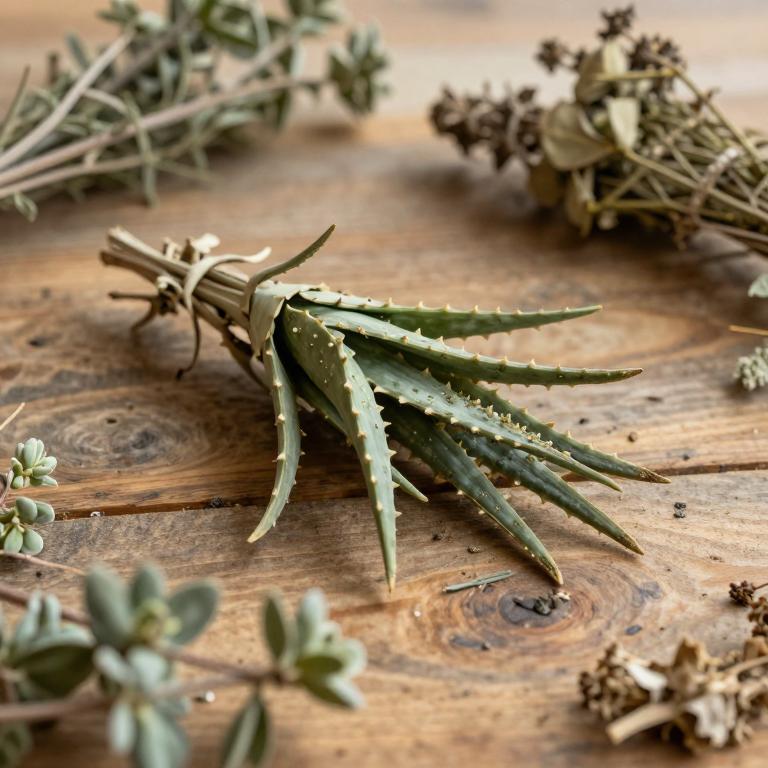
Aloe pulcherrima, scientifically known as Aloe pulcherrima, is a stunning succulent celebrated for its striking, spiny leaves and vibrant blooms. Beyond its ornamental appeal, this resilient plant holds significant medicinal potential, traditionally utilized in various cultures for its soothing properties and healing capabilities in treating skin ailments and inflammation.
- Family
- Asphodelaceae
- Native range
- Africa
- Parts used
- Root
- Common names
- Not available
- Scientific synonyms
- Not available
Names and Synonyms
Scientific Names
Accepted name
Aloe pulcherrimaSources: Wikidata
Taxonomical Classification
This plant belongs to the kingdom Plantae and the phylum Streptophyta, falling within the class Equisetopsida and subclass Magnoliidae. It is further classified under the order Asparagales and the family Asphodelaceae. Ultimately, its taxonomic identity is defined by the genus Aloe.
| Rank | Classification |
|---|---|
| Kingdom | Plantae |
| Phylum | Streptophyta |
| Class | Equisetopsida |
| Subclass | Magnoliidae |
| Order | Asparagales |
| Family | Asphodelaceae |
| Genus | Aloe |
Sources: The World Checklist of Vascular Plants (WCVP)
Distribution
This plant is primarily characterized by a very limited and specific range within the wild. Its known geographical distribution is centered in the Northeast Tropical Africa region. Within this broad area, the species is specifically documented to occur in Ethiopia. Because of this localized presence, it is considered a geographically restricted succulent. Consequently, its natural habitat is confined to these particular environmental conditions in the Ethiopian landscape.
| Region | Area |
|---|---|
| Northeast Tropical Africa | Ethiopia |
Sources: The World Checklist of Vascular Plants (WCVP)
Botanical Identification
Life history
The life history of Aloe pulcherrima is characterized by its status as a perennial organism, allowing it to persist through multiple growing seasons rather than completing its cycle within a single year. As a chamaephyte, its regenerative buds are positioned close to or just above the soil surface, a structural adaptation that influences its growth habit and resilience within its ecological niche. Furthermore, the plant maintains an evergreen deciduousness, ensuring that its foliage remains functional and green throughout the year, providing continuous photosynthetic activity without the need for seasonal leaf shedding.
- Deciduousness :
- evergreen
- Life form :
- chamaephyte
- Lifecycle :
- perennial
Morphology
The morphology of Aloe pulcherrima is characterized by a shrub-like growth form, typically reaching an average plant height of 0.8 m. As a woody species, it possesses a sturdy structure that allows it to function as a self-supporting plant rather than a climber. It is an independent organism that does not exhibit parasitic behavior, and its ecological habit is strictly terrestrial, growing in soil rather than as an epiphyte.
- Climber :
- self-supporting
- Epiphyte :
- terrestrial
- Growth form :
- shrub
- Parasite :
- independent
- Plant height mean:
- 0.8 m
- Woodiness :
- woody
Physiology
The physiology of Aloe pulcherrima is characterized by its specialized succulent adaptations designed for moisture conservation and efficient metabolic processing in arid environments. As a member of the Asphodelaceae family, it utilizes Crassulacean Acid Metabolism (CAM) to facilitate gas exchange, allowing the plant to open its stomata primarily at night to minimize transpirational water loss while accumulating carbon dioxide in the form of organic acids. This metabolic pathway is complemented by its thick, fleshy leaves which serve as primary water storage organs, maintaining cellular turgor through highly specialized parenchymatous tissue. The plant's nutrient acquisition is strictly dependent on the mineral content of the soil and organic decomposition, as it is not a nitrogen fixer; therefore, it lacks the symbiotic relationship with diazotrophic bacteria required for atmospheric nitrogen conversion. Its physiological processes are further supported by a robust root system capable of rapid moisture absorption following sporadic rainfall, ensuring that the metabolic demands of its slow-growing, perennial lifecycle are met through efficient internal resource management.
- Nitrogen fixer :
- no
Sources: Global Inventory of Floras and Traits (GIFT)
Plant Parts
Aloe pulcherrima has 1 reported plant parts identified across 1 scientific publications and several other databases that are studied for medicinal purposes. The most consistently reported plant part include root.
| Plant part | Supporting sources | Consensus |
|---|---|---|
| Root | 1 supporting sources | ★☆☆☆☆ |
Root
- PloS one
Chemicals
Aloe pulcherrima has 3 reported phytochemicals identified across 1 scientific publications and several other databases. The most consistently reported chemicals include Aloesaponarin II, Chrysophanol, aloesaponarin I.
| Chemical | Supporting sources | Consensus |
|---|---|---|
| Aloesaponarin II | 1 supporting sources | ★☆☆☆☆ |
| Chrysophanol | 1 supporting sources | ★☆☆☆☆ |
| aloesaponarin I | 1 supporting sources | ★☆☆☆☆ |
Aloesaponarin II
- PloS one
Chrysophanol
- PloS one
aloesaponarin I
- PloS one
Activities
Aloe pulcherrima has 2 reported activities identified across 1 scientific publications and several other databases. The most consistently reported activities include Antibacterial, Antiplasmodial.
| Activity | Supporting sources | Consensus |
|---|---|---|
| Antibacterial | 1 supporting sources | ★☆☆☆☆ |
| Antiplasmodial | 1 supporting sources | ★☆☆☆☆ |
Antibacterial
- PloS one
Antiplasmodial
- PloS one
Conditions
Aloe pulcherrima has 3 reported investigations on conditions identified across 1 scientific publications and several other databases. The most consistently reported conditions include malaria, urolithiasis, wound healing.
| Condition | Supporting sources | Consensus |
|---|---|---|
| Malaria | 1 supporting sources | ★☆☆☆☆ |
| Urolithiasis | 1 supporting sources | ★☆☆☆☆ |
| Wound healing | 1 supporting sources | ★☆☆☆☆ |
Malaria
- PloS one
Urolithiasis
- Toxicology reports
Wound healing
- PloS one
Preparations
Aloe pulcherrima has 1 reported preparations identified across 1 scientific publications and several other databases. The most consistently reported preparations include acetone extracts of roots of A. pulcherrima.
| Preparation | Supporting sources | Consensus |
|---|---|---|
| Acetone extracts of roots of a. pulcherrima | 1 supporting sources | ★☆☆☆☆ |
Acetone extracts of roots of a. pulcherrima
- PloS one