Aloe microstigma subsp. microstigma
Aloe microstigma subsp. microstigma · Accepted scientific name
Scientific literature: Very Sparse (0 studies) · ★☆☆☆☆
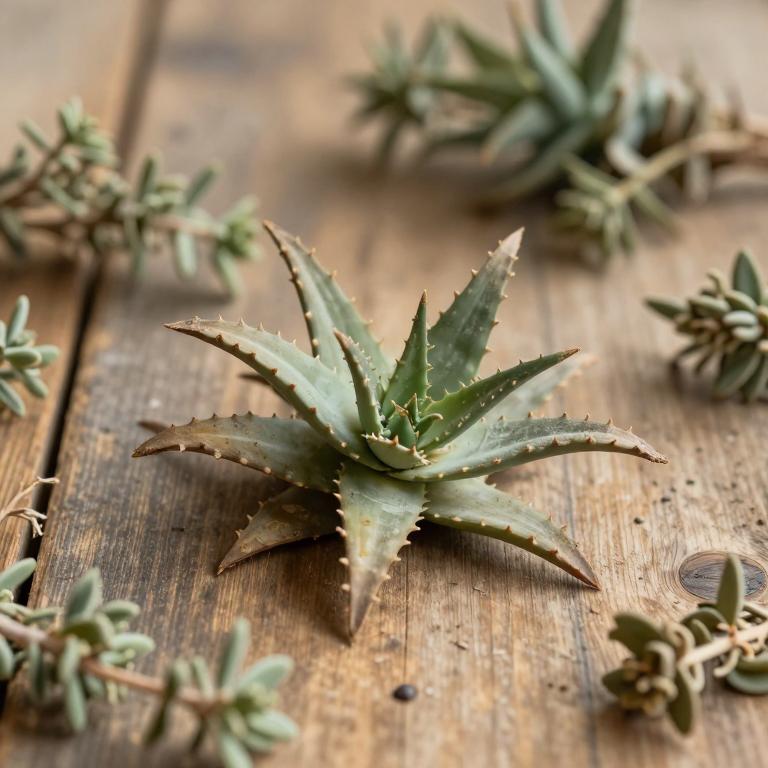
Aloe microstigma subsp. microstigma is a distinctive succulent species native to the arid regions of Southern Africa. This plant is characterized by its compact growth habit and striking floral displays that attract various pollinators. One of its most notable biological features is the presence of specialized glycoproteins within its tissues. These chemical compounds play a vital role in the plant's complex physiological processes and environmental adaptations. Understanding this subspecies provides valuable insight into the unique evolutionary strategies of the Aloe genus.
- Synonyms
- Aloe Brunnthaleri · Aloe Obscura · 5 more
- Common names
- Not available
- Family
- Asphodelaceae
- Distribution
- Asia-Temperate
- Plant Parts
- Not available
Classification
Common Names
Aloe microstigma subsp. microstigma is a versatile succulent known by a variety of distinct regional names. Many enthusiasts and botanists fondly refer to this species as the Cape Speckled Aloe due to its unique appearance. It is also frequently called the Aloeboom, a name that captures its striking form. In certain local contexts, you may hear it described as the Tweederly or the Wilde-aalwyn. Regardless of which common name is used, this plant remains a celebrated member of its genus.
Sources: Catalogue of Life (COL)
Synonyms
Aloe microstigma subsp. microstigma is a complex botanical entity that has been classified under several different names throughout history. Scientific literature identifies this subspecies through various synonyms, including the name Aloe brunnthaleri. It is also frequently associated with the synonym Aloe obscura, a connection that highlights its taxonomic intricacies. Furthermore, the plant has been referred to as Aloe perfoliata var. obscura and Aloe perfoliata var. saponaria in previous studies. Completing this diverse list of nomenclature is the synonym Aloe picta, illustrating the extensive range of names used to describe this single taxon.
Sources: The World Checklist of Vascular Plants (WCVP)
Taxonomy
Aloe microstigma subsp. microstigma belongs to the diverse kingdom Plantae, marking its place among the world's many botanical species. Within this vast kingdom, it is classified under the class Equisetopsida and the order Asparagales. This specific plant is a distinguished member of the family Asphodelaceae, showcasing its unique evolutionary lineage. Furthermore, it is categorized under the well-known genus Aloe, which defines many of its physical characteristics. Understanding these biological relationships provides essential insight into the scientific identity of this particular subspecies.
| Rank | Classification |
|---|---|
| Kingdom | Plantae |
| Phylum | Streptophyta |
| Class | Equisetopsida |
| Subclass | Magnoliidae |
| Order | Asparagales |
| Family | Asphodelaceae |
| Genus | Aloe |
Sources: The World Checklist of Vascular Plants (WCVP)
Distribution
Geographic Regions
Aloe microstigma subsp. microstigma is a distinctive succulent species primarily found across the African continent. Its natural distribution is concentrated within the diverse landscapes of Southern Africa. More specifically, the plant thrives throughout the unique ecological niches of the Cape Provinces. This regional presence highlights its specialized adaptation to the specific climates found in these southern reaches. Understanding its geographical range is essential for appreciating the botanical heritage of the region.
Sources: The World Checklist of Vascular Plants (WCVP)
Identification
Biological Activities
Compounds
Aloe microstigma subsp. microstigma contains glycoprotein, a discovery that highlights the complex biochemical makeup of certain Aloe species. Research into related Aloe varieties suggests that these specific substances can possess significant biological activities. In particular, certain glycoproteins have been identified as having antibradykinin activity within the plant pulp. These molecules function by catalyzing the hydrolysis of bradykinin, effectively breaking specific peptide bonds. Such findings underscore the potential therapeutic importance of the diverse chemical compounds found within these succulents.
Conditions
Aloe microstigma subsp. microstigma treats antibradykinin activity through the presence of specific active materials. These materials, which are identified as glycoproteins, function by catalyzing the hydrolysis of bradykinin molecules. Scientific analysis suggests that these glycoproteins specifically cleave the Gly4-Phe5 and Pro7-Phe8 bonds. This biochemical process occurs effectively at a pH of 7.4 within the biological environment. Consequently, the plant's pulp contains these specialized substances that actively reduce bradykinin levels.