Aloe marlothii subsp. marlothii
Aloe marlothii subsp. marlothii · Accepted scientific name
Scientific literature: Very Sparse (0 studies) · ★☆☆☆☆
Aloe marlothii subsp. marlothii, commonly known as the Mountain Aloe, is a formidable succulent native to the arid landscapes of Southern Africa. This impressive plant is characterized by its thick, fleshy leaves lined with sharp teeth, serving as a natural defense in its rugged habitat. Beyond its striking physical presence, various traditional medicinal practices have historically utilized different parts of the aloe to address various physiological imbalances. Emerging research continues to explore how specific bioactive compounds found in such succulents might influence metabolic health. Consequently, its botanical properties remain a subject of significant interest for those studying natural approaches to managing conditions like Diabetes Mellitus.
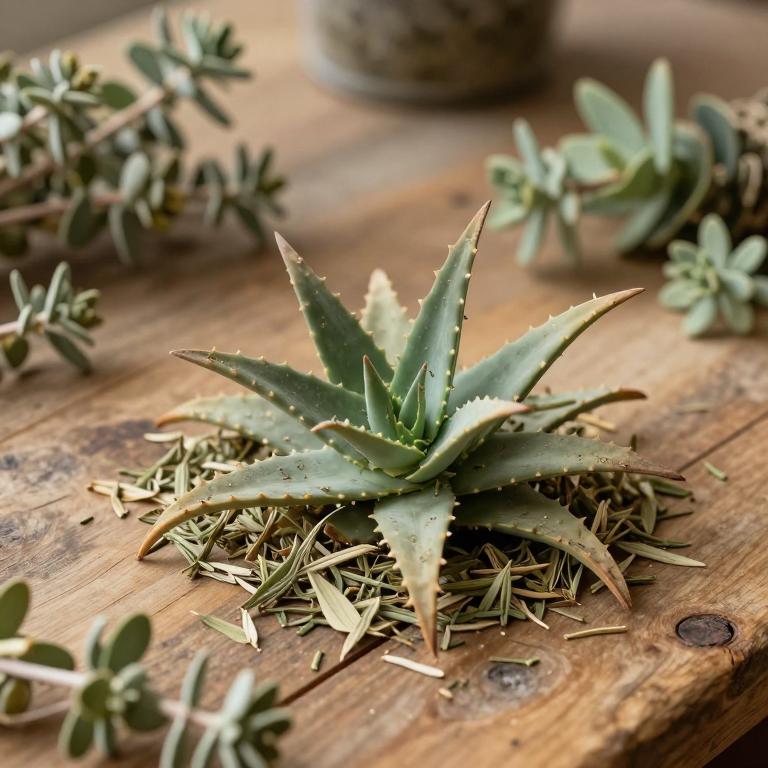
- Synonyms
- Aloe Supralaevis Var. Hanburyi · Aloe Marlothii Var. Bicolor · 1 more
- Common names
- Not available
- Family
- Asphodelaceae
- Distribution
- Africa
- Plant Parts
- Not available
Classification
Common Names
Aloe marlothii subsp. marlothii is a remarkable succulent known by several distinct regional names. Commonly referred to as the Berg-Aloe or Bergaalwyn, it holds a significant place in various local landscapes. It is also frequently identified as the Flat-Flowered Aloe, a name that highlights its unique botanical characteristics. In certain areas, enthusiasts and locals may call it the Transvaal Aloe. Finally, it is recognized by the traditional name bindamutsho, showcasing the diverse linguistic heritage associated with this plant.
Sources: Catalogue of Life (COL)
Synonyms
Aloe marlothii subsp. marlothii is a complex botanical entity with several documented taxonomic synonyms. One recognized variation is Aloe ferox var. xanthostachys, which reflects its close evolutionary ties to other aloe species. The plant is also associated with the name Aloe marlothii var. bicolor in certain scientific records. Furthermore, researchers have linked it to Aloe supralaevis var. hanburyi, illustrating the intricate nature of its classification. Understanding these relationships is essential for accurate botanical identification and study.
Sources: The World Checklist of Vascular Plants (WCVP)
Taxonomy
Aloe marlothii subsp. marlothii is a fascinating organism that belongs to the vast kingdom Plantae. Within this biological realm, it is classified under the class Equisetopsida. The plant further belongs to the order Asparagales, showcasing its specific evolutionary path. It is a distinguished member of the genus Aloe, which is well-known for its unique succulent characteristics. Finally, its taxonomic journey concludes within the family Asphodelaceae, defining its place in the natural world.
| Rank | Classification |
|---|---|
| Kingdom | Plantae |
| Phylum | Streptophyta |
| Class | Equisetopsida |
| Subclass | Magnoliidae |
| Order | Asparagales |
| Family | Asphodelaceae |
| Genus | Aloe |
Sources: The World Checklist of Vascular Plants (WCVP)
Distribution
Geographic Regions
Aloe marlothii subsp. marlothii is a resilient succulent primarily distributed across the vast landscapes of Southern Africa. Its natural range extends through various territories, including the nation of Botswana and the kingdom of Eswatini. Within South Africa, this subspecies is frequently encountered across several key regions. It thrives in the diverse environments of the Free State, KwaZulu-Natal, and the Northern Provinces. This wide geographical spread highlights the plant's ability to adapt to the unique climates found throughout the African continent.
Sources: The World Checklist of Vascular Plants (WCVP)
Identification
Biological Activities
Compounds
Conditions
Aloe marlothii subsp. marlothii is identified as one of the key plant species used by Bapedi traditional healers to manage diabetes mellitus. In an ethnobotanical survey conducted in the Limpopo Province of South Africa, this specific plant was repeatedly mentioned by healers for its medicinal properties. It belongs to a group of twenty-four plant species utilized in various management protocols to treat the condition. Along with other plants like Moringa oleifera, it plays a significant role in the phytomedicine practices of the local community. The use of such species highlights the traditional knowledge applied by healers to address diabetes mellitus through natural extracts.