Aloe longibracteata
Aloe longibracteata · Accepted scientific name
Scientific literature: Very Sparse (5 studies) · ★☆☆☆☆
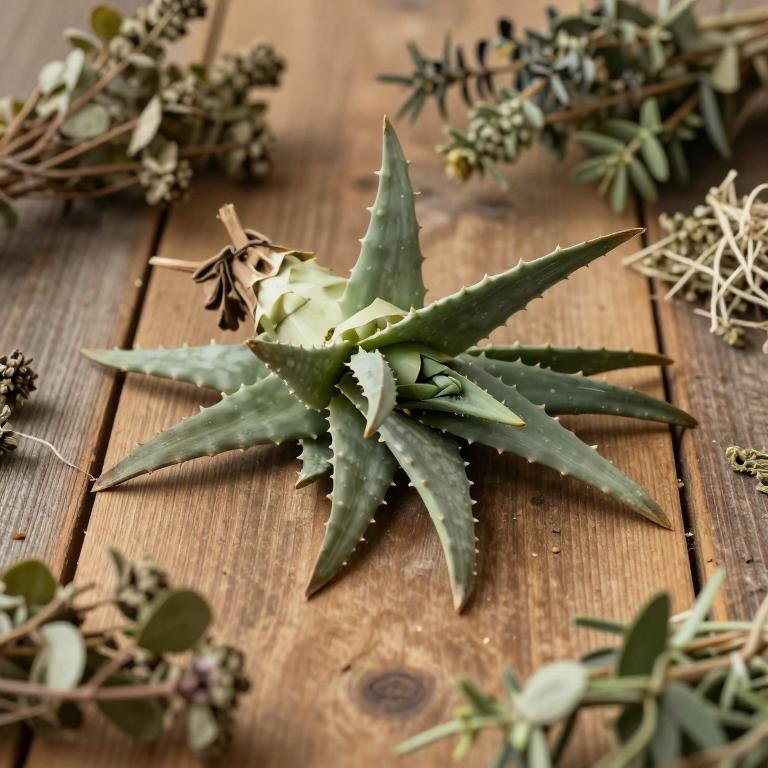
, scientifically known as Aloe longibracteata, is a distinctive succulent species native to specific arid regions. Characterized by its elongated bracts and robust leaves, this medicinal plant offers unique therapeutic potential. Researchers study its bioactive compounds for their antioxidant and anti-inflammatory properties, highlighting its importance in traditional herbal medicine.
- Family
- Asphodelaceae
- Native range
- Africa
- Parts used
- Not available
- Common names
- Not available
- Scientific synonyms
- Not available
Names and Synonyms
Scientific Names
Accepted name
Aloe longibracteataSources: Wikidata, Catalogue of Life
Taxonomical Classification
This plant belongs to the kingdom Plantae and is classified under the phylum Streptophyta and the class Equisetopsida. Within the subclass Magnoliidae and the order Asparagales, it is a member of the family Asphodelaceae. Finally, it is specifically identified under the genus Aloe.
| Rank | Classification |
|---|---|
| Kingdom | Plantae |
| Phylum | Streptophyta |
| Class | Equisetopsida |
| Subclass | Magnoliidae |
| Order | Asparagales |
| Family | Asphodelaceae |
| Genus | Aloe |
Sources: The World Checklist of Vascular Plants (WCVP)
Distribution
This plant is primarily found within the specific environmental landscapes of Southern Africa. Its natural habitat is concentrated in the Northern Provinces of this region. Within these territories, the species thrives in particular soil types and climatic conditions. This localized presence makes it a distinct component of the regional flora. Therefore, its geographical range remains relatively restricted to these specific southern locations.
| Region | Area |
|---|---|
| Southern Africa | Northern Provinces |
Sources: The World Checklist of Vascular Plants (WCVP)
Botanical Identification
Life history
The life history of Aloe longibracteata is characterized by its classification as a hemicryptophyte, a growth form where the perennating buds are located at or just below the soil surface, protected by a layer of leaf litter or substrate. This life strategy allows the plant to endure seasonal environmental fluctuations by protecting its vital regenerative tissues from desiccation and temperature extremes. Within the broader spectrum of plant life forms, it functions as a hemicryptophyte, ensuring its survival through periods of dormancy before emerging to produce its distinctive succulent foliage and elongated bracts. This physiological adaptation enables the species to maintain a perennial presence in its habitat, balancing resource conservation during dry intervals with rapid growth when favorable conditions arise.
- Life form :
- hemicryptophyte
Morphology
The morphology of Aloe longibracteata is characterized by its growth form as a herb, displaying a non-woody structure throughout its development. It functions as an independent organism, meaning it lacks any parasitic tendencies, and it maintains a terrestrial existence rather than an epiphytic one. In terms of its physical support and habit, the plant does not exhibit any climbing behavior, remaining as a self-supporting individual.
- Climber :
- self-supporting
- Epiphyte :
- terrestrial
- Growth form :
- herb
- Parasite :
- independent
- Woodiness :
- non-woody
Sources: Global Inventory of Floras and Traits (GIFT)
Chemicals
Aloe longibracteata has 5 reported phytochemicals identified across 0 scientific publications and several other databases. The most consistently reported chemicals include 5-Hydroxyindole-3-acetate, allantoin, indole-3-acetate, myo-inositol, tyrosine.
| Chemical | Supporting sources | Consensus |
|---|---|---|
| 5-Hydroxyindole-3-acetate | 1 supporting sources | ★☆☆☆☆ |
| allantoin | 1 supporting sources | ★☆☆☆☆ |
| indole-3-acetate | 1 supporting sources | ★☆☆☆☆ |
| myo-inositol | 1 supporting sources | ★☆☆☆☆ |
| tyrosine | 1 supporting sources | ★☆☆☆☆ |
5-Hydroxyindole-3-acetate
- AMB Express
allantoin
- AMB Express
indole-3-acetate
- AMB Express
myo-inositol
- AMB Express
tyrosine
- AMB Express