Rodrigues aloe
Aloe lomatophylloides · Accepted scientific name
Scientific literature: Very Sparse (2 studies) · ★☆☆☆☆
Rodrigues aloe, scientifically known as Aloe lomatophylloides, is a rare, succulent species endemic to the island of Rodrigues. Distinguished by its unique, thick leaves and striking flowering spikes, this resilient plant plays a vital role in its native ecosystem, offering significant botanical interest and potential medicinal value in traditional practices.
- Family
- Asphodelaceae
- Native range
- Africa
- Parts used
- Not available
- Common names
- Rodrigues Aloe
- Scientific synonyms
- Lomatophyllum Lomatophylloides
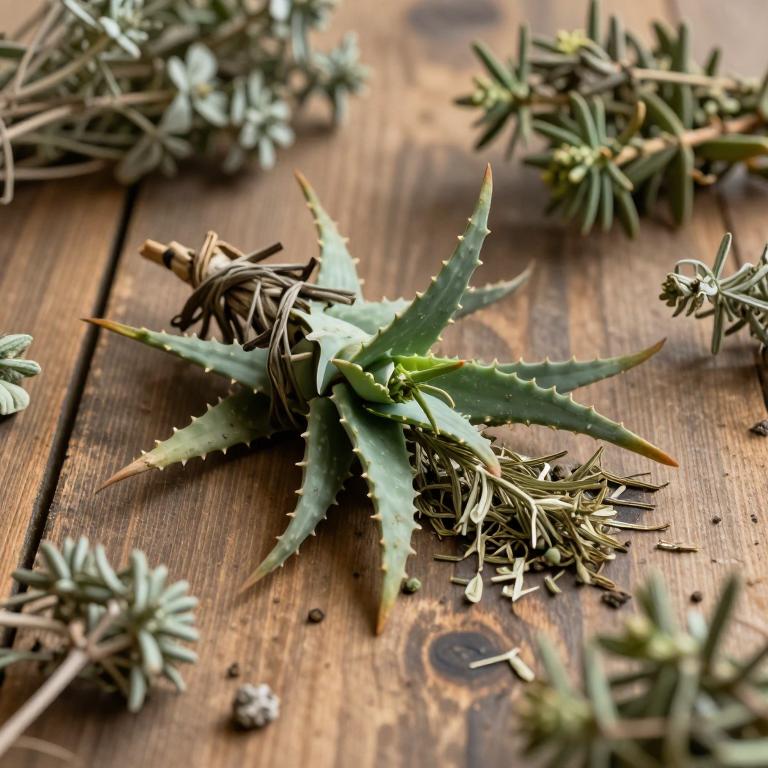
Names and Synonyms
Common Names
- Rodrigues aloe
Scientific Names
Accepted name
Aloe lomatophylloidesSynonyms
- Lomatophyllum lomatophylloides
Sources: Wikidata, Catalogue of Life
Taxonomical Classification
This plant belongs to the kingdom Plantae within the phylum Streptophyta and the class Equisetopsida. It is classified under the subclass Magnoliidae and the order Asparagales, falling into the family Asphodelaceae. Finally, it is categorized under the genus Aloe as the species Aloe lomatophylloides.
| Rank | Classification |
|---|---|
| Kingdom | Plantae |
| Phylum | Streptophyta |
| Class | Equisetopsida |
| Subclass | Magnoliidae |
| Order | Asparagales |
| Family | Asphodelaceae |
| Genus | Aloe |
Sources: The World Checklist of Vascular Plants (WCVP)
Distribution
This plant is characterized by a very restricted and specific natural range. It is found exclusively within the Western Indian Ocean region. Specifically, its distribution is limited to the island of Rodrigues. Due to this localized habitat, the species is considered an endemic treasure of the area. Protecting this unique geographical niche is essential for the survival of the species.
| Region | Area |
|---|---|
| Western Indian Ocean | Rodrigues |
Sources: The World Checklist of Vascular Plants (WCVP)
Botanical Identification
Life history
The life history of Aloe lomatophylloides is characterized by its status as a perennial plant, ensuring its long-term presence within its ecological niche. As a chamaephyte, it maintains its photosynthetic structures close to the ground, a growth form that provides resilience against environmental stressors. Furthermore, the species exhibits an evergreen deciduousness, retaining its foliage throughout various seasons to maintain continuous metabolic activity.
- Deciduousness :
- evergreen
- Life form :
- chamaephyte
- Lifecycle :
- perennial
Morphology
The morphology of Aloe lomatophylloides is characterized by a shrub-like growth form that typically reaches a mean plant height of approximately 0.4 m. As a woody species, it possesses a structural rigidity that allows it to function as a self-supporting plant rather than a climber. It is an independent organism that does not exhibit parasitic behavior, thriving instead as a terrestrial plant within its natural habitat.
- Climber :
- self-supporting
- Epiphyte :
- terrestrial
- Growth form :
- shrub
- Parasite :
- independent
- Plant height mean:
- 0.4 m
- Woodiness :
- woody
Physiology
The physiology of Aloe lomatophylloides is characterized by specialized metabolic pathways designed for survival in arid and semi-arid environments, primarily utilizing Crassulacean Acid Metabolism (CAM) to optimize water-use efficiency. Through this photosynthetic pathway, the plant opens its stomata at night to collect carbon dioxide, which is stored as malic acid, allowing for gas exchange while minimizing transpirational water loss during the heat of the day. The plant's succulent leaves serve as critical physiological reservoirs, storing significant quantities of water and mucilaginous polysaccharides that maintain cellular turgor and protect against desiccation. Regarding its nutrient acquisition strategies, Aloe lomatophylloides does not possess the biological mechanisms required to engage in symbiotic relationships with nitrogen-fixing bacteria; therefore, it is not a nitrogen fixer. Instead, it relies on the uptake of inorganic nitrogen compounds from the soil through its root system to support its metabolic functions and structural development.
- Nitrogen fixer :
- no
Sources: Global Inventory of Floras and Traits (GIFT)
Chemicals
Aloe lomatophylloides has 2 reported phytochemicals identified across 0 scientific publications and several other databases. The most consistently reported chemicals include Anthraquinones, Chromones.
| Chemical | Supporting sources | Consensus |
|---|---|---|
| Anthraquinones | 1 supporting sources | ★☆☆☆☆ |
| Chromones | 1 supporting sources | ★☆☆☆☆ |
Anthraquinones
- Fitoterapia
Chromones
- Fitoterapia