Aloe krapohliana
Aloe krapohliana · Accepted scientific name
Scientific literature: Very Sparse (3 studies) · ★☆☆☆☆
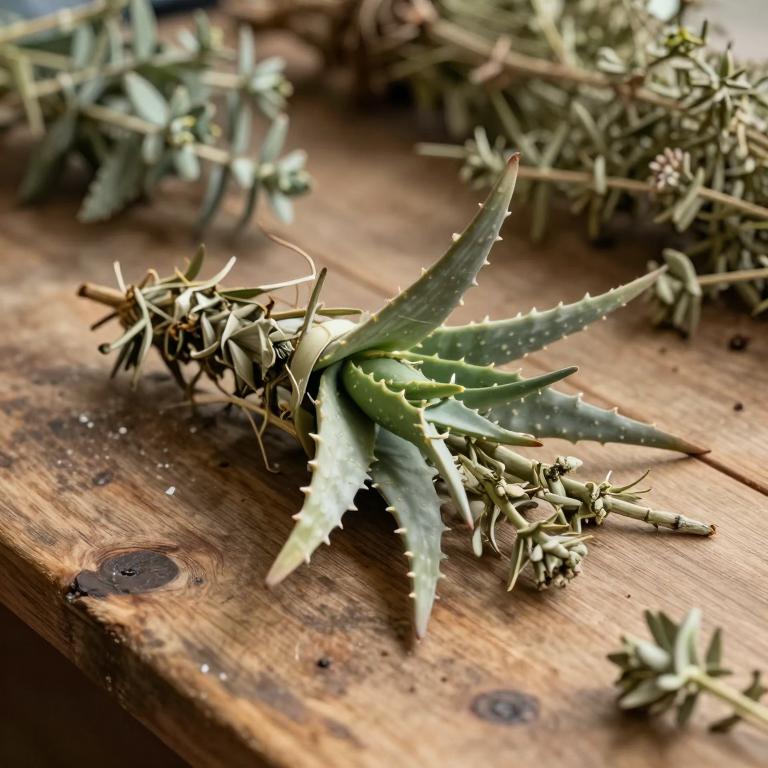
, scientifically known as Aloe krapohliana, is a remarkable medicinal succulent prized for its therapeutic potential. Characterized by its unique leaf structure, this plant offers potent bioactive compounds used in traditional healing. It serves as a vital natural resource for soothing skin ailments and supporting overall wellness through its unique properties.
- Family
- Not available
- Native range
- Africa
- Parts used
- Not available
- Common names
- Not available
- Scientific synonyms
- Not available
Names and Synonyms
Scientific Names
Accepted name
Aloe krapohlianaDistribution
This plant is a specific species of succulent found within the unique ecosystems of the southern portion of the African continent. Its natural habitat is primarily concentrated within the Cape Provinces of Southern Africa. This region provides the specific environmental conditions necessary for its growth and survival. Because its range is so localized, it is considered an endemic element of this particular landscape. Consequently, understanding its distribution is essential for the conservation of its native territory.
| Region | Area |
|---|---|
| Southern Africa | Cape Provinces |
Sources: The World Checklist of Vascular Plants (WCVP)
Botanical Identification
Ecology
The ecology of Aloe krapohliana is characterized by its ability to inhabit a diverse range of topographical gradients, spanning an elevational range from 0 m AMSL to a maximum of 1500 m AMSL. This broad altitudinal distribution suggests a high degree of environmental plasticity, allowing the species to adapt to various microclimates and ecological niches within its habitat. By occupying territories from sea level to montane regions, the plant interacts with a wide spectrum of temperature profiles, precipitation patterns, and soil compositions, which facilitates its survival across both lowland and mid-elevation landscapes.
- Elevational range max:
- 1500 m AMSL
- Elevational range min:
- 0 m AMSL
Life history
The life history of Aloe krapohliana is characterized by its status as a perennial organism, allowing it to persist through multiple growing seasons and establish a stable presence within its ecological niche. As a chamaephyte, its life form is defined by its growth habit, where the majority of its photosynthetic organs are situated close to the soil surface or just above it, protected by the proximity to the ground. This growth strategy enables the plant to endure varying environmental conditions, utilizing its perennial nature to maintain long-term survival while managing seasonal fluctuations through its specific chamaephyte architecture.
- Life form :
- chamaephyte
- Lifecycle :
- perennial
Morphology
The morphology of Aloe krapohliana is characterized by its growth form as a non-woody herb, manifesting as a small-statured plant with a minimum height of 0.15 m and a maximum height of 0.2 m. It functions as a self-supporting organism rather than a climber, maintaining an independent existence without acting as a parasite. The plant is primarily terrestrial in its ecological positioning, rather than being aquatic, semiaquatic, or epiphytic, and it exhibits a consistent herbaceous structure throughout its development.
- Aquatic :
- terrestrial
- Climber :
- self-supporting
- Epiphyte :
- terrestrial
- Growth form :
- herb
- Parasite :
- independent
- Plant height max:
- 0.2 m
- Plant height min:
- 0.15 m
- Woodiness :
- non-woody
Sources: Global Inventory of Floras and Traits (GIFT)
Chemicals
Aloe krapohliana has 1 reported phytochemicals identified across 0 scientific publications and several other databases. The most consistently reported chemicals include CONIINE.
| Chemical | Supporting sources | Consensus |
|---|---|---|
| CONIINE | 1 supporting sources | ★☆☆☆☆ |
CONIINE
- Dr. Duke
Activities
Aloe krapohliana has 2 reported activities identified across 0 scientific publications and several other databases. The most consistently reported activities include Emetic, Paralytic.
| Activity | Supporting sources | Consensus |
|---|---|---|
| Emetic | 1 supporting sources | ★☆☆☆☆ |
| Paralytic | 1 supporting sources | ★☆☆☆☆ |
Emetic
- Dr. Duke
Paralytic
- Dr. Duke