Aloe hereroensis
Aloe hereroensis · Accepted scientific name
Scientific literature: Very Sparse (0 studies) · ★☆☆☆☆
Aloe hereroensis is a distinctive succulent species known for its unique morphological characteristics and medicinal potential. This plant contains a complex profile of bioactive compounds, including various anthraquinones. Among its most notable constituents are barbaloin and aloenin, which contribute to its biological activity. Additionally, the presence of aloeresin plays a significant role in the chemical composition of its inner gel. Understanding these specific chemicals is essential for exploring the diverse therapeutic applications of this species.
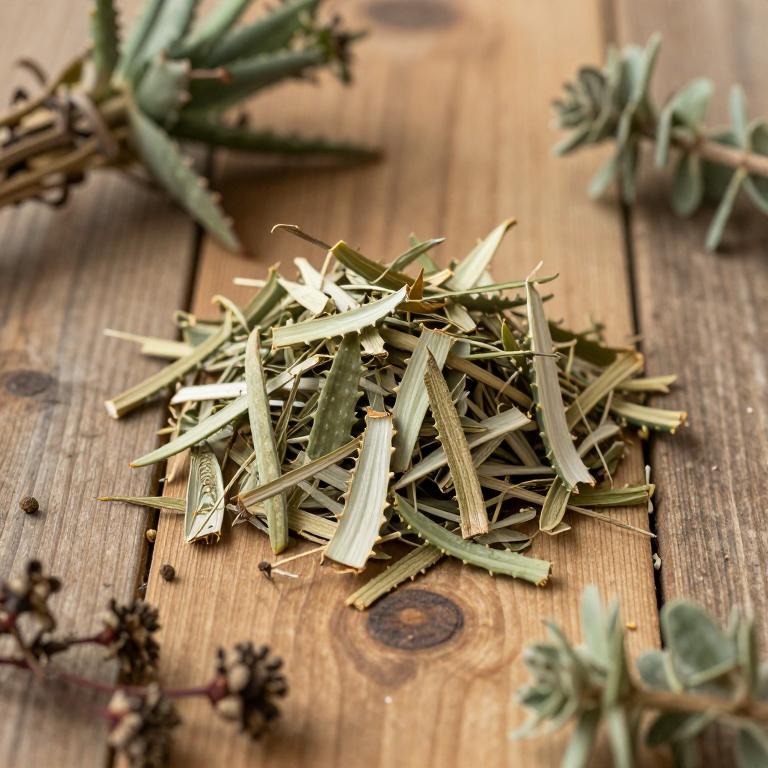
- Synonyms
- Aloe Hereroensis Var. Orpeniae · Aloe Hereroensis Var. Lutea · 1 more
- Common names
- Not available
- Family
- Asphodelaceae
- Distribution
- Not available
- Plant Parts
- Not available
Classification
Common Names
Aloe hereroensis is a remarkable succulent known by several distinct regional names. It is frequently referred to as the Herero-aalwyn or Sandaalwyn, names that highlight its specific botanical heritage. In different contexts, you may also encounter it called the Orange Sand Aloe or simply the Sand Aloe. Some enthusiasts further identify the species as the Vlakte-aalwyn, reflecting its natural habitat. These diverse common names illustrate the rich linguistic variety used to describe this unique plant.
Sources: Catalogue of Life (COL)
Synonyms
Aloe hereroensis is a complex species characterized by several taxonomic synonyms that highlight its botanical diversity. Within its classification, the plant is closely linked to the variety lutea, which represents a distinct morphological subset. It is also taxonomically associated with Aloe hereroensis var. orpeniae, further expanding its recognized range of forms. Interestingly, some botanical records previously categorized these variations under the name Aloe orpeniae. Understanding these relationships is essential for accurate identification and a clear grasp of the plant's evolutionary history.
Sources: The World Checklist of Vascular Plants (WCVP)
Taxonomy
Aloe hereroensis is a distinctive botanical specimen belonging to the kingdom Plantae. Within this vast biological realm, the species is classified under the class Equisetopsida. It further falls into the order Asparagales, showcasing its specialized evolutionary lineage. As a member of the family Asphodelaceae, it shares structural characteristics with many related succulents. Ultimately, this plant is identified by its specific genus, Aloe, which defines its unique identity in the natural world.
| Rank | Classification |
|---|---|
| Kingdom | Plantae |
| Phylum | Streptophyta |
| Class | Equisetopsida |
| Subclass | Magnoliidae |
| Order | Asparagales |
| Family | Asphodelaceae |
| Genus | Aloe |
Sources: The World Checklist of Vascular Plants (WCVP)
Distribution
Geographic Regions
Aloe hereroensis is a resilient species widely distributed across various regions of the African continent. Its presence is particularly notable throughout Southern Africa, where it thrives in diverse environments. Specifically, the plant can be found stretching across the landscapes of Botswana, Namibia, and the Free State. It also maintains significant populations within the Cape Provinces of South Africa. Furthermore, its range extends into the tropical reaches of Angola, showcasing its impressive adaptability to different climates.
Sources: The World Checklist of Vascular Plants (WCVP)
Identification
Morphology
Aloe hereroensis is a distinct herb characterized by its sturdy and self-supporting growth form. This resilient plant maintains a relatively compact stature within its natural habitat. While most specimens typically reach a maximum height of 0.5 meters, their dimensions can vary. Depending on environmental factors, individual plants may present a minimum height of 0.3 meters or 0.8 meters. These varying measurements highlight the adaptability of this unique species.
Sources: Global Inventory of Floras and Traits (GIFT)
Biological Activities
Compounds
Aloe hereroensis is a succulent species found primarily in the arid and semi-arid deserts of South Africa. Research using TLC analysis has revealed that this plant contains high concentrations of phenolic derivative metabolites known as anthraquinones. Specifically, the species is characterized by the presence of aloenin and aloeresin within its leaves. Furthermore, the plant also contains significant amounts of barbaloin and homonataloin. These chemical components are believed to function as a specialized defense strategy to protect the plant from environmental threats.
Conditions
Aloe hereroensis utilizes a specific chemical defense strategy to protect itself from external threats. This protection is achieved through the high concentration of phenolic derivative metabolites, specifically anthraquinones like barbaloin and aloenin. These protective compounds are not distributed evenly, as the youngest leaves contain the highest concentration to ensure survival. Within each leaf, the concentration is most intense at the top and along the margins to safeguard vulnerable areas. Ultimately, this strategic distribution of anthraquinones serves as a vital mechanism for the plant's self-defense.