Aloe esculenta
Aloe esculenta · Accepted scientific name
Scientific literature: Very Sparse (0 studies) · ★☆☆☆☆
Aloe esculenta is a unique botanical specimen valued for its specific culinary and medicinal properties. To unlock its full potential, the plant must undergo careful processing through various traditional methods. Most commonly, the leaves are crushed to extract their potent and viscous inner gel. This substance is then frequently soaked in water to refine its texture and prepare it for consumption. Through these intentional steps, the plant becomes a versatile ingredient used in diverse preparations.
- Synonyms
- Not available
- Common names
- Not available
- Family
- Asphodelaceae
- Distribution
- Southern America
- Plant Parts
- Not available
Classification
Common Names
Aloe esculenta is a versatile plant recognized by a diverse array of regional names. Depending on the local dialect or area, it is frequently referred to as dishashanogha. It is also widely known by the common names ekundu and endobo. Furthermore, the plant is identified as endombwe in certain communities. These various names highlight the deep cultural connections associated with this specific species.
Sources: Catalogue of Life (COL)
Taxonomy
Aloe esculenta is a distinctive member of the kingdom Plantae, showcasing the diverse beauty found within the natural world. This plant belongs to the class Equisetopsida and is categorized under the order Asparagales. Within this botanical framework, it is further classified into the family Asphodelaceae. As a representative of the genus Aloe, it shares structural characteristics with many well-known succulent species. Understanding these taxonomic relationships provides essential insight into the biological heritage of this fascinating plant.
| Rank | Classification |
|---|---|
| Kingdom | Plantae |
| Phylum | Streptophyta |
| Class | Equisetopsida |
| Subclass | Magnoliidae |
| Order | Asparagales |
| Family | Asphodelaceae |
| Genus | Aloe |
Sources: The World Checklist of Vascular Plants (WCVP)
Distribution
Geographic Regions
Aloe esculenta is a resilient species primarily distributed throughout the vast landscapes of Africa. Its natural range spans across South Tropical Africa, with notable populations found in Angola and Zambia. Moving toward the southern regions, the plant also flourishes within the borders of Botswana. Furthermore, its presence is well-established across the arid stretches of Namibia. This widespread distribution highlights the plant's ability to adapt to diverse environments across the southern half of the continent.
Sources: The World Checklist of Vascular Plants (WCVP)
Identification
Morphology
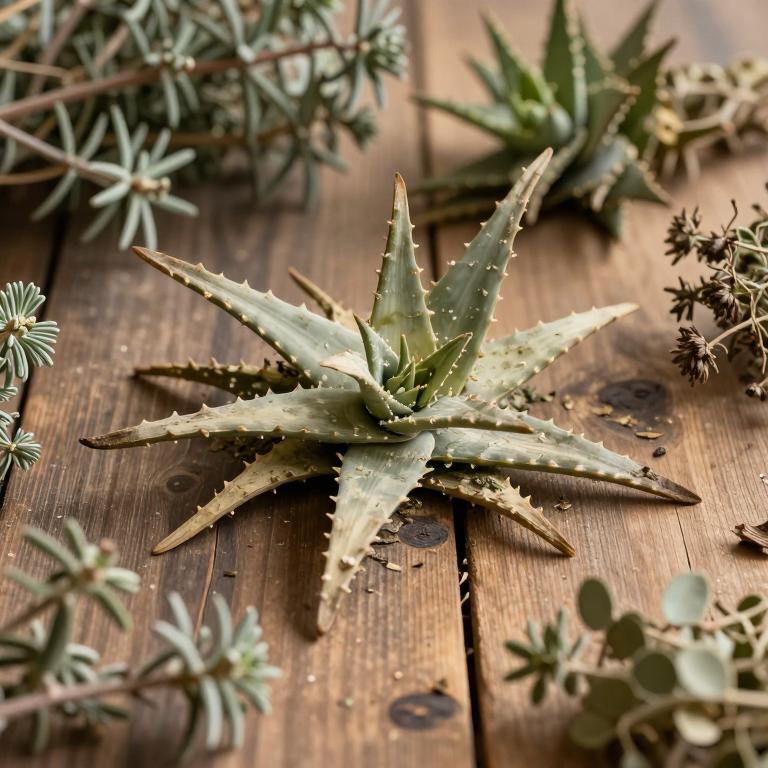
Aloe esculenta is a self-supporting plant that develops into a compact shrub form. This species maintains a modest stature, reaching a maximum height of only 0.5 meters. Its sturdy structure allows it to thrive effectively within its natural environment.
Sources: Global Inventory of Floras and Traits (GIFT)
Biological Activities
Compounds
Conditions
Aloe esculenta is utilized in the treatment of skin infections according to ethnoveterinary practices in Namibia. This specific plant species demonstrated a high fidelity level of 90% among the respondents surveyed in the Omusati and Kunene regions. When used for such cutaneous purposes, it serves as a vital medicinal resource for managing various skin ailments in livestock. The effectiveness of this plant in treating infections highlights its significant role within traditional veterinary medicine. Consequently, its application for skin conditions remains a key finding of this ethnomedicinal study.
Preparations
Aloe esculenta is prepared as crushed material for use in ethnoveterinary medicine. This specific plant is also prepared by being soaked in water to create medicinal compositions. These preparation methods are applied when using Aloe esculenta to treat skin infections in livestock. The effectiveness of this plant is highlighted by its high fidelity level among the species studied. Consequently, both crushing and soaking are essential steps in the traditional processing of Aloe esculenta.