Aloe elegans
Aloe elegans · Accepted scientific name
Scientific literature: Very Sparse (7 studies) · ★☆☆☆☆
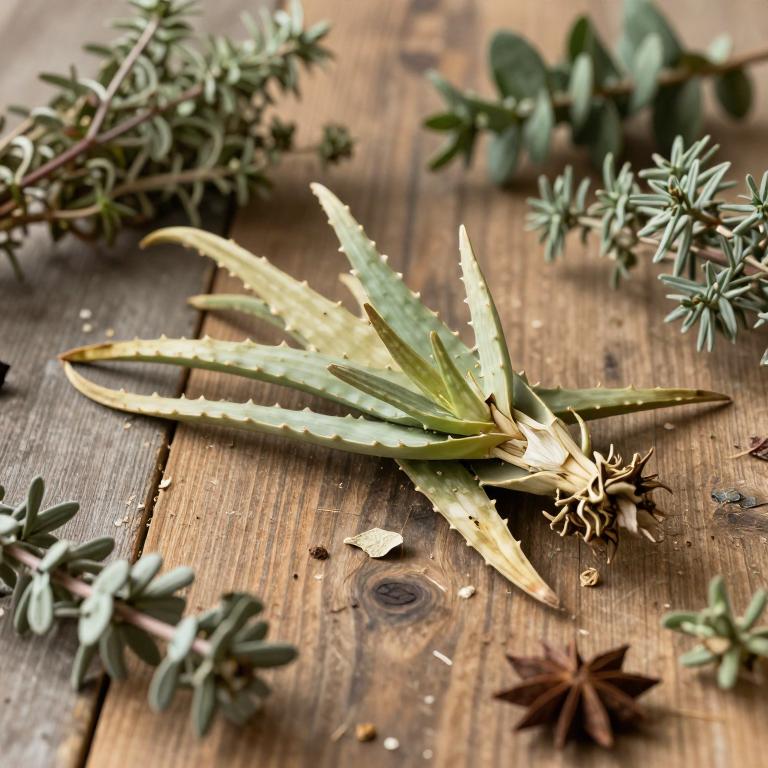
Aloe elegans, scientifically known as Aloe elegans, is a distinctive succulent species valued for its unique morphological features and medicinal potential. Native to specific arid regions, this plant offers therapeutic benefits, often utilized in traditional remedies to soothe skin irritations and promote healing through its potent bioactive compounds.
- Family
- Asphodelaceae
- Native range
- Africa
- Parts used
- Leaf
- Common names
- Not available
- Scientific synonyms
- Aloe Peacockii · Aloe Aethiopica · 2 more
Names and Synonyms
Scientific Names
Accepted name
Aloe elegansSynonyms
- Aloe peacockii
- Aloe aethiopica
- Aloe abyssinica var. peacockii
- Aloe vera var. aethiopica
Sources: Wikidata
Taxonomical Classification
This plant, known as Aloe elegans, belongs to the kingdom Plantae and the phylum Streptophyta. Within the class Equisetopsida and subclass Magnoliidae, it is categorized under the order Asparagales. Finally, it is classified under the family Asphodelaceae and the genus Aloe.
| Rank | Classification |
|---|---|
| Kingdom | Plantae |
| Phylum | Streptophyta |
| Class | Equisetopsida |
| Subclass | Magnoliidae |
| Order | Asparagales |
| Family | Asphodelaceae |
| Genus | Aloe |
Sources: The World Checklist of Vascular Plants (WCVP)
Distribution
This plant is primarily found within the Northeast Tropical Africa region. Specifically, its natural habitat includes the country of Eritrea. It also maintains a presence across the diverse landscapes of Ethiopia. Furthermore, the distribution extends into the territories of Sudan and South Sudan. These specific locations define the known geographical range of Aloe elegans.
| Region | Area |
|---|---|
| Northeast Tropical Africa | Eritrea |
| Northeast Tropical Africa | Ethiopia |
| Northeast Tropical Africa | Sudan-South Sudan |
Sources: The World Checklist of Vascular Plants (WCVP)
Botanical Identification
Life history
The life history of Aloe elegans is characterized by its classification as a chamaephyte, a growth form where the permanent buds are located close to the ground surface, often protected by a layer of substrate or leaf litter. This life strategy allows the plant to thrive in specific ecological niches, typically exhibiting a perennial lifecycle where it maintains a robust presence through specialized succulent tissues. As a chamaephyte, its vegetative structure is adapted to survive seasonal environmental fluctuations, utilizing its low-profile morphology to mitigate damage from wind or temperature extremes. The development cycle involves the gradual accumulation of biomass in its fleshy leaves, which serve as both nutrient storage and water reservoirs, supporting its long-term survival in its native habitat. Reproduction typically occurs through the production of flowering stalks that rise above the low-growing foliage, facilitating pollination before the plant settles back into its protected, ground-level growth habit.
- Life form :
- chamaephyte
Morphology
The morphology of Aloe elegans is characterized by its growth form as a herb, lacking any significant woodiness as it remains a non-woody species. This plant functions as an independent organism, showing no parasitic tendencies toward other plants. It is a terrestrial species, growing in soil rather than as an epiphyte, and while it possesses a climbing tendency, it is classified as a self-supporting climber.
- Climber :
- self-supporting
- Epiphyte :
- terrestrial
- Growth form :
- herb
- Parasite :
- independent
- Woodiness :
- non-woody
Sources: Global Inventory of Floras and Traits (GIFT)
Plant Parts
Aloe elegans has 1 reported plant parts identified across 1 scientific publications and several other databases that are studied for medicinal purposes. The most consistently reported plant part include leaf.
| Plant part | Supporting sources | Consensus |
|---|---|---|
| Leaf | 1 supporting sources | ★☆☆☆☆ |
Leaf
- Scientific reports
Chemicals
Aloe elegans has 3 reported phytochemicals identified across 1 scientific publications and several other databases. The most consistently reported chemicals include Anthraquinones, Phenols, Saponins.
| Chemical | Supporting sources | Consensus |
|---|---|---|
| Anthraquinones | 1 supporting sources | ★☆☆☆☆ |
| Phenols | 1 supporting sources | ★☆☆☆☆ |
| Saponins | 1 supporting sources | ★☆☆☆☆ |
Anthraquinones
- Scientific reports
Phenols
- Scientific reports
Saponins
- Scientific reports
Conditions
Aloe elegans has 3 reported investigations on conditions identified across 1 scientific publications and several other databases. The most consistently reported conditions include Escherichia coli, Salmonella typhi, Staphylococcus aureus.
| Condition | Supporting sources | Consensus |
|---|---|---|
| Escherichia coli | 1 supporting sources | ★☆☆☆☆ |
| Salmonella typhi | 1 supporting sources | ★☆☆☆☆ |
| Staphylococcus aureus | 1 supporting sources | ★☆☆☆☆ |
Escherichia coli
- Scientific reports
Salmonella typhi
- Scientific reports
Staphylococcus aureus
- Scientific reports
Preparations
Aloe elegans has 2 reported preparations identified across 1 scientific publications and several other databases. The most consistently reported preparations include distilled water extract, methanol extract.
| Preparation | Supporting sources | Consensus |
|---|---|---|
| Distilled water extract | 1 supporting sources | ★☆☆☆☆ |
| Methanol extract | 1 supporting sources | ★☆☆☆☆ |
Distilled water extract
- Scientific reports
Methanol extract
- Scientific reports