Aloe descoingsii
Aloe descoingsii · Accepted scientific name
Scientific literature: Very Sparse (3 studies) · ★☆☆☆☆
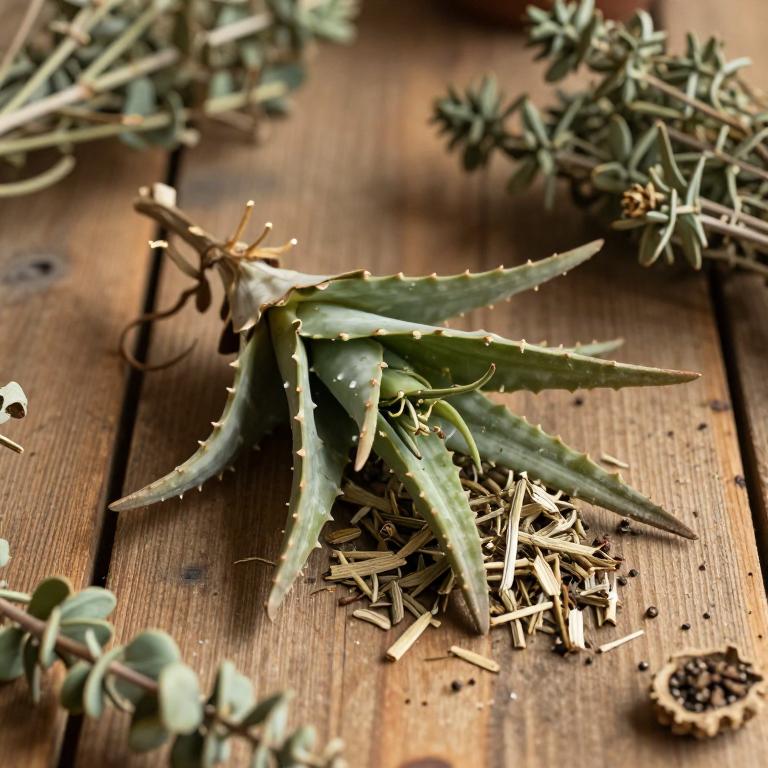
Aloe descoingsii, scientifically known as Aloe descoingsii, is a remarkable succulent native to specific arid regions. Renowned for its thick, medicinal leaves, this plant offers significant therapeutic potential. It is widely utilized in traditional medicine to treat skin irritations, promote wound healing, and provide soothing antioxidant benefits.
- Family
- Not available
- Native range
- Africa
- Parts used
- Not available
- Common names
- Not available
- Scientific synonyms
- Not available
Names and Synonyms
Scientific Names
Accepted name
Aloe descoingsiiDistribution
This plant is characterized by a very specific and limited geographical range. It is found exclusively within the Western Indian Ocean region. More specifically, its natural habitat is located on the island of Madagascar. Because of this narrow distribution, the species is endemic to that particular area. This unique location defines the environmental conditions in which the plant naturally thrives.
| Region | Area |
|---|---|
| Western Indian Ocean | Madagascar |
Sources: The World Checklist of Vascular Plants (WCVP)
Botanical Identification
Life history
The life history of Aloe descoingsii is characterized by its classification as a chamaephyte, a growth form that allows it to persist in its natural habitat by keeping its buds close to the soil surface. Within this ecological framework, it functions specifically as a chamaephyte (Life_form_1) and maintains a chamaephyte structural strategy (Life_form_2), which enables it to survive varying environmental stresses by protecting its vital meristematic tissues near the ground level. This life strategy facilitates its development within succulent-friendly niches, where it manages its growth cycle through perennial cycles of leaf production and occasional flowering, ensuring resilience through its low-profile, compact architecture.
- Life form :
- chamaephyte
Morphology
The morphology of Aloe descoingsii is characterized by a growth form of a herb, exhibiting a non-woody structure throughout its development. As a terrestrial species, it does not inhabit aquatic or semiaquatic environments, nor does it function as an epiphyte. The plant is biologically independent, functioning as a non-parasitic organism rather than an obligatory or facultative parasite. Furthermore, its physical structure is self-supporting, lacking the climbing mechanisms found in vines or creepers.
- Aquatic :
- terrestrial
- Climber :
- self-supporting
- Epiphyte :
- terrestrial
- Growth form :
- herb
- Parasite :
- independent
- Woodiness :
- non-woody
Physiology
The physiology of Aloe descoingsii is fundamentally defined by its specialized water-storage mechanisms, characterized by a high degree of succulence. This succulent nature allows the plant to undergo complex metabolic processes designed for survival in arid environments, primarily through the development of thickened, fleshy leaves that function as internal reservoirs. Within these tissues, the plant utilizes Crassulacean Acid Metabolism (CAM) to optimize gas exchange, facilitating the nocturnal uptake of carbon dioxide to minimize transpirational water loss during the heat of the day. The presence of large, parenchymatous cells within the leaf interior facilitates the storage of mucilaginous polysaccharides, which assist in maintaining cellular turgor and regulating osmotic potential. Consequently, the physiological state of the plant is a balance between its ability to sequester moisture through its succulent morphology and its highly efficient, water-conserving photosynthetic pathway.
- Succulence :
- yes
Sources: Global Inventory of Floras and Traits (GIFT)
Chemicals
Aloe descoingsii has 1 reported phytochemicals identified across 0 scientific publications and several other databases. The most consistently reported chemicals include CONIINE.
| Chemical | Supporting sources | Consensus |
|---|---|---|
| CONIINE | 1 supporting sources | ★☆☆☆☆ |
CONIINE
- Dr. Duke
Activities
Aloe descoingsii has 2 reported activities identified across 0 scientific publications and several other databases. The most consistently reported activities include Emetic, Paralytic.
| Activity | Supporting sources | Consensus |
|---|---|---|
| Emetic | 1 supporting sources | ★☆☆☆☆ |
| Paralytic | 1 supporting sources | ★☆☆☆☆ |
Emetic
- Dr. Duke
Paralytic
- Dr. Duke