Chabauds Aloe
Aloe chabaudii · Accepted scientific name
Scientific literature: Very Sparse (4 studies) · ★☆☆☆☆
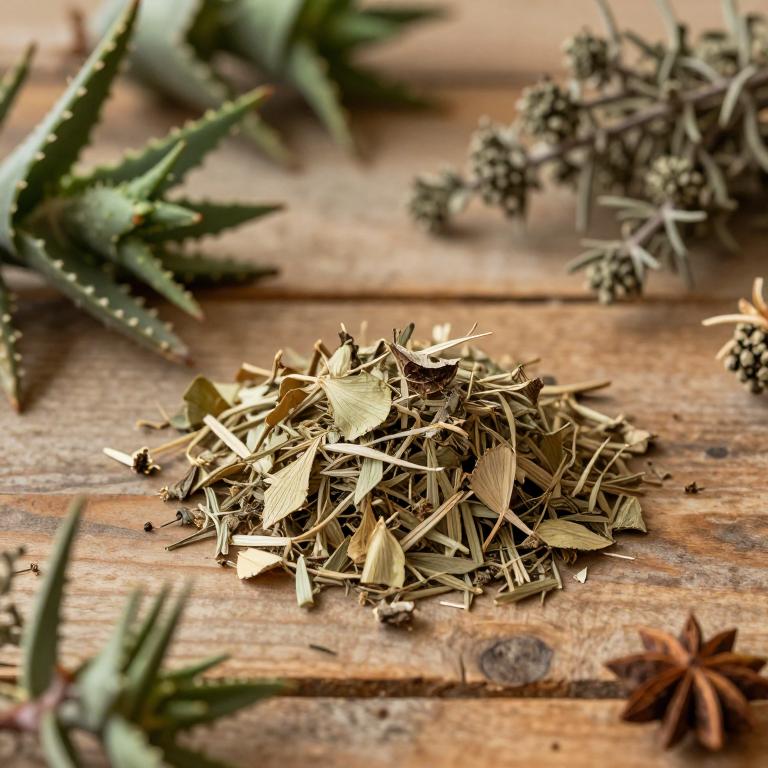
Chabauds Aloe, scientifically known as Aloe chabaudii, is a rare and captivating succulent native to specialized habitats. Renowned for its unique morphological features and potent therapeutic potential, this plant offers intriguing possibilities in ethnobotany. Its distinctive growth patterns and medicinal properties make it a subject of significant botanical interest.
- Family
- Asphodelaceae
- Native range
- Africa
- Parts used
- Leaf · Root
- Common names
- Chabauds Aloe · Dwala Aloe
- Scientific synonyms
- Not available
Names and Synonyms
Common Names
- Chabauds Aloe
- Dwala Aloe
Scientific Names
Accepted name
Aloe chabaudiiSources: Wikidata, Catalogue of Life
Taxonomical Classification
This plant belongs to the kingdom Plantae and the phylum Streptophyta, falling under the class Equisetopsida and subclass Magnoliidae. Within the order Asparagales, it is classified under the family Asphodelaceae. Finally, it is categorized within the genus Aloe.
| Rank | Classification |
|---|---|
| Kingdom | Plantae |
| Phylum | Streptophyta |
| Class | Equisetopsida |
| Subclass | Magnoliidae |
| Order | Asparagales |
| Family | Asphodelaceae |
| Genus | Aloe |
Sources: The World Checklist of Vascular Plants (WCVP)
Distribution
This plant exhibits a widespread distribution across several key regions of the African continent. In West-Central Tropical Africa, it can be found within the Democratic Republic of the Congo. Moving to East Tropical Africa, its presence is noted in Tanzania. The species also extends into South Tropical Africa, specifically inhabiting the nation of Malawi. Furthermore, its range in South Tropical Africa includes the countries of Mozambique and Zambia.
| Region | Area |
|---|---|
| West-Central Tropical Africa | DR Congo |
| East Tropical Africa | Tanzania |
| South Tropical Africa | Malawi |
| South Tropical Africa | Mozambique |
| South Tropical Africa | Zambia |
| South Tropical Africa | Zimbabwe |
| Southern Africa | Botswana |
| Southern Africa | KwaZulu-Natal |
| Southern Africa | Eswatini |
| Southern Africa | Northern Provinces |
Sources: The World Checklist of Vascular Plants (WCVP)
Botanical Identification
Ecology
The ecology of Aloe chabaudii is characterized by its ability to inhabit a diverse range of altitudinal gradients, spanning from low-lying coastal or lowland areas to significant montane elevations. Specifically, this species thrives across an elevational range that begins at a minimum of 15 m AMSL and extends up to a maximum of 1675 m AMSL. This broad vertical distribution suggests a high degree of ecological plasticity, allowing the plant to adapt to varying climatic conditions, temperature fluctuations, and moisture regimes found between sea level and high-altitude environments.
- Elevational range max:
- 1675 m AMSL
- Elevational range min:
- 15 m AMSL
Life history
The life history of Aloe chabaudii is characterized by its status as a perennial plant, allowing it to persist through multiple growing seasons. Functioning as a hemicryptophyte, its perennially active buds are located at or near the soil surface, protected by residual leaf bases or organic matter. This species maintains an evergreen habit, ensuring that its photosynthetic tissues remain functional and present throughout the year without undergoing a seasonal shedding of leaves.
- Deciduousness :
- evergreen
- Life form :
- hemicryptophyte
- Lifecycle :
- perennial
Morphology
The morphology of Aloe chabaudii is characterized by a non-woody, herbaceous growth form, functioning as both a herb and a forb. This species is primarily terrestrial in its ecological niche, lacking aquatic or epiphytic tendencies, and it operates as an independent organism rather than a parasite. Structurally, the plant is self-supporting and does not exhibit climbing habits. In terms of physical stature, it maintains a relatively low profile, with a plant height ranging from a minimum of 0.3 m to a maximum of 0.64 m.
- Aquatic :
- terrestrial
- Climber :
- self-supporting
- Epiphyte :
- terrestrial
- Growth form :
- herb
- Parasite :
- independent
- Plant height max:
- 0.64 m
- Plant height min:
- 0.3 m
- Woodiness :
- non-woody
Physiology
The physiology of Aloe chabaudii is characterized by its specialized succulent metabolism, designed to facilitate survival in arid environments through highly efficient water conservation and nutrient management. As a member of the Asphodelaceae family, its metabolic processes are governed by Crassulacean Acid Metabolism (CAM), which allows the plant to sequester carbon dioxide at night to minimize transpirational water loss during the heat of the day. The internal physiological structure features large parenchyma cells dedicated to storing mucilaginous polysaccharides and water, which maintain turgor pressure and metabolic stability during prolonged drought. Regarding its nutrient acquisition strategies, the plant does not engage in symbiotic biological nitrogen fixation; it is not a nitrogen fixer, meaning it relies entirely on the uptake of available nitrogenous compounds from the soil through its root system rather than converting atmospheric nitrogen. This reliance on soil-based nitrogen uptake is integrated into its slow-growth physiological profile, where nutrient assimilation is closely synchronized with seasonal moisture availability to optimize resource allocation between leaf development and reproductive efforts.
- Nitrogen fixer :
- no
Reproduction
Reproduction in Aloe chabaudii is facilitated through the production of specialized seeds that play a critical role in its life cycle. These seeds are characterized by an extremely lightweight and consistent physical profile, exhibiting a uniform seed mass across observed samples. The data indicates that the seed mass is remarkably stable, with a mean value of 0.00183 g, a maximum value of 0.00183 g, and a minimum value of 0.00183 g. This lack of variance in mass suggests a highly standardized reproductive output, where each seed is produced with precise physiological dimensions to optimize dispersal and germination potential within its natural habitat.
- Seed mass mean:
- 0.00183 g
Sources: Global Inventory of Floras and Traits (GIFT)
Plant Parts
Aloe chabaudii has 2 reported plant parts identified across 2 scientific publications and several other databases that are studied for medicinal purposes. The most consistently reported plant part include leaf, root.
| Plant part | Supporting sources | Consensus |
|---|---|---|
| Leaf | 1 supporting sources | ★☆☆☆☆ |
| Root | 1 supporting sources | ★☆☆☆☆ |
Leaf
- Methods and findings in experimental and clinical pharmacology
Root
- Journal of ethnopharmacology
Activities
Aloe chabaudii has 1 reported activities identified across 2 scientific publications and several other databases. The most consistently reported activities include Abortifacient.
| Activity | Supporting sources | Consensus |
|---|---|---|
| Abortifacient | 1 supporting sources | ★☆☆☆☆ |
Abortifacient
- The Central African journal of medicine
Conditions
Aloe chabaudii has 1 reported investigations on conditions identified across 2 scientific publications and several other databases. The most consistently reported conditions include diarrhea.
| Condition | Supporting sources | Consensus |
|---|---|---|
| Diarrhea | 1 supporting sources | ★☆☆☆☆ |
Diarrhea
- Methods and findings in experimental and clinical pharmacology