Aloe castellorum
Aloe castellorum · Accepted scientific name
Scientific literature: Very Sparse (10 studies) · ★☆☆☆☆
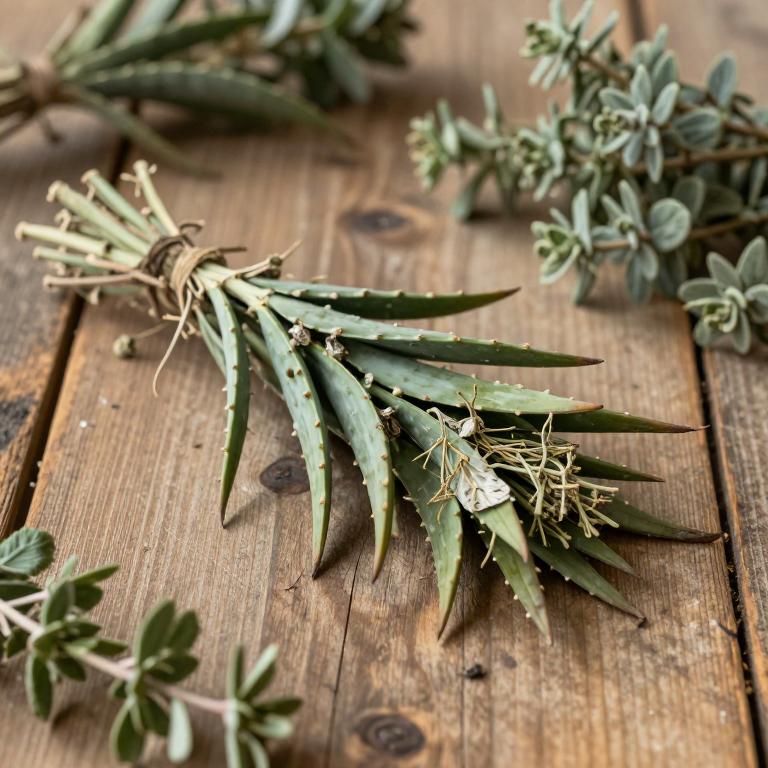
Aloe castellorum, scientifically known as Aloe castellorum, is a striking succulent native to the arid landscapes of South Africa. Renowned for its fleshy, serrated leaves and vibrant blooms, this resilient species is prized both by collectors for its ornamental beauty and by herbalists for its diverse medicinal properties.
- Family
- Not available
- Native range
- Asia-Temperate
- Parts used
- Leaf
- Common names
- Not available
- Scientific synonyms
- Not available
Names and Synonyms
Scientific Names
Accepted name
Aloe castellorumRegional and Traditional Names
German:
- Aloe hijazensis
Sources: Wikidata
Distribution
This plant, known as Aloe castellorum, exhibits a specific and limited geographical range within the Middle East. Its natural habitat is primarily concentrated within the Arabian Peninsula. Specifically, it can be found growing in the landscapes of Saudi Arabia. Furthermore, its distribution extends into the neighboring territory of Yemen. Consequently, this species is characteristic of the unique arid environments found in these two specific countries.
| Region | Area |
|---|---|
| Arabian Peninsula | Saudi Arabia |
| Arabian Peninsula | Yemen |
Sources: The World Checklist of Vascular Plants (WCVP)
Botanical Identification
Life history
The life history of Aloe castellorum is characterized by a perennial lifecycle, allowing the plant to persist through multiple growing seasons and establish a stable presence within its natural habitat. As a chamaephyte, its life form is defined by its growth habit, where the majority of its photosynthetic biomass remains close to the ground, often protected by a layer of leaf litter or the substrate itself. This combination of a long-lived perennial nature and a low-growing chamaephyte structure enables the species to endure environmental fluctuations and maintain its ecological niche over extended periods.
- Life form :
- chamaephyte
- Lifecycle :
- perennial
Morphology
The morphology of Aloe castellorum is characterized by its growth form as a non-woody herb, manifesting as a succulent plant that lacks any woody tissue. It functions as an independent organism, neither acting as a parasite nor as an epiphyte, as it maintains a strictly terrestrial lifestyle. Although it does not possess climbing mechanisms, its structural habit is classified as self-supporting, allowing it to maintain its posture upright without the need for external support or climbing structures.
- Climber :
- self-supporting
- Epiphyte :
- terrestrial
- Growth form :
- herb
- Parasite :
- independent
- Woodiness :
- non-woody
Reproduction
The reproduction of Aloe castellorum is characterized by the production of highly uniform seeds, which play a critical role in the dispersal and establishment of new individuals. Quantitative analysis of the reproductive output reveals that the seeds are exceptionally small and consistent in size, with a recorded seed mass of 0.00193 g. This value represents the mean, maximum, and minimum measurements, indicating a lack of variance in seed mass within the sampled population. Such precise uniformity in seed mass suggests a highly stabilized reproductive strategy, where each seed is produced with a consistent allocation of maternal resources, ensuring predictable germination potential across the species' reproductive cycle.
- Seed mass mean:
- 0.00193 g
Sources: Global Inventory of Floras and Traits (GIFT)
Plant Parts
Aloe castellorum has 1 reported plant parts identified across 1 scientific publications and several other databases that are studied for medicinal purposes. The most consistently reported plant part include leaf.
| Plant part | Supporting sources | Consensus |
|---|---|---|
| Leaf | 1 supporting sources | ★☆☆☆☆ |
Leaf
- Saudi journal of biological sciences
Conditions
Aloe castellorum has 8 reported investigations on conditions identified across 1 scientific publications and several other databases. The most consistently reported conditions include Bacteroides fragilis, Escherichia coli, Fusobacterium nucleatum, Helicobacter pylori, Neisseria gonorrhoeae.
| Condition | Supporting sources | Consensus |
|---|---|---|
| Bacteroides fragilis | 1 supporting sources | ★☆☆☆☆ |
| Escherichia coli | 1 supporting sources | ★☆☆☆☆ |
| Fusobacterium nucleatum | 1 supporting sources | ★☆☆☆☆ |
| Helicobacter pylori | 1 supporting sources | ★☆☆☆☆ |
| Neisseria gonorrhoeae | 1 supporting sources | ★☆☆☆☆ |
| Porphyromonas gingivalis | 1 supporting sources | ★☆☆☆☆ |
| Salmonella enterica | 1 supporting sources | ★☆☆☆☆ |
| Treponema pallidum | 1 supporting sources | ★☆☆☆☆ |
Bacteroides fragilis
- Journal of gastrointestinal cancer
Escherichia coli
- Journal of gastrointestinal cancer
Fusobacterium nucleatum
- Journal of gastrointestinal cancer
Helicobacter pylori
- Journal of gastrointestinal cancer
Neisseria gonorrhoeae
- Journal of gastrointestinal cancer
Porphyromonas gingivalis
- Journal of gastrointestinal cancer
Salmonella enterica
- Journal of gastrointestinal cancer
Treponema pallidum
- Journal of gastrointestinal cancer
Preparations
Aloe castellorum has 3 reported preparations identified across 1 scientific publications and several other databases. The most consistently reported preparations include ethanolic extracts, leaf extracts, methanolic extracts.
| Preparation | Supporting sources | Consensus |
|---|---|---|
| Ethanolic extracts | 1 supporting sources | ★☆☆☆☆ |
| Leaf extracts | 1 supporting sources | ★☆☆☆☆ |
| Methanolic extracts | 1 supporting sources | ★☆☆☆☆ |
Ethanolic extracts
- Journal of gastrointestinal cancer
Leaf extracts
- Saudi journal of biological sciences
Methanolic extracts
- Saudi journal of biological sciences