Krans aloe
Aloe arborescens · Accepted scientific name
Scientific literature: Sparse (75 studies) · ★★☆☆☆
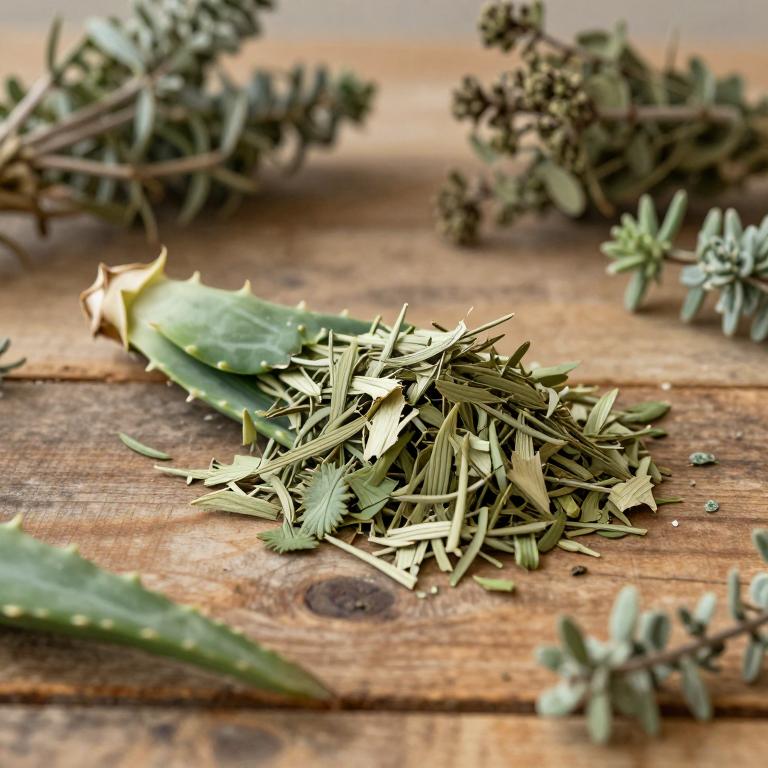
Krans aloe, scientifically known as Aloe arborescens, is a striking succulent native to South Africa. Renowned for its robust, architectural form and vibrant, tubular orange flowers, it thrives in rocky terrains. Beyond its ornamental appeal, this hardy species is valued in traditional medicine for its soothing, healing properties.
- Family
- Asphodelaceae
- Native range
- Europe
- Parts used
- Leaf
- Common names
- Candelabra Aloe · Candelabra-Plant · 11 more
- Scientific synonyms
- Catevala Arborescens · Aloe Perfoliata Var. Arborescens
Names and Synonyms
Common Names
- candelabra aloe
- candelabra-plant
- octopus-plant
- torchplant
- Cliff Aloe
- Japan Aloe
- Kraal Aloe
- Krantz Aloe
- Kranz aloe
- Mountain Bush Aloe
- Oldenland's Bush Aloe
- Torch Aloe
- Krantz or Candelabra Aloe
Scientific Names
Accepted name
Aloe arborescensSynonyms
- Catevala arborescens
- Aloe perfoliata var. arborescens
Regional and Traditional Names
Spanish:
- Catevala arborescens
- Aloe arborescens var natalensis
- Aloe arborescens var. frutescens
- Aloe fruticosa
- Aloe arborescens var frutescens
- Aloe arborescens var. milleri
- Aloe arborea
- Aloe arborescens var. pachythyrsa
- Aloe arborescens var. natalensis
- Aloe arborescens var milleri
- Aloe arborescens var pachythyrsa
- Aloe perfoliata var. arborescens
- Aloe perfoliata var. eta
- Aloe perfoliata var eta
- Aloe frutescens
- Aloe perfoliata var arborescens
- Aloe candelabro
- Sábila candelabro africano
German:
- Felsen-Aloe
- Tintenfisch-Aloe
French:
- Aloé arborescente
- Aloé candélabre
- Aloès candélabre
- Corne de bélier
- Aloès arborescent
Sources: Wikidata, Catalogue of Life
Taxonomical Classification
This plant, Aloe arborescens, belongs to the kingdom Plantae and the phylum Streptophyta. Within the class Equisetopsida and subclass Magnoliidae, it is classified under the order Asparagales and the family Asphodelaceae. It is further categorized under the genus Aloe.
| Rank | Classification |
|---|---|
| Kingdom | Plantae |
| Phylum | Streptophyta |
| Class | Equisetopsida |
| Subclass | Magnoliidae |
| Order | Asparagales |
| Family | Asphodelaceae |
| Genus | Aloe |
Sources: The World Checklist of Vascular Plants (WCVP)
Distribution
This plant exhibits a widespread distribution across several regions of Southern Europe. Within Southwestern Europe, its presence is noted in the Balearic Islands, France, Portugal, and Spain. Additionally, the species can be found extending into Southeastern Europe, specifically within Italy. This range highlights its ability to thrive in the diverse Mediterranean climates found across these territories. Consequently, the geographical footprint of Aloe arborescens spans multiple countries throughout the Mediterranean basin.
| Region | Area |
|---|---|
| Southwestern Europe | Baleares |
| Southwestern Europe | France |
| Southwestern Europe | Portugal |
| Southwestern Europe | Spain |
| Southeastern Europe | Italy |
| Southeastern Europe | Sicilia |
| Northern Africa | Algeria |
| Northern Africa | Morocco |
| Northern Africa | Tunisia |
| Macaronesia | Azores |
Sources: The World Checklist of Vascular Plants (WCVP)
Botanical Identification
Ecology
The ecology of Aloe arborescens is characterized by a remarkably broad altitudinal distribution, allowing it to inhabit a diverse range of environmental gradients. The species can be found at elevations as low as 10 m AMSL, yet it extends its reach to significant heights, with a maximum recorded elevation of 1900 m AMSL and a mean elevational range centered around 2600 m AMSL. This wide vertical dispersal suggests an ability to adapt to varying temperature regimes and atmospheric pressures. Furthermore, the plant possesses active biological defense mechanisms, a trait that serves to protect its physiological integrity against herbivory or environmental stressors within its varied habitats.
- Defense :
- yes
- Elevational range max:
- 1900 m AMSL
- Elevational range mean:
- 2600 m AMSL
- Elevational range min:
- 10 m AMSL
Life history
The life history of Aloe arborescens is characterized by its status as a perennial plant, allowing it to persist through multiple growing seasons. It exhibits a dual life form classification depending on its developmental stage and environmental context, functioning both as a phanerophyte, where its woody stems elevate the foliage above the ground, and as a nanophanerophyte. Throughout its existence, the plant maintains an evergreen deciduousness, ensuring that its succulent, fleshy leaves remain functional and green year-round rather than shedding seasonally.
- Deciduousness :
- evergreen
- Life form :
- nanophanerophyte
- Life form :
- phanerophyte
- Lifecycle :
- perennial
Morphology
The morphology of Aloe arborescens is characterized by a woody, shrub-like growth form that functions as a self-supporting structure rather than a climber or vine. As a terrestrial species, it is neither aquatic nor epiphytic, growing independently in its environment without parasitic tendencies. The plant typically reaches a height ranging from a minimum of 0.8 m to a maximum of 3 m, with a mean height of approximately 3 m, establishing a robust and sturdy presence in its habitat.
- Aquatic :
- terrestrial
- Climber :
- self-supporting
- Epiphyte :
- terrestrial
- Growth form :
- shrub
- Parasite :
- independent
- Plant height mean:
- 3 m
- Plant height min:
- 0.8 m
- Woodiness :
- woody
Physiology
The physiology of Aloe arborescens is characterized by specialized adaptations for water conservation and efficient metabolic processing in arid environments. As a succulent species, it possesses thick, fleshy tissues designed for significant water storage, a trait supported by its Crassulacean Acid Metabolism (CAM) photosynthetic pathway, which allows the plant to fix carbon dioxide at night to minimize transpirational water loss. Morphologically, the plant features a distinctive rosette leaf arrangement, where the leaves emerge in a circular pattern from a central axis. These leaves exhibit significant dimensional variability, typically measuring between 20 cm and 50 cm in length, with widths ranging from a minimum of 4 cm to a maximum of 7 cm. Furthermore, the plant does not function as a nitrogen fixer, relying instead on external soil nutrient availability for its developmental needs.
- Leaf arrangement :
- rosette
- Leaf length max:
- 50 cm
- Leaf length min:
- 20 cm
- Leaf width max:
- 7 cm
- Leaf width min:
- 4 cm
- Nitrogen fixer :
- no
- Photosynthetic pathway :
- CAM
- Succulence :
- yes
Reproduction
The reproduction of Aloe arborescens is characterized by the production of red flowers arranged in a raceme inflorescence. These inflorescences vary in length, ranging from a minimum of 0.1 m to a maximum of 0.3 m. The individual flowers are relatively small, with lengths measuring between 3 cm and 4 cm. The flowering period is highly variable, typically beginning around April and concluding by February of the following year. This plant utilizes a biotic pollination syndrome, specifically relying on bees to facilitate the reproductive process. Following successful pollination, the plant develops fruit in the form of a capsule, which is a dehiscence-type fruit, meaning it opens at maturity to release its contents. The resulting seeds are minute, with a mean mass of 0.00181 g, though they range from a minimum of 0.00112 g to a maximum of 0.0025 g.
- Dehiscence :
- dehiscent
- Flower colour :
- red
- Flower length max:
- 4 cm
- Flower length min:
- 3 cm
- Flowering time :
- Apr
- Flowering time :
- Feb
- Fruit type :
- capsule
- Inflorescence :
- raceme
- Inflorescence length max:
- 0.3 m
- Inflorescence length min:
- 0.1 m
- Pollination syndrome :
- bee
- Pollination syndrome :
- biotic
- Seed mass max:
- 0.0025 g
- Seed mass mean:
- 0.00181 g
- Seed mass min:
- 0.00112 g
Sources: Global Inventory of Floras and Traits (GIFT)
Plant Parts
Aloe arborescens has 1 reported plant parts identified across 3 scientific publications and several other databases that are studied for medicinal purposes. The most consistently reported plant part include leaf.
| Plant part | Supporting sources | Consensus |
|---|---|---|
| Leaf | 3 supporting sources | ★★☆☆☆ |
Leaf
- Acta poloniae pharmaceutica
- Journal of photochemistry and photobiology. B, Biology
- Plant & cell physiology
Chemicals
Aloe arborescens has 27 reported phytochemicals identified across 3 scientific publications and several other databases. The most consistently reported chemicals include Aloenin, Barbaloin, Aloe emodin, Aloenin A, Anthraquinones.
| Chemical | Supporting sources | Consensus |
|---|---|---|
| Aloenin | 3 supporting sources | ★★☆☆☆ |
| Barbaloin | 3 supporting sources | ★★☆☆☆ |
| Aloe emodin | 2 supporting sources | ★☆☆☆☆ |
| Aloenin A | 2 supporting sources | ★☆☆☆☆ |
| Anthraquinones | 2 supporting sources | ★☆☆☆☆ |
| Flavonoids | 2 supporting sources | ★☆☆☆☆ |
| 5,7-Dihydroxy-2-methylchromone | 1 supporting sources | ★☆☆☆☆ |
| 6-(2-(2,4-dihydroxy-6-methylphenyl)-2-oxoethyl)-4-hydroxy-2-pyrone | 1 supporting sources | ★☆☆☆☆ |
| 7-O-Methylaloeresin A | 1 supporting sources | ★☆☆☆☆ |
| ANTHRAQUINONE | 1 supporting sources | ★☆☆☆☆ |
Aloenin
- Phytotherapy research : PTR
- Ying yong sheng tai xue bao = The journal of applied ecology
- The FEBS journal
Barbaloin
- Phytotherapy research : PTR
- Ying yong sheng tai xue bao = The journal of applied ecology
- The FEBS journal
Aloe emodin
- Yao xue xue bao = Acta pharmaceutica Sinica
- Molecules (Basel, Switzerland)
Aloenin A
- Yao xue xue bao = Acta pharmaceutica Sinica
- Molecules (Basel, Switzerland)
Anthraquinones
- Phytotherapy research : PTR
- Ying yong sheng tai xue bao = The journal of applied ecology
Flavonoids
- BMC complementary and alternative medicine
- Frontiers in pharmacology
5,7-Dihydroxy-2-methylchromone
- The FEBS journal
6-(2-(2,4-dihydroxy-6-methylphenyl)-2-oxoethyl)-4-hydroxy-2-pyrone
- The FEBS journal
7-O-Methylaloeresin A
- Yao xue xue bao = Acta pharmaceutica Sinica
ANTHRAQUINONE
- Cells
Activities
Aloe arborescens has 8 reported activities identified across 3 scientific publications and several other databases. The most consistently reported activities include Antiinflammatory, Antifungal, Antiglycation, Antimicrobial, Antitumor.
| Activity | Supporting sources | Consensus |
|---|---|---|
| Antiinflammatory | 2 supporting sources | ★☆☆☆☆ |
| Antifungal | 1 supporting sources | ★☆☆☆☆ |
| Antiglycation | 1 supporting sources | ★☆☆☆☆ |
| Antimicrobial | 1 supporting sources | ★☆☆☆☆ |
| Antitumor | 1 supporting sources | ★☆☆☆☆ |
| Antiulcer | 1 supporting sources | ★☆☆☆☆ |
| Antiviral | 1 supporting sources | ★☆☆☆☆ |
| Neuroprotective | 1 supporting sources | ★☆☆☆☆ |
Antiinflammatory
- Wiener medizinische Wochenschrift (1946)
- Phytotherapy research : PTR
Antifungal
- Phytotherapy research : PTR
Antiglycation
- Molecules (Basel, Switzerland)
Antimicrobial
- Phytotherapy research : PTR
Antitumor
- Phytotherapy research : PTR
Antiulcer
- Phytotherapy research : PTR
Antiviral
- Wiener medizinische Wochenschrift (1946)
Neuroprotective
- Acta histochemica
Conditions
Aloe arborescens has 22 reported investigations on conditions identified across 3 scientific publications and several other databases. The most consistently reported conditions include upper respiratory tract infections, wound healing, Aspergillus niger, Parkinson's disease, acetylcholinesterase.
| Condition | Supporting sources | Consensus |
|---|---|---|
| Upper respiratory tract infections | 3 supporting sources | ★★☆☆☆ |
| Wound healing | 2 supporting sources | ★☆☆☆☆ |
| Aspergillus niger | 1 supporting sources | ★☆☆☆☆ |
| Parkinson's disease | 1 supporting sources | ★☆☆☆☆ |
| Acetylcholinesterase | 1 supporting sources | ★☆☆☆☆ |
| Butyrylcholinesterase | 1 supporting sources | ★☆☆☆☆ |
| Colon cancer | 1 supporting sources | ★☆☆☆☆ |
| Common cold | 1 supporting sources | ★☆☆☆☆ |
| Duodenal cancer | 1 supporting sources | ★☆☆☆☆ |
| Hyaluronidase | 1 supporting sources | ★☆☆☆☆ |
Upper respiratory tract infections
- Wiener medizinische Wochenschrift (1946)
- Acta poloniae pharmaceutica
- Wiadomosci lekarskie (Warsaw, Poland : 1960)
Wound healing
- Journal of photochemistry and photobiology. B, Biology
- Frontiers in pharmacology
Aspergillus niger
- Phytotherapy research : PTR
Parkinson's disease
- Acta histochemica
Acetylcholinesterase
- Molecules (Basel, Switzerland)
Butyrylcholinesterase
- Molecules (Basel, Switzerland)
Colon cancer
- Phytotherapy research : PTR
Common cold
- Wiener medizinische Wochenschrift (1946)
Duodenal cancer
- Phytotherapy research : PTR
Hyaluronidase
- Molecules (Basel, Switzerland)
Preparations
Aloe arborescens has 10 reported preparations identified across 3 scientific publications and several other databases. The most consistently reported preparations include AA S6-3-b, Leaf sap extract (LSE), all the fractions, aloe gel, aqueous extract.
| Preparation | Supporting sources | Consensus |
|---|---|---|
| Aa s6-3-b | 1 supporting sources | ★☆☆☆☆ |
| Leaf sap extract (lse) | 1 supporting sources | ★☆☆☆☆ |
| All the fractions | 1 supporting sources | ★☆☆☆☆ |
| Aloe gel | 1 supporting sources | ★☆☆☆☆ |
| Aqueous extract | 1 supporting sources | ★☆☆☆☆ |
| Aqueous extract of aloe arborescens gel | 1 supporting sources | ★☆☆☆☆ |
| Ethyl acetate extract of the acetone-soluble aloe arborescens fraction | 1 supporting sources | ★☆☆☆☆ |
| Extracellular vesicles | 1 supporting sources | ★☆☆☆☆ |
| Extract | 1 supporting sources | ★☆☆☆☆ |
| Extract from the leaves | 1 supporting sources | ★☆☆☆☆ |
Aa s6-3-b
- Yakugaku zasshi : Journal of the Pharmaceutical Society of Japan
Leaf sap extract (lse)
- Journal of photochemistry and photobiology. B, Biology
All the fractions
- BMC complementary and alternative medicine
Aloe gel
- Journal of ethnopharmacology
Aqueous extract
- Wiadomosci lekarskie (Warsaw, Poland : 1960)
Aqueous extract of aloe arborescens gel
- Acta histochemica
Ethyl acetate extract of the acetone-soluble aloe arborescens fraction
- Phytotherapy research : PTR
Extracellular vesicles
- Cells
Extract
- Phytotherapy research : PTR
Extract from the leaves
- Acta poloniae pharmaceutica