Aloe adigratana
Aloe adigratana · Accepted scientific name
Scientific literature: Very Sparse (14 studies) · ★☆☆☆☆
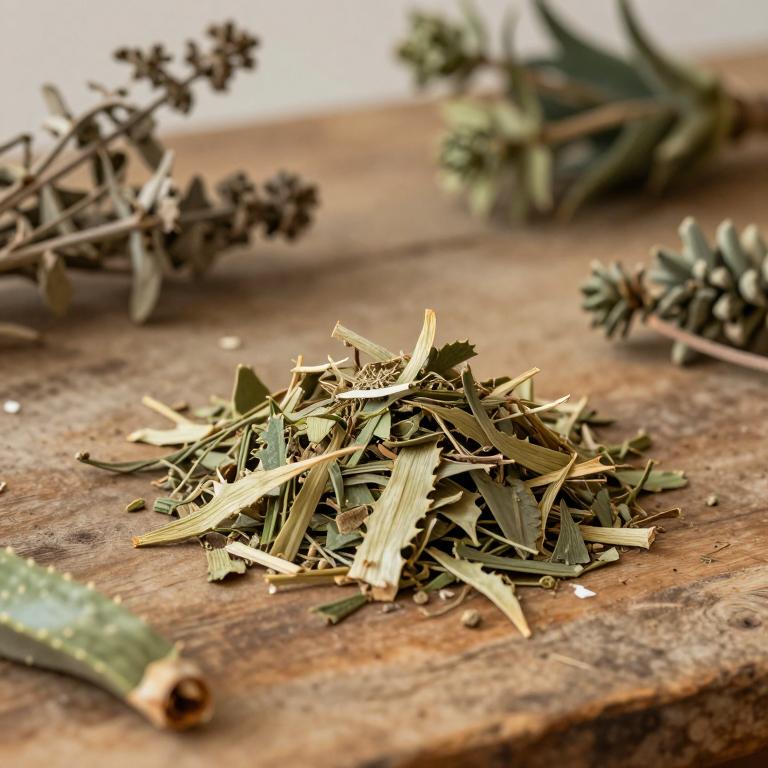
, scientifically known as Aloe adigratana, is a resilient succulent prized for its diverse therapeutic properties. Native to specific tropical regions, this medicinal plant is widely utilized in traditional healing to treat skin irritations, promote wound recovery, and support digestive health through its potent, nutrient-rich bioactive compounds.
- Family
- Asphodelaceae
- Native range
- Africa
- Parts used
- Leaf
- Common names
- Not available
- Scientific synonyms
- Aloe Eru Var. Hookeri
Names and Synonyms
Scientific Names
Accepted name
Aloe adigratanaSynonyms
- Aloe eru var. hookeri
Sources: Wikidata
Taxonomical Classification
This plant belongs to the kingdom Plantae and the phylum Streptophyta, falling under the class Equisetopsida and subclass Magnoliidae. Within the order Asparagales, it is classified under the family Asphodelaceae. Finally, its taxonomic identity is defined by the genus Aloe.
| Rank | Classification |
|---|---|
| Kingdom | Plantae |
| Phylum | Streptophyta |
| Class | Equisetopsida |
| Subclass | Magnoliidae |
| Order | Asparagales |
| Family | Asphodelaceae |
| Genus | Aloe |
Sources: The World Checklist of Vascular Plants (WCVP)
Distribution
This plant possesses a specific and limited geographical range within the African continent. It is primarily found distributed across the region of Northeast Tropical Africa. Specifically, its presence has been documented within the borders of Eritrea. Additionally, the species can be located within the territory of Ethiopia. These locations represent the known natural habitats for this medicinal species.
| Region | Area |
|---|---|
| Northeast Tropical Africa | Eritrea |
| Northeast Tropical Africa | Ethiopia |
Sources: The World Checklist of Vascular Plants (WCVP)
Botanical Identification
Life history
The life history of Aloe adigratana is characterized by its classification as a chamaephyte, a growth form where the permanent buds are located close to the soil surface, allowing the plant to persist through varying environmental conditions. As a perennial succulent, its life cycle begins with the germination of seeds, typically occurring in rocky or semi-arid substrates where it establishes a robust root system to anchor itself and capture moisture. The plant progresses through a vegetative stage marked by the development of thick, fleshy leaves designed for water storage, which are essential for its survival in its native habitat. During its reproductive phase, Aloe adigratana produces inflorescences that bear flowers, often attracting specific pollinators that facilitate sexual reproduction. Following successful pollination, the production of seeds ensures the continuation of the species. The plant's ability to maintain its life cycle is heavily dependent on its ability to withstand periods of drought, utilizing its specialized morphology to protect its growing points near the ground, thereby ensuring resilience against herbivory and environmental stressors.
- Life form :
- chamaephyte
Morphology
The morphology of Aloe adigratana is characterized by its distinct growth form as a non-woody herb. As a terrestrial organism, it grows directly in the soil rather than as an epiphyte, maintaining an independent existence without functioning as a parasite. While its structural habit is primarily defined by its herbaceous nature, its physical arrangement is classified as a self-supporting climber, allowing it to maintain its stature through its own structural integrity.
- Climber :
- self-supporting
- Epiphyte :
- terrestrial
- Growth form :
- herb
- Parasite :
- independent
- Woodiness :
- non-woody
Sources: Global Inventory of Floras and Traits (GIFT)
Plant Parts
Aloe adigratana has 1 reported plant parts identified across 2 scientific publications and several other databases that are studied for medicinal purposes. The most consistently reported plant part include leaf.
| Plant part | Supporting sources | Consensus |
|---|---|---|
| Leaf | 2 supporting sources | ★☆☆☆☆ |
Leaf
- Scientific reports
- Evidence-based complementary and alternative medicine : eCAM
Chemicals
Aloe adigratana has 3 reported phytochemicals identified across 2 scientific publications and several other databases. The most consistently reported chemicals include Anthraquinones, Phenols, Saponins.
| Chemical | Supporting sources | Consensus |
|---|---|---|
| Anthraquinones | 1 supporting sources | ★☆☆☆☆ |
| Phenols | 1 supporting sources | ★☆☆☆☆ |
| Saponins | 1 supporting sources | ★☆☆☆☆ |
Anthraquinones
- Scientific reports
Phenols
- Scientific reports
Saponins
- Scientific reports
Activities
Aloe adigratana has 3 reported activities identified across 2 scientific publications and several other databases. The most consistently reported activities include Antibacterial, Antifungal, Antimicrobial.
| Activity | Supporting sources | Consensus |
|---|---|---|
| Antibacterial | 1 supporting sources | ★☆☆☆☆ |
| Antifungal | 1 supporting sources | ★☆☆☆☆ |
| Antimicrobial | 1 supporting sources | ★☆☆☆☆ |
Antibacterial
- Evidence-based complementary and alternative medicine : eCAM
Antifungal
- Evidence-based complementary and alternative medicine : eCAM
Antimicrobial
- Evidence-based complementary and alternative medicine : eCAM
Conditions
Aloe adigratana has 6 reported investigations on conditions identified across 2 scientific publications and several other databases. The most consistently reported conditions include Escherichia coli, Salmonella typhi, Staphylococcus aureus, dandruff, malaria.
| Condition | Supporting sources | Consensus |
|---|---|---|
| Escherichia coli | 1 supporting sources | ★☆☆☆☆ |
| Salmonella typhi | 1 supporting sources | ★☆☆☆☆ |
| Staphylococcus aureus | 1 supporting sources | ★☆☆☆☆ |
| Dandruff | 1 supporting sources | ★☆☆☆☆ |
| Malaria | 1 supporting sources | ★☆☆☆☆ |
| Wound | 1 supporting sources | ★☆☆☆☆ |
Escherichia coli
- Scientific reports
Salmonella typhi
- Scientific reports
Staphylococcus aureus
- Scientific reports
Dandruff
- Evidence-based complementary and alternative medicine : eCAM
Malaria
- Evidence-based complementary and alternative medicine : eCAM
Wound
- Evidence-based complementary and alternative medicine : eCAM
Preparations
Aloe adigratana has 4 reported preparations identified across 2 scientific publications and several other databases. The most consistently reported preparations include TLC fractions, distilled water extract, leaf latex, methanol extract.
| Preparation | Supporting sources | Consensus |
|---|---|---|
| Tlc fractions | 1 supporting sources | ★☆☆☆☆ |
| Distilled water extract | 1 supporting sources | ★☆☆☆☆ |
| Leaf latex | 1 supporting sources | ★☆☆☆☆ |
| Methanol extract | 1 supporting sources | ★☆☆☆☆ |
Tlc fractions
- Evidence-based complementary and alternative medicine : eCAM
Distilled water extract
- Scientific reports
Leaf latex
- Evidence-based complementary and alternative medicine : eCAM
Methanol extract
- Scientific reports