grey alder
Alnus incana · Accepted scientific name
Scientific literature: Very Sparse (18 studies) · ★☆☆☆☆
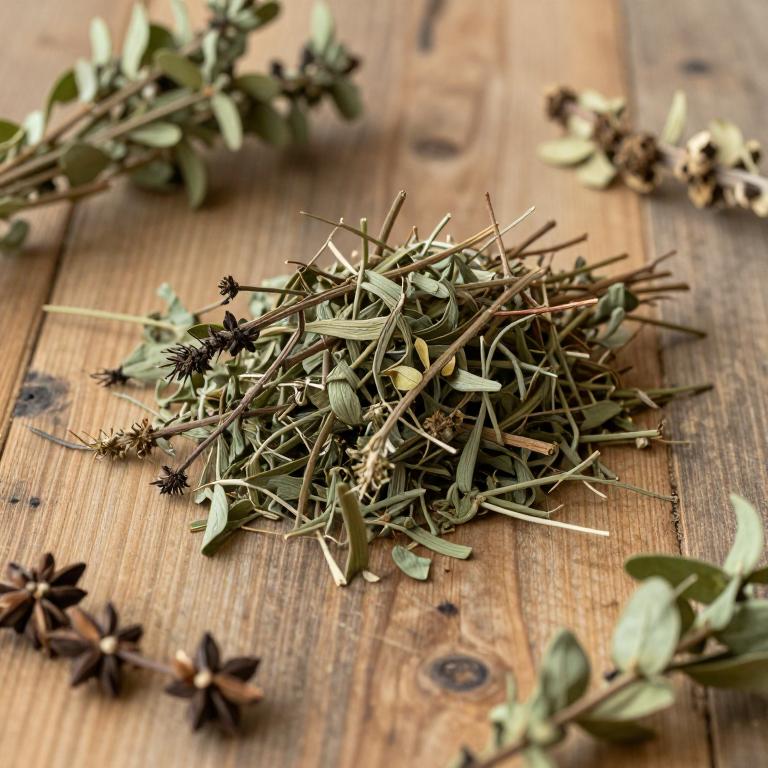
Grey alder, scientifically known as Alnus incana, is a versatile deciduous shrub or small tree native to temperate regions. Renowned for its nitrogen-fixing capabilities, it thrives in moist soils. Traditionally, its bark and leaves have been utilized in various medicinal practices to treat ailments ranging from inflammation to digestive issues.
Names and Synonyms
Common Names
- gray alder
- grey alder
- hoary alder
- speckled alder
- tag alder
Scientific Names
Accepted name
Alnus incanaSynonyms
- Alnus glutinosa var. incana
- Betula incana
- Alnus februaria var. incana
- Betula alnus var. incana
Regional and Traditional Names
Spanish:
- Alnus februaria var incana
- Betula incana
- Aliso gris
- Betula alnus var. incana
- Aliso dorado
- Aliso cano
- Alnus februaria var. incana
- Betula alnus var incana
German:
- Grau-Erle
- Grauerle
- Grau-Erle
- Weiß-Erle
French:
- Aulne blanc
- Aulne de montagne
- Aulne rugueux
- aulne blanc
- arcoce
- aulne blanc
- aulne gris
- aulne
- Aulne blanchatre
- Verne
Sources: Wikidata, Catalogue of Life
Taxonomical Classification
This plant belongs to the kingdom Plantae and the phylum Streptophyta, falling under the class Equisetopsida and subclass Magnoliidae. Within the order Fagales and family Betulaceae, it is classified under the genus Alnus.
| Rank | Classification |
|---|---|
| Kingdom | Plantae |
| Phylum | Streptophyta |
| Class | Equisetopsida |
| Subclass | Magnoliidae |
| Order | Fagales |
| Family | Betulaceae |
| Genus | Alnus |
Sources: The World Checklist of Vascular Plants (WCVP)
Distribution
This plant exhibits a specific distribution pattern across several regions of Northern Europe. It can be found growing within the borders of Denmark and throughout Finland. The species is also present in the Faroe Islands, known locally as Føroyar. Furthermore, its range extends to the islands of Great Britain and Ireland. These locations highlight its preference for the northern European climate.
| Region | Area |
|---|---|
| Northern Europe | Denmark |
| Northern Europe | Finland |
| Northern Europe | Føroyar |
| Northern Europe | Great Britain |
| Northern Europe | Ireland |
| Northern Europe | Norway |
| Northern Europe | Sweden |
| Middle Europe | Austria |
| Middle Europe | Belgium |
| Middle Europe | Czechia-Slovakia |
Sources: The World Checklist of Vascular Plants (WCVP)
Botanical Identification
Ecology
The ecology of Alnus incana is defined by its ability to thrive across diverse topographical landscapes, ranging from low-lying forest ecosystems and dense forest edges to more rugged hills and mountainous terrain. It is a versatile species capable of colonizing various environments, including managed landscapes such as parks, where it integrates into both wild and semi-natural settings. As a pioneer species, it frequently occupies transitional zones and disturbed areas within these habitats, often playing a critical role in soil stabilization and nutrient cycling. Its distribution across varying elevations allows it to adapt to a range of microclimates, provided there is sufficient moisture to support its growth within these forested and montane ecological niches.
- Habitat :
- forest,forestedges,hills,mountains,parks
Life history
The life history of Alnus incana is characterized by its status as a perennial species, allowing it to persist in its environment through multiple growing seasons. As a phanerophyte, its buds are located on aerial shoots well above the ground, a structural adaptation that defines its growth habit. The plant follows a deciduous pattern, shedding its foliage annually as part of its seasonal cycle. Its life strategy is further defined by its classification as a phanerophyte, ensuring its reproductive and vegetative structures remain elevated during its developmental stages.
- Deciduousness :
- deciduous
- Life form :
- phanerophyte
- Lifecycle :
- perennial
Morphology
The morphology of Alnus incana is characterized by its growth form, which primarily manifests as a woody tree or shrub. As a self-supporting plant, it does not function as a climber or a liana, and it maintains an independent lifestyle rather than acting as a parasite or an epiphyte, typically occupying terrestrial habitats. The stature of the species is quite variable, with plant heights ranging from a minimum of 3 m to a maximum of 24 m, though it reaches a mean height of approximately 8.532 m.
- Aquatic :
- terrestrial
- Climber :
- self-supporting
- Epiphyte :
- terrestrial
- Growth form :
- tree
- Growth form :
- shrub
- Parasite :
- independent
- Plant height max:
- 24 m
- Plant height mean:
- 8.532 m
- Plant height min:
- 3 m
- Woodiness :
- woody
Physiology
The physiology of Alnus incana is characterized by a C3 photosynthetic pathway, which is typical for many temperate woody species. The plant exhibits a mean leaf size of approximately 27.2331 cm², facilitating efficient light interception within its ecological niche. It is classified as a non-carnivorous organism, relying on traditional autotrophic methods for nutrient acquisition rather than the capture of prey. Furthermore, its leaf structure is defined by a mean Specific Leaf Area (SLA) of 205.15 cm²/g, reflecting a physiological strategy that balances leaf thickness and surface area for optimized gas exchange and resource management.
- Carnivory :
- non-carnivorous
- Leaf size mean:
- 27.2331 cm²
- Photosynthetic pathway :
- C3
- Specific Leaf Area (SLA) mean:
- 205.15 cm²/g
Reproduction
The reproduction of Alnus incana is characterized by a sexual process that is bisexual in nature, although it does not utilize asexual reproduction. The flowering period typically begins in March and concludes in April. The plant utilizes an abiotic pollination syndrome, specifically relying on wind (anemophily) for the transfer of pollen. Self-fertilization is absent, ensuring genetic diversity through its pollination mechanism. The resulting fruit is classified as a dry, indehiscent achene. These fruits are highly prolific, containing more than 1,000 seeds per fruit. The seeds are characterized by a mean mass of approximately 0.0007647178 g, with individual seed masses ranging from a minimum of 0.00032 g to a maximum of 0.0035 g. Furthermore, the seed volume is consistent at 0.79 mm³. For the distribution of its offspring, the plant employs an anemochorous dispersal syndrome, utilizing the wind to spread its seeds across the environment.
- Dehiscence :
- indehiscent
- Dispersal syndrome :
- anemochorous
- Flowering time :
- Mar
- Flowering time :
- Apr
- Fruit dryness :
- dry
- Fruit type :
- achene
- Pollination syndrome :
- wind
- Pollination syndrome :
- abiotic
- Reproduction asexual :
- absent
- Reproduction sexual :
- bisexual
- Seed mass max:
- 0.0035 g
- Seed mass mean:
- 0.0007647178 g
- Seed mass min:
- 0.00032 g
- Seed volume max:
- 0.79 mm³
- Seeds_per_fruit :
- >1000
- Self fertilization :
- absent
Sources: Global Inventory of Floras and Traits (GIFT)
Chemicals
Alnus incana has 9 reported phytochemicals identified across 0 scientific publications and several other databases. The most consistently reported chemicals include Betulin, Flavonoids, LUPENONE, Phytol, betulinic acid.
| Chemical | Supporting sources | Consensus |
|---|---|---|
| Betulin | 1 supporting sources | ★☆☆☆☆ |
| Flavonoids | 1 supporting sources | ★☆☆☆☆ |
| LUPENONE | 1 supporting sources | ★☆☆☆☆ |
| Phytol | 1 supporting sources | ★☆☆☆☆ |
| betulinic acid | 1 supporting sources | ★☆☆☆☆ |
| betulone | 1 supporting sources | ★☆☆☆☆ |
| linoleic acid | 1 supporting sources | ★☆☆☆☆ |
| linolenic acid | 1 supporting sources | ★☆☆☆☆ |
| palmitic acid | 1 supporting sources | ★☆☆☆☆ |
Betulin
- Journal of ethnopharmacology
Flavonoids
- Scientific reports
LUPENONE
- Journal of ethnopharmacology
Phytol
- BMC complementary medicine and therapies
betulinic acid
- Journal of ethnopharmacology
betulone
- Journal of ethnopharmacology
linoleic acid
- BMC complementary medicine and therapies
linolenic acid
- BMC complementary medicine and therapies
palmitic acid
- BMC complementary medicine and therapies
Activities
Alnus incana has 2 reported activities identified across 0 scientific publications and several other databases. The most consistently reported activities include Antiapoptotic, Antioxidant.
| Activity | Supporting sources | Consensus |
|---|---|---|
| Antiapoptotic | 1 supporting sources | ★☆☆☆☆ |
| Antioxidant | 1 supporting sources | ★☆☆☆☆ |
Antiapoptotic
- Scientific reports
Antioxidant
- Scientific reports
Conditions
Alnus incana has 6 reported investigations on conditions identified across 0 scientific publications and several other databases. The most consistently reported conditions include Cervical cancer, HeLa cells, obesity, sickle-cell anemia, thalassemia.
| Condition | Supporting sources | Consensus |
|---|---|---|
| Cervical cancer | 1 supporting sources | ★☆☆☆☆ |
| Hela cells | 1 supporting sources | ★☆☆☆☆ |
| Obesity | 1 supporting sources | ★☆☆☆☆ |
| Sickle-cell anemia | 1 supporting sources | ★☆☆☆☆ |
| Thalassemia | 1 supporting sources | ★☆☆☆☆ |
| Tuberculosis | 1 supporting sources | ★☆☆☆☆ |
Cervical cancer
- BMC complementary medicine and therapies
Hela cells
- BMC complementary medicine and therapies
Obesity
- Planta medica
Sickle-cell anemia
- Scientific reports
Thalassemia
- Scientific reports
Tuberculosis
- Journal of ethnopharmacology
Preparations
Alnus incana has 9 reported preparations identified across 0 scientific publications and several other databases. The most consistently reported preparations include DCM fraction, Methanolic extracts of the bark, butanol extract, dichloromethane and 80 % ethanol extracts, ethanolic extracts.
| Preparation | Supporting sources | Consensus |
|---|---|---|
| Dcm fraction | 1 supporting sources | ★☆☆☆☆ |
| Methanolic extracts of the bark | 1 supporting sources | ★☆☆☆☆ |
| Butanol extract | 1 supporting sources | ★☆☆☆☆ |
| Dichloromethane and 80 % ethanol extracts | 1 supporting sources | ★☆☆☆☆ |
| Ethanolic extracts | 1 supporting sources | ★☆☆☆☆ |
| Extracts | 1 supporting sources | ★☆☆☆☆ |
| Gallery of dryocoetes alni | 1 supporting sources | ★☆☆☆☆ |
| Methanolic extracts | 1 supporting sources | ★☆☆☆☆ |
| Total extract | 1 supporting sources | ★☆☆☆☆ |
Dcm fraction
- BMC complementary medicine and therapies
Methanolic extracts of the bark
- Journal of ethnopharmacology
Butanol extract
- Scientific reports
Dichloromethane and 80 % ethanol extracts
- Journal of ethnopharmacology
Ethanolic extracts
- Canadian journal of physiology and pharmacology
Extracts
- Planta medica
Gallery of dryocoetes alni
- Fungal systematics and evolution
Methanolic extracts
- Journal of ethnopharmacology
Total extract
- Scientific reports