Allium triquetrum
Allium subhirsutum · Accepted scientific name
Scientific literature: Very Sparse (2 studies) · ★☆☆☆☆
Allium triquetrum, scientifically known as Allium subhirsuatum, is a perennial herb belonging to the Amaryllidaceae family. Found primarily in subtropical regions, this plant is valued for its distinct garlic-like aroma. It is frequently utilized in traditional medicine for its antimicrobial properties and its potential to support cardiovascular health.
- Family
- Amaryllidaceae
- Native range
- Europe
- Parts used
- Not available
- Common names
- Hairy Garlic
- Scientific synonyms
- Kalabotis Clusianum · Allium Subhirsutum Var. Brachystemon · 12 more
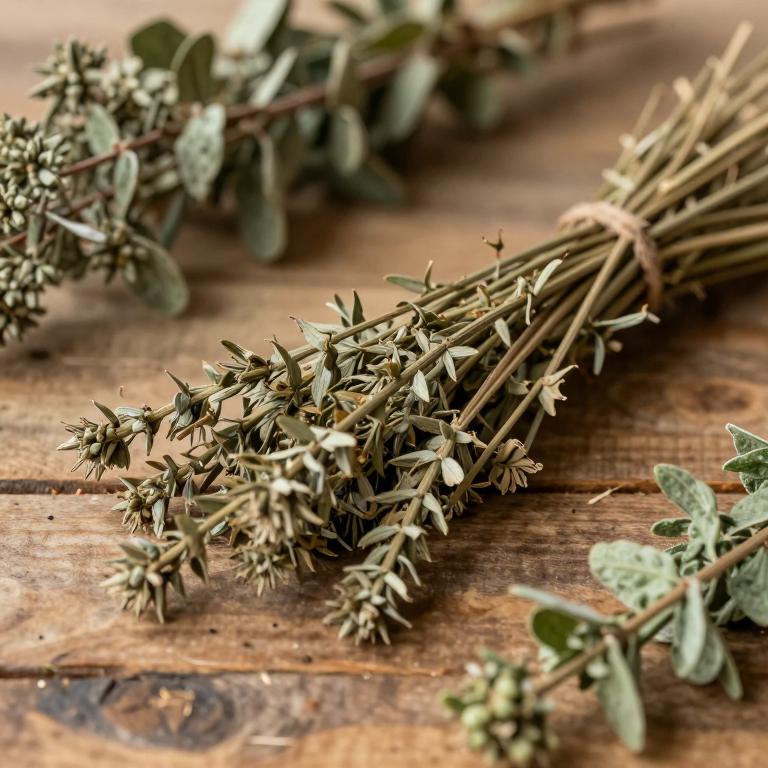
Names and Synonyms
Common Names
- Hairy Garlic
Scientific Names
Accepted name
Allium subhirsutumSynonyms
- Kalabotis clusianum
- Allium subhirsutum var. brachystemon
- Allium subvillosum var. clusianum
- Allium trifoliatum proles loiseleurii
- Allium subhirsutum proles loiseleurii
- Allium subhirsutum var. hellenicum
- Allium subhirsutum subsp. ciliare
- Allium subhirsutum var. ciliatum
- Allium subhirsutum subsp. ciliatum
- Allium tineoi
- Allium niveum
- Allium ciliare
- Allium brachystemon
- Allium loiseleurii
Sources: Wikidata, Catalogue of Life
Taxonomical Classification
This plant, Allium subhirsumtum, belongs to the kingdom Plantae and the phylum Streptophyta. It is further classified under the class Equisetopsida and subclass Magnoliidae, falling within the order Asparagales. Finally, it is a member of the family Amaryllidaceae and the genus Allium.
| Rank | Classification |
|---|---|
| Kingdom | Plantae |
| Phylum | Streptophyta |
| Class | Equisetopsida |
| Subclass | Magnoliidae |
| Order | Asparagales |
| Family | Amaryllidaceae |
| Genus | Allium |
Sources: The World Checklist of Vascular Plants (WCVP)
Distribution
This plant exhibits a diverse geographical distribution across several European regions. In Northern Europe, its presence can be documented within Great Britain. Moving toward Middle Europe, the species is also found in Germany. The distribution extends into Southwestern Europe, where it inhabits the Baleares and Corse. Finally, the plant is also commonly located throughout France.
| Region | Area |
|---|---|
| Northern Europe | Great Britain |
| Middle Europe | Germany |
| Southwestern Europe | Baleares |
| Southwestern Europe | Corse |
| Southwestern Europe | France |
| Southwestern Europe | Sardegna |
| Southwestern Europe | Spain |
| Southeastern Europe | Albania |
| Southeastern Europe | Greece |
| Southeastern Europe | Italy |
Sources: The World Checklist of Vascular Plants (WCVP)
Botanical Identification
Life history
The life history of Allium subhirsumtum is characterized by a perennial lifecycle, allowing the plant to persist through multiple growing seasons. As a specialized survivalist, its life form is classified as a geophyte, meaning it relies on underground storage organs to endure unfavorable environmental conditions. This evolutionary strategy is further defined by its status as a cryptophyte, where the essential regenerative parts of the plant remain protected beneath the soil surface, ensuring its continued development and resilience across successive years.
- Life form :
- geophyte
- Life form :
- cryptophyte
- Lifecycle :
- perennial
Morphology
The morphology of Allium subhirsum is characterized by a growth form classified as a herb, specifically appearing as a non-woody, herbaceous plant. It functions as an independent organism, neither acting as a parasite nor as an epiphyte, as it maintains a primarily terrestrial habitat. In terms of structural support, the plant is self-supporting and does not exhibit climbing behaviors such as those found in vines or lianas. Its physical constitution is entirely non-woody, consistent with its herbaceous nature.
- Aquatic :
- terrestrial
- Climber :
- self-supporting
- Epiphyte :
- terrestrial
- Growth form :
- herb
- Parasite :
- independent
- Woodiness :
- non-woody
Physiology
The physiology of Allium subhirsumtum is characterized by a metabolic framework centered on a C3 photosynthetic pathway, which dictates how the plant captures and processes carbon dioxide to synthesize organic compounds. Under this C3 mechanism, carbon fixation occurs primarily through the enzyme RuBisCO within the mesophyll cells during the light-independent reactions of photosynthesis. This physiological strategy involves the direct fixation of atmospheric $CO_2$ into three-carbon molecules, a process that is highly efficient in temperate or moist environments but requires careful regulation of transpiration to minimize photorespiration. The plant's energy acquisition is closely tied to its ability to manage gas exchange through its stomata, balancing the intake of carbon for biomass production against the loss of water vapor. This metabolic pathway serves as the fundamental driver for the plant's growth, nutrient assimilation, and the synthesis of secondary metabolites that define its medicinal properties.
- Photosynthetic pathway :
- C3
Sources: Global Inventory of Floras and Traits (GIFT)
Chemicals
Allium subhirsutum has 1 reported phytochemicals identified across 0 scientific publications and several other databases. The most consistently reported chemicals include Flavonoids.
| Chemical | Supporting sources | Consensus |
|---|---|---|
| Flavonoids | 1 supporting sources | ★☆☆☆☆ |
Flavonoids
- Molecules (Basel, Switzerland)