Persian shallot
Allium stipitatum · Accepted scientific name
Scientific literature: Very Sparse (24 studies) · ★☆☆☆☆
Persian shallot, scientifically known as Alliium stipitatum, is a versatile medicinal plant prized in traditional healing. Renowned for its potent antimicrobial and antioxidant properties, it serves as a natural remedy for respiratory issues and digestive health. This nutrient-rich bulb offers significant therapeutic benefits, supporting overall wellness through its bioactive compounds.
- Family
- Amaryllidaceae
- Native range
- Europe
- Parts used
- Flower · Stem
- Common names
- Not available
- Scientific synonyms
- Allium Hirtifolium · Allium Atropurpureum Var. Hirtulum
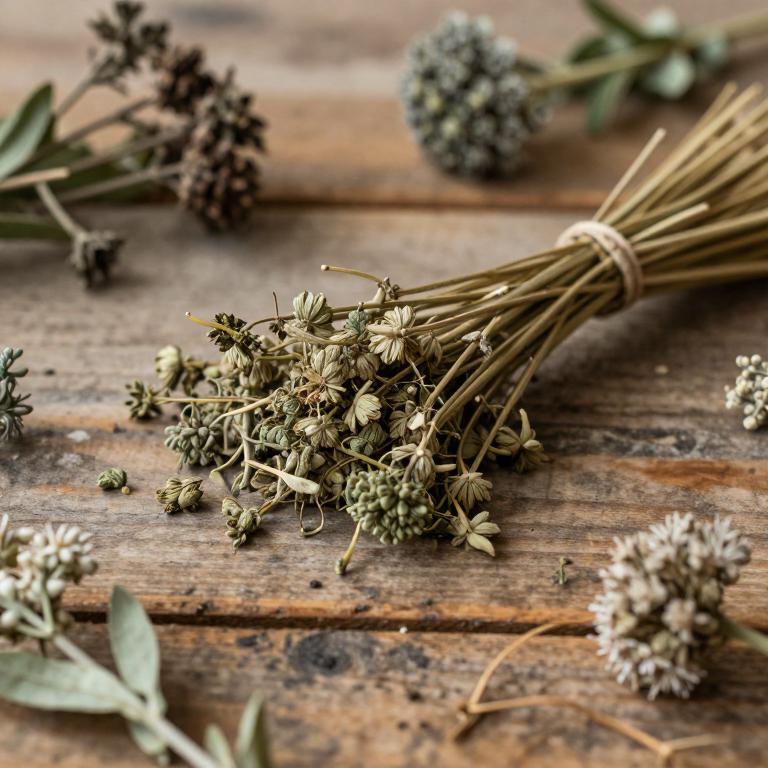
Names and Synonyms
Scientific Names
Accepted name
Allium stipitatumSynonyms
- Allium hirtifolium
- Allium atropurpureum var. hirtulum
Regional and Traditional Names
German:
- Stiel-Lauch
Sources: Wikidata, Catalogue of Life
Taxonomical Classification
This plant belongs to the kingdom Plantae and the phylum Streptophyta, falling under the class Equisetopsida and subclass Magnoliidae. Within the order Asparagales, it is classified under the family Amaryllidaceae and the genus Allium.
| Rank | Classification |
|---|---|
| Kingdom | Plantae |
| Phylum | Streptophyta |
| Class | Equisetopsida |
| Subclass | Magnoliidae |
| Order | Asparagales |
| Family | Amaryllidaceae |
| Genus | Allium |
Sources: The World Checklist of Vascular Plants (WCVP)
Distribution
This plant exhibits a diverse geographical distribution spanning across parts of Europe and Asia. Within Middle Europe, it can be found growing in the regions of Austria and Germany. Its presence also extends through the territories of Czechia and Slovakia. Moving toward Central Asia, the species is widely distributed across Kazakhstan. Finally, its range reaches into the mountainous landscapes of Kirgizstan.
| Region | Area |
|---|---|
| Middle Europe | Austria |
| Middle Europe | Czechia-Slovakia |
| Middle Europe | Germany |
| Central Asia | Kazakhstan |
| Central Asia | Kirgizstan |
| Central Asia | Turkmenistan |
| Central Asia | Tadzhikistan |
| Central Asia | Uzbekistan |
| Western Asia | Afghanistan |
| Western Asia | Iran |
Sources: The World Checklist of Vascular Plants (WCVP)
Botanical Identification
Ecology
The ecology of Allium stipitatum is characterized by its specialized preference for mountainous environments, where it thrives within high-altitude ecosystems. This species occupies a specific vertical niche, distributed across an elevational range that begins at 1,900 m AMSL and extends up to a maximum of 3,000 m AMSL. By inhabiting these montane regions, the plant is adapted to the unique climatic conditions and soil compositions typically found in high-elevation mountain habitats.
- Elevational range max:
- 3000 m AMSL
- Elevational range min:
- 1900 m AMSL
- Habitat :
- mountains
Life history
The life history of Allium stipitatum is characterized by its classification as a perennial organism, exhibiting a life cycle that allows it to persist through multiple growing seasons. As a member of the geophyte life form, it survives unfavorable environmental conditions by storing nutrients in specialized underground structures, such as bulbs, which facilitate its regeneration. Furthermore, its biological strategy identifies it as a cryptophyte, meaning its essential regenerative buds are protected beneath the soil surface, ensuring its survival and continued development throughout its long-term life cycle.
- Life form :
- geophyte
- Life form :
- cryptophyte
- Lifecycle :
- perennial
Morphology
Morphologically, Allium stipitatum is characterized as a non-woody herb that exhibits a self-supporting growth habit, requiring no external structures for climbing. This terrestrial plant grows as an independent organism, functioning without parasitic tendencies. In terms of stature, it maintains a moderate height, typically ranging from a minimum of 0.6 m to a maximum of 1.5 m.
- Climber :
- self-supporting
- Epiphyte :
- terrestrial
- Growth form :
- herb
- Parasite :
- independent
- Plant height max:
- 1.5 m
- Plant height min:
- 0.6 m
- Woodiness :
- non-woody
Reproduction
The reproduction of Allium stipitatum is characterized by a specific seasonal flowering cycle that dictates its reproductive success. The flowering period typically begins in May, marking the onset of its reproductive phase, and continues through the late spring and early summer months until it reaches its conclusion in June. This relatively concentrated window of flowering suggests a specialized period for pollination and subsequent seed development.
- Flowering time :
- May
- Flowering time :
- Jun
Sources: Global Inventory of Floras and Traits (GIFT)
Plant Parts
Allium stipitatum has 2 reported plant parts identified across 2 scientific publications and several other databases that are studied for medicinal purposes. The most consistently reported plant part include flower, stem.
| Plant part | Supporting sources | Consensus |
|---|---|---|
| Flower | 1 supporting sources | ★☆☆☆☆ |
| Stem | 1 supporting sources | ★☆☆☆☆ |
Flower
- Scientific reports
Stem
- Scientific reports
Chemicals
Allium stipitatum has 13 reported phytochemicals identified across 2 scientific publications and several other databases. The most consistently reported chemicals include 2-methylpyridine-1-ium-1-sulfonate, Ajoene, Allicin, Alliogenin, Gitogenin.
| Chemical | Supporting sources | Consensus |
|---|---|---|
| 2-methylpyridine-1-ium-1-sulfonate | 1 supporting sources | ★☆☆☆☆ |
| Ajoene | 1 supporting sources | ★☆☆☆☆ |
| Allicin | 1 supporting sources | ★☆☆☆☆ |
| Alliogenin | 1 supporting sources | ★☆☆☆☆ |
| Gitogenin | 1 supporting sources | ★☆☆☆☆ |
| Sulfur Compounds | 1 supporting sources | ★☆☆☆☆ |
| kaempferol | 1 supporting sources | ★☆☆☆☆ |
| linoleic acid | 1 supporting sources | ★☆☆☆☆ |
| oleic acid | 1 supporting sources | ★☆☆☆☆ |
| palmitic acid | 1 supporting sources | ★☆☆☆☆ |
2-methylpyridine-1-ium-1-sulfonate
- Biomedicine & pharmacotherapy = Biomedecine & pharmacotherapie
Ajoene
- Pakistan journal of biological sciences : PJBS
Allicin
- Pakistan journal of biological sciences : PJBS
Alliogenin
- In silico pharmacology
Gitogenin
- In silico pharmacology
Sulfur Compounds
- Scientific reports
kaempferol
- In silico pharmacology
linoleic acid
- In silico pharmacology
oleic acid
- In silico pharmacology
palmitic acid
- In silico pharmacology
Activities
Allium stipitatum has 1 reported activities identified across 2 scientific publications and several other databases. The most consistently reported activities include Antibacterial.
| Activity | Supporting sources | Consensus |
|---|---|---|
| Antibacterial | 1 supporting sources | ★☆☆☆☆ |
Antibacterial
- BioMed research international
Conditions
Allium stipitatum has 3 reported investigations on conditions identified across 2 scientific publications and several other databases. The most consistently reported conditions include Acinetobacter baumannii, Stenotrophomonas maltophilia, fungal infections.
| Condition | Supporting sources | Consensus |
|---|---|---|
| Acinetobacter baumannii | 1 supporting sources | ★☆☆☆☆ |
| Stenotrophomonas maltophilia | 1 supporting sources | ★☆☆☆☆ |
| Fungal infections | 1 supporting sources | ★☆☆☆☆ |
Acinetobacter baumannii
- BioMed research international
Stenotrophomonas maltophilia
- BioMed research international
Fungal infections
- Tropical biomedicine
Preparations
Allium stipitatum has 3 reported preparations identified across 2 scientific publications and several other databases. The most consistently reported preparations include SA foliar application, dichloromethane (ASDE) extracts, hexane (ASHE) extracts.
| Preparation | Supporting sources | Consensus |
|---|---|---|
| Sa foliar application | 1 supporting sources | ★☆☆☆☆ |
| Dichloromethane (asde) extracts | 1 supporting sources | ★☆☆☆☆ |
| Hexane (ashe) extracts | 1 supporting sources | ★☆☆☆☆ |
Sa foliar application
- Heliyon
Dichloromethane (asde) extracts
- BioMed research international
Hexane (ashe) extracts
- BioMed research international