honey garlic
Allium siculum · Accepted scientific name
Scientific literature: Very Sparse (5 studies) · ★☆☆☆☆
Honey garlic, scientifically known as Allium siculum, is a charming perennial herb native to the Mediterranean region. Distinguished by its delicate white flowers and pungent aroma, this resilient plant belongs to the amaryllis family. It is highly valued in traditional herbalism for its potent antimicrobial and antioxidant therapeutic properties.
- Family
- Amaryllidaceae
- Native range
- Europe
- Parts used
- Flower · Leaf
- Common names
- Honey Garlic · Honeybells
- Scientific synonyms
- Nothoscordum Siculum · Nectaroscordum Siculum · 1 more
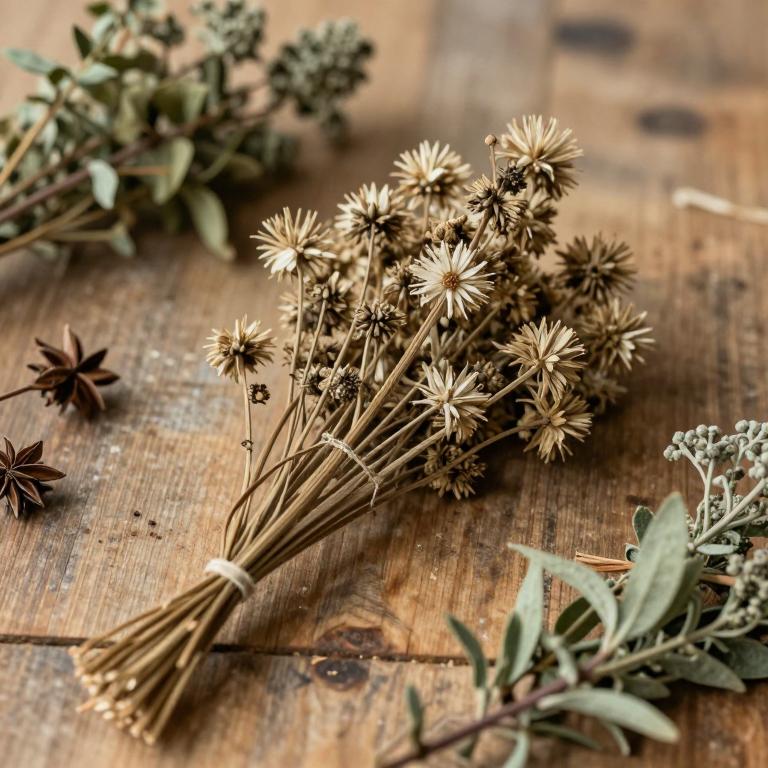
Names and Synonyms
Common Names
- Honey Garlic
- Honeybells
Scientific Names
Accepted name
Allium siculumSynonyms
- Nothoscordum siculum
- Nectaroscordum siculum
- Trigonea sicula
Regional and Traditional Names
German:
- Sizilianischer Honiglauch
- Nectaroscordum siculum
- Sizilianischer Honiglauch
French:
- Ail de Sicile
- Nectaroscorde de Sicile
Sources: Wikidata, Catalogue of Life
Taxonomical Classification
This plant, Allium siculum, belongs to the kingdom Plantae and the phylum Streptophyta. Within the class Equisetopsida and subclass Magnoliidae, it is classified under the order Asparagales. Finally, it is a member of the family Amaryllidaceae and the genus Allium.
| Rank | Classification |
|---|---|
| Kingdom | Plantae |
| Phylum | Streptophyta |
| Class | Equisetopsida |
| Subclass | Magnoliidae |
| Order | Asparagales |
| Family | Amaryllidaceae |
| Genus | Allium |
Sources: The World Checklist of Vascular Plants (WCVP)
Distribution
This plant exhibits a varied geographical range spanning several distinct regions of Europe. In Northern Europe, its presence can be documented within Great Britain. Moving into Middle Europe, the species is found in Germany. Its distribution extends significantly into Southwestern Europe, where it grows in France and on the island of Corse. Finally, the plant is also located in the Mediterranean region of Sardegna.
| Region | Area |
|---|---|
| Northern Europe | Great Britain |
| Middle Europe | Germany |
| Southwestern Europe | Corse |
| Southwestern Europe | France |
| Southwestern Europe | Sardegna |
| Southeastern Europe | Bulgaria |
| Southeastern Europe | Greece |
| Southeastern Europe | Italy |
| Southeastern Europe | Romania |
| Southeastern Europe | Sicilia |
Sources: The World Checklist of Vascular Plants (WCVP)
Botanical Identification
Ecology
The ecology of Allium siculum is characterized by its preference for forest environments, where it integrates into the complex structural layers of the woodland ecosystem. Within these forested habitats, the species typically occupies shaded to semi-shaded niches, benefiting from the buffered microclimate provided by the tree canopy, which regulates temperature fluctuations and maintains relative humidity levels. The plant thrives in the organic-rich, moist soils common to forest floors, often appearing in areas where light penetration is sufficient to support seasonal growth cycles. By occupying these specific woodland settings, Allium siculum plays a role in the local biodiversity, interacting with the soil microbiota and contributing to the nutrient cycling processes inherent to forest ecosystems.
- Habitat :
- forest
Life history
The life history of Allium siculum is characterized by a perennial lifecycle, allowing the plant to persist across multiple growing seasons. It functions as a cryptophyte, utilizing specialized underground structures to survive unfavorable environmental conditions. Specifically, its life form is classified as a geophyte, meaning it relies on protected storage organs located beneath the soil surface to sustain itself through dormant periods.
- Life form :
- geophyte
- Life form :
- cryptophyte
- Lifecycle :
- perennial
Morphology
The morphology of Allium siculum is characterized by its growth form as a non-woody herb, which functions as a self-supporting plant rather than a climber. It is an independent species, lacking any parasitic tendencies, and grows in terrestrial environments. In terms of stature, the plant maintains a height ranging from a minimum of 0.7 m to a maximum of 1.25 m.
- Aquatic :
- terrestrial
- Climber :
- self-supporting
- Epiphyte :
- terrestrial
- Growth form :
- herb
- Parasite :
- independent
- Plant height max:
- 1.25 m
- Plant height min:
- 0.7 m
- Woodiness :
- non-woody
Reproduction
The reproduction of Allium siculum is characterized by a specific seasonal flowering cycle that dictates its reproductive phenology. The flowering period is concentrated within a narrow temporal window, with the flowering start occurring in May. This reproductive phase concludes within the same month, as the flowering end is also recorded in May, though the timing can be subject to environmental variables. This concentrated blooming period facilitates the plant's pollination processes during the late spring, ensuring the successful transition from flowering to seed development.
- Flowering time :
- May
Sources: Global Inventory of Floras and Traits (GIFT)
Plant Parts
Allium siculum has 3 reported plant parts identified across 3 scientific publications and several other databases that are studied for medicinal purposes. The most consistently reported plant part include flower, leaf, stem.
| Plant part | Supporting sources | Consensus |
|---|---|---|
| Flower | 1 supporting sources | ★☆☆☆☆ |
| Leaf | 1 supporting sources | ★☆☆☆☆ |
| Stem | 1 supporting sources | ★☆☆☆☆ |
Flower
- Journal of natural products
Leaf
- Journal of natural products
Stem
- Journal of natural products
Chemicals
Allium siculum has 1 reported phytochemicals identified across 3 scientific publications and several other databases. The most consistently reported chemicals include S-n-Butylcysteine sulfoxide.
| Chemical | Supporting sources | Consensus |
|---|---|---|
| S-n-Butylcysteine sulfoxide | 1 supporting sources | ★☆☆☆☆ |
S-n-Butylcysteine sulfoxide
- Journal of natural products