Rosy garlic
Allium roseum · Accepted scientific name
Scientific literature: Very Sparse (25 studies) · ★☆☆☆☆
Rosy garlic, scientifically known as Alliun roseum, is a captivating perennial bulb celebrated for its striking pinkish-white blooms. Native to specific Mediterranean climates, this aromatic plant offers both ornamental beauty and traditional medicinal value, frequently utilized in herbal practices for its potent antimicrobial and antioxidant properties in natural wellness.
- Family
- Amaryllidaceae
- Native range
- Europe
- Parts used
- Leaf
- Common names
- Rosy Garlic
- Scientific synonyms
- Nectaroscordum Roseum · Molium Roseum
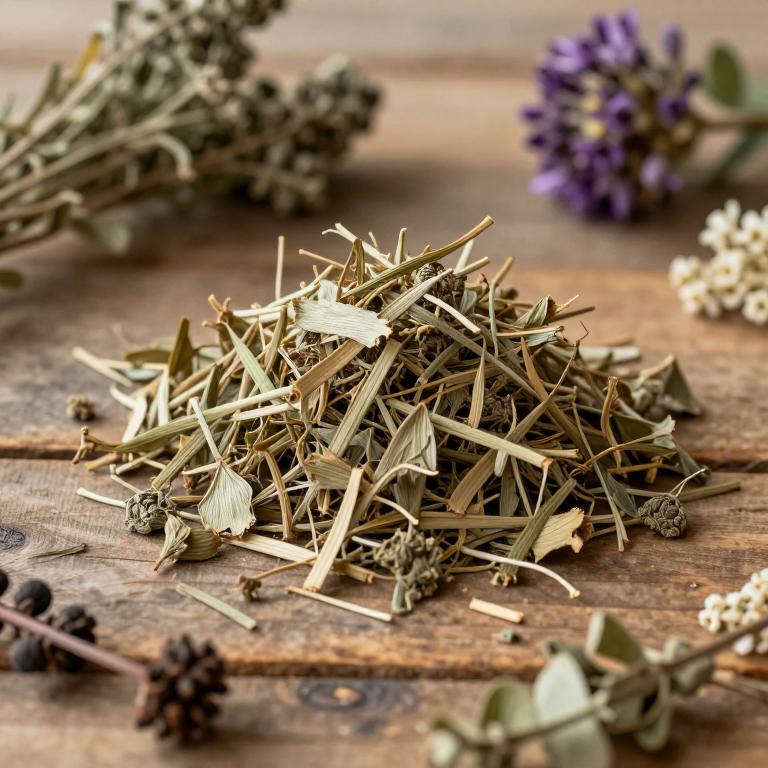
Names and Synonyms
Common Names
- Rosy Garlic
Scientific Names
Accepted name
Allium roseumSynonyms
- Nectaroscordum roseum
- Molium roseum
Regional and Traditional Names
Spanish:
- Allium odoratissimum
- Allium roseum ssp. bulbilliferum
- Allium roseum ssp bulbilliferum
- Allium roseum var. bulbiferum
- Allium ambiguum
- Allium roseum var bulbilliferum
- Allium amoenum
- Allium roseum var bulbiferum
- Allium roseum var carneum
- Allium roseum var. bulbilliferum
- Allium roseum var. carneum
German:
- Rosen-Lauch
- Rosenlauch
- Rosenlauch
French:
- Ail rose
- Ail rose
Sources: Wikidata, Catalogue of Life
Taxonomical Classification
This plant, known scientifically as Allium roseum, belongs to the kingdom Plantae and the phylum Streptophyta. It is classified under the class Equisetopsida and the subclass Magnoliidae, falling within the order Asparagales. Ultimately, it is a member of the family Amaryllidaceae and the genus Allium.
| Rank | Classification |
|---|---|
| Kingdom | Plantae |
| Phylum | Streptophyta |
| Class | Equisetopsida |
| Subclass | Magnoliidae |
| Order | Asparagales |
| Family | Amaryllidaceae |
| Genus | Allium |
Sources: The World Checklist of Vascular Plants (WCVP)
Distribution
This plant exhibits a diverse geographical distribution across several distinct regions of the European continent. In Northern Europe, its presence can be documented within the territories of Great Britain and Ireland. Moving toward the center of the continent, it is also found throughout Middle Europe, specifically in Germany and the Czechia-Slovakia region. The species extends its reach into Southwestern Europe, where it inhabits the Baleares islands. Consequently, its range spans from the northern Atlantic coasts to the Mediterranean islands.
| Region | Area |
|---|---|
| Northern Europe | Great Britain |
| Northern Europe | Ireland |
| Middle Europe | Czechia-Slovakia |
| Middle Europe | Germany |
| Southwestern Europe | Baleares |
| Southwestern Europe | Corse |
| Southwestern Europe | France |
| Southwestern Europe | Portugal |
| Southwestern Europe | Sardegna |
| Southwestern Europe | Spain |
Sources: The World Checklist of Vascular Plants (WCVP)
Botanical Identification
Ecology
The ecology of Allium roseum is fundamentally shaped by its preference for lowland environments, where it finds the specific environmental conditions necessary for its growth and reproduction. Within these low-lying regions, the plant typically colonizes open landscapes such as grasslands, meadows, or rocky slopes that offer sufficient sunlight and well-drained soil. Its presence in lowland habitats suggests an adaptation to moderate elevations where temperature fluctuations and moisture availability are conducive to its life cycle. By occupying these specific ecological niches, Allium roseum participates in the local nutrient cycling and provides essential resources for specialized pollinators within the lowland ecosystem.
- Habitat :
- Lowland
Life history
The life history of Allium roseum is characterized by a perennial lifecycle, allowing the plant to persist through multiple growing seasons. It functions as a geophyte, relying on underground storage organs to survive unfavorable environmental conditions, a strategy that aligns with its classification as a cryptophyte. This specialized survival mechanism ensures that the plant remains protected beneath the soil surface during dormant periods. Furthermore, the species exhibits an evergreen deciduousness, maintaining its biological vitality through its unique structural adaptations.
- Deciduousness :
- evergreen
- Life form :
- geophyte
- Life form :
- cryptophyte
- Lifecycle :
- perennial
Morphology
The morphology of Allium roseum is characterized by its growth form as a non-woody herb. As a terrestrial species, it grows independently without being an epiphyte or a parasite. The plant is self-supporting rather than being a climber, vine, or liana. In terms of stature, it exhibits a variable plant height ranging from a minimum of 0.1 m to a maximum of 0.75 m, with an average height of approximately 0.45 m.
- Aquatic :
- terrestrial
- Climber :
- self-supporting
- Epiphyte :
- terrestrial
- Growth form :
- herb
- Parasite :
- independent
- Plant height max:
- 0.75 m
- Plant height mean:
- 0.45 m
- Plant height min:
- 0.1 m
- Woodiness :
- non-woody
Physiology
The physiology of Allium roseum is characterized by a C3 photosynthetic pathway, which dictates its carbon fixation processes and metabolic efficiency. The vegetative morphology is defined by relatively narrow foliage, where the leaf width remains consistent at a mean, minimum, and maximum of 1 cm. In terms of leaf dimensions, the length of the foliage reaches a maximum of 3 cm. Furthermore, the plant does not function as a nitrogen fixer, meaning it relies on external soil nutrient availability rather than symbiotic nitrogen-fixing bacteria to fulfill its nitrogen requirements.
- Leaf length max:
- 3 cm
- Leaf width mean:
- 1 cm
- Nitrogen fixer :
- no
- Photosynthetic pathway :
- C3
Reproduction
The reproduction of Allium roseum involves both sexual and asexual mechanisms, with asexual reproduction being present to facilitate its spread. The flowering period for this species is highly flexible, with a flowering start that can occur in any month of the year, ranging from January through December, or it may be highly variable depending on environmental conditions. Regarding the movement of its progeny, the plant exhibits an unspecialized dispersal syndrome, utilizing multiple non-specific methods such as anemochory, zoochory, autochory, and hydrochory to distribute its seeds across the landscape.
- Dispersal syndrome :
- unspecialized
- Flowering time :
- Mar
- Reproduction asexual :
- present
Sources: Global Inventory of Floras and Traits (GIFT)
Plant Parts
Allium roseum has 1 reported plant parts identified across 2 scientific publications and several other databases that are studied for medicinal purposes. The most consistently reported plant part include leaf.
| Plant part | Supporting sources | Consensus |
|---|---|---|
| Leaf | 2 supporting sources | ★☆☆☆☆ |
Leaf
- International journal of biological macromolecules
- Antioxidants (Basel, Switzerland)
Chemicals
Allium roseum has 9 reported phytochemicals identified across 2 scientific publications and several other databases. The most consistently reported chemicals include Galacturonic acid, glucose, mannose, Flavonoids, Luteolin 7-O-glucoside.
| Chemical | Supporting sources | Consensus |
|---|---|---|
| Galacturonic acid | 2 supporting sources | ★☆☆☆☆ |
| glucose | 2 supporting sources | ★☆☆☆☆ |
| mannose | 2 supporting sources | ★☆☆☆☆ |
| Flavonoids | 1 supporting sources | ★☆☆☆☆ |
| Luteolin 7-O-glucoside | 1 supporting sources | ★☆☆☆☆ |
| fructose | 1 supporting sources | ★☆☆☆☆ |
| galactose | 1 supporting sources | ★☆☆☆☆ |
| rhamnose | 1 supporting sources | ★☆☆☆☆ |
| xylose | 1 supporting sources | ★☆☆☆☆ |
Galacturonic acid
- International journal of biological macromolecules
- Antioxidants (Basel, Switzerland)
glucose
- International journal of biological macromolecules
- Antioxidants (Basel, Switzerland)
mannose
- International journal of biological macromolecules
- Antioxidants (Basel, Switzerland)
Flavonoids
- PloS one
Luteolin 7-O-glucoside
- PloS one
fructose
- International journal of biological macromolecules
galactose
- Antioxidants (Basel, Switzerland)
rhamnose
- Antioxidants (Basel, Switzerland)
xylose
- Antioxidants (Basel, Switzerland)
Activities
Allium roseum has 5 reported activities identified across 2 scientific publications and several other databases. The most consistently reported activities include Antidiabetic, Antioxidant, Antibacterial, Anticancer, Antiviral.
| Activity | Supporting sources | Consensus |
|---|---|---|
| Antidiabetic | 2 supporting sources | ★☆☆☆☆ |
| Antioxidant | 2 supporting sources | ★☆☆☆☆ |
| Antibacterial | 1 supporting sources | ★☆☆☆☆ |
| Anticancer | 1 supporting sources | ★☆☆☆☆ |
| Antiviral | 1 supporting sources | ★☆☆☆☆ |
Antidiabetic
- International journal of biological macromolecules
- Antioxidants (Basel, Switzerland)
Antioxidant
- International journal of biological macromolecules
- Antioxidants (Basel, Switzerland)
Antibacterial
- International journal of biological macromolecules
Anticancer
- International journal of biological macromolecules
Antiviral
- Antioxidants (Basel, Switzerland)
Conditions
Allium roseum has 4 reported investigations on conditions identified across 2 scientific publications and several other databases. The most consistently reported conditions include Alzheimer's disease, antidiabetic, antioxidant, oxidative stress.
| Condition | Supporting sources | Consensus |
|---|---|---|
| Alzheimer's disease | 1 supporting sources | ★☆☆☆☆ |
| Antidiabetic | 1 supporting sources | ★☆☆☆☆ |
| Antioxidant | 1 supporting sources | ★☆☆☆☆ |
| Oxidative stress | 1 supporting sources | ★☆☆☆☆ |
Alzheimer's disease
- PloS one
Antidiabetic
- International journal of biological macromolecules
Antioxidant
- International journal of biological macromolecules
Oxidative stress
- Antioxidants (Basel, Switzerland)
Preparations
Allium roseum has 6 reported preparations identified across 2 scientific publications and several other databases. The most consistently reported preparations include aqueous medium, basic, chelating, ethanolic extract, polysaccharides.
| Preparation | Supporting sources | Consensus |
|---|---|---|
| Aqueous medium | 1 supporting sources | ★☆☆☆☆ |
| Basic | 1 supporting sources | ★☆☆☆☆ |
| Chelating | 1 supporting sources | ★☆☆☆☆ |
| Ethanolic extract | 1 supporting sources | ★☆☆☆☆ |
| Polysaccharides | 1 supporting sources | ★☆☆☆☆ |
| Water | 1 supporting sources | ★☆☆☆☆ |
Aqueous medium
- Antioxidants (Basel, Switzerland)
Basic
- Antioxidants (Basel, Switzerland)
Chelating
- Antioxidants (Basel, Switzerland)
Ethanolic extract
- PloS one
Polysaccharides
- International journal of biological macromolecules
Water
- Antioxidants (Basel, Switzerland)