Jack-by-the-hedge
Alliaria petiolata · Accepted scientific name
Scientific literature: Very Extensive (234 studies) · ★★★★★
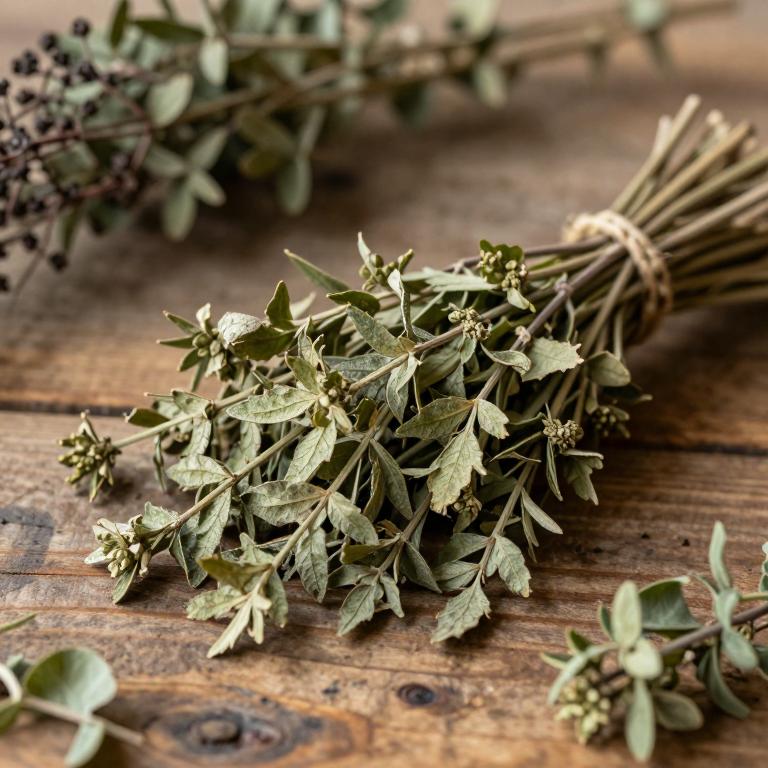
Jack-by-the-hedge, scientifically known as Alliaria petiolata, is a versatile perennial herb native to North America. Often found in woodland settings, this plant is valued in traditional herbalism for its potent antimicrobial and anti-inflammatory properties. Its distinct garlic-like aroma and medicinal potential make it a fascinating subject of ethnobotany.
Names and Synonyms
Common Names
- garlic mustard
- hedge garlic
- hedge-garlic
- jack-by-the-hedge
- Hedge mustard
Scientific Names
Accepted name
Alliaria petiolataSynonyms
- Sisymbrium alliaria
- Crucifera alliaria
- Hesperis alliaria
- Alliaria officinalis f. grandifolia
- Erysimum cordifolium
- Arabis petiolata
- Clypeola alliacea
- Pallavicinia alliaria
- Arabis alliaria
- Erysimum alliaria
- Sisymbrium truncatum
- Alliaria matthioli
Regional and Traditional Names
Spanish:
- Hierba ajera
- Hoja del ganán
- Alliaria alliaria
- Hoja del ganan
- Yerba de ajo
- Hoja del gañán
- Alliaria officinalis
- Zancaraña
- Hoja del gañan
- Erysimum alliaria
- Yerba del ajo
- Zancarana
- Hierba de ajo
- Yerba que huele a ajos
- ajera
- aliaria
- hierba del ajo
- Hierba del Ajo
- aliaria
German:
- Knoblauchsrauke
- Knoblauchhederich
- Knoblauchrauke
- Lauchkraut
- Knoblauchskraut
- Lauchhederich
- alliaire
- Herbe à Ail
- gewöhnliche Knoblauchsrauke
- Knoblauchsrauke
- Knoblauchhederich
French:
- Alliaire officinale
- Herbe à ail
- Alliaire
- Alliaria officinalis
- alliaire
- alliaire officinale
- Herbe à ail
Sources: Wikidata, Catalogue of Life
Taxonomical Classification
This plant, known scientifically as Alliaria petiolata, belongs to the kingdom Plantae and the phylum Streptophyta. It is classified within the class Equisetopsida and the subclass Magnoliidae, falling under the order Brassicales. Finally, it is a member of the family Brassicaceae and is categorized under the genus Alliaria.
| Rank | Classification |
|---|---|
| Kingdom | Plantae |
| Phylum | Streptophyta |
| Class | Equisetopsida |
| Subclass | Magnoliidae |
| Order | Brassicales |
| Family | Brassicaceae |
| Genus | Alliaria |
Sources: The World Checklist of Vascular Plants (WCVP)
Distribution
This plant, known as Alliaria petiolata, exhibits a specific geographical presence across parts of Northern Europe. Its range extends through the Scandinavian peninsula, where it can be found in both Norway and Finland. Additionally, the species is documented within the coastal and mainland regions of Denmark. Moving westward, the plant is also distributed across the British Isles. Specifically, its occurrence is noted in both Great Britain and Ireland.
| Region | Area |
|---|---|
| Northern Europe | Denmark |
| Northern Europe | Finland |
| Northern Europe | Great Britain |
| Northern Europe | Ireland |
| Northern Europe | Norway |
| Northern Europe | Sweden |
| Middle Europe | Austria |
| Middle Europe | Belgium |
| Middle Europe | Czechia-Slovakia |
| Middle Europe | Germany |
Sources: The World Checklist of Vascular Plants (WCVP)
Botanical Identification
Ecology
The ecology of Alliaria petiolata is characterized by its preference for sheltered environments, specifically thriving within forest ecosystems and shrubberies. This species occupies a significant vertical gradient in its distribution, found at elevations ranging from a minimum of 400 m AMSL to a maximum of 2800 m AMSL. Such a broad altitudinal range suggests an ability to adapt to varying temperature regimes and atmospheric pressures within its preferred woodland and shrub-dominated habitats.
- Elevational range max:
- 2800 m AMSL
- Elevational range min:
- 400 m AMSL
- Habitat :
- forest, shrubberies
Life history
The life history of Alliaria petiolata is characterized by a biennial lifecycle, though it can exhibit variable growth patterns depending on environmental conditions. As a hemicryptophyte, the plant protects its perennating buds at the soil surface level during unfavorable seasons, a structural adaptation that supports its survival through various climatic shifts. The species is distinctly deciduous, shedding its foliage as part of its seasonal cycle. This combination of a biennial strategy and a hemicryptophytic life form allows the plant to establish itself effectively within its ecological niche, transitioning from vegetative growth to reproductive maturity over its lifespan.
- Deciduousness :
- deciduous
- Life form :
- hemicryptophyte
- Lifecycle :
- biennial
Morphology
The morphology of Alliaria petiolata is characterized by its growth form as a non-woody herb and forb. This terrestrial plant exhibits an erect shoot orientation and is a self-supporting species, functioning as an independent organism without parasitic or epiphytic tendencies. In terms of stature, the plant typically reaches an average height of approximately 0.58 m, though individual specimens can vary significantly in size, ranging from a minimum height of 0.12 m to a maximum of 1.2 m.
- Aquatic :
- terrestrial
- Climber :
- self-supporting
- Epiphyte :
- terrestrial
- Growth form :
- herb
- Growth form :
- forb
- Parasite :
- independent
- Plant height max:
- 1.2 m
- Plant height mean:
- 0.583333333333333 m
- Plant height min:
- 0.12 m
- Shoot orientation :
- erect
- Woodiness :
- non-woody
Physiology
The physiology of Alliaria petiolata is characterized by a C3 photosynthetic pathway, which dictates its carbon fixation processes and metabolic efficiency. As a non-carnivorous species, it relies entirely on soil-based nutrient uptake rather than supplemental insect consumption. The plant exhibits significant morphological variation in its foliage, with leaf lengths reaching a maximum of 11 cm and a mean leaf width of 5.8 cm (which also represents its minimum and maximum recorded widths). The average leaf size is approximately 75.14 cm², contributing to its overall canopy structure. Furthermore, the plant demonstrates a high Specific Leaf Area (SLA) with a mean value of 412 cm²/g, suggesting relatively thin, high-surface-area leaves optimized for light interception and gas exchange within its ecological niche.
- Carnivory :
- non-carnivorous
- Leaf length max:
- 11 cm
- Leaf size mean:
- 75.14 cm²
- Leaf width mean:
- 5.8 cm
- Photosynthetic pathway :
- C3
- Specific Leaf Area (SLA) mean:
- 412 cm²/g
Reproduction
The reproduction of Alliaria petiolata is driven by sexual processes, as asexual reproduction is noted to be absent. The flowering period typically begins in April and concludes in June, during which the plant utilizes biotic pollination syndromes, specifically relying on insects and bees to facilitate fertilization. Self-fertilization is present within the species, ensuring reproductive success. Following pollination, the plant develops fruit in the form of a dehiscence capsule. These capsules vary in size, with a mean length of 4.7 cm (ranging from a minimum of 2 cm to a maximum of 8 cm) and a mean width of 0.2125 cm (ranging from 0.2 cm to 0.25 cm). The seeds produced are uniform in length at 3.2 mm, with a mean mass of approximately 0.00260120825 g, reaching a maximum of 0.003451 g and a minimum of 0.00172 g. Once the capsules reach maturity, they undergo dehiscence to release the seeds, which are dispersed via an anemochorous syndrome, utilizing the wind for distribution.
- Dehiscence :
- dehiscent
- Dispersal syndrome :
- anemochorous
- Flowering time :
- Apr
- Flowering time :
- Jun
- Fruit length max:
- 8 cm
- Fruit length mean:
- 4.7 cm
- Fruit length min:
- 2 cm
- Fruit type :
- capsule
- Fruit width max:
- 0.25 cm
- Fruit width mean:
- 0.2125 cm
- Fruit width min:
- 0.2 cm
- Pollination syndrome :
- insect
- Pollination syndrome :
- bee
- Pollination syndrome :
- biotic
- Reproduction asexual :
- absent
- Seed length mean:
- 3.2 mm
- Seed mass max:
- 0.003451 g
- Seed mass mean:
- 0.00260120825 g
- Seed mass min:
- 0.00172 g
- Self fertilization :
- present
Sources: Global Inventory of Floras and Traits (GIFT)
Chemicals
Alliaria petiolata has 31 reported phytochemicals identified across 0 scientific publications and several other databases. The most consistently reported chemicals include -carotene, 1-Cyano-2,3-epithiopropane, ALLYL ISOTHIOCYANATE, Allyl glucosinolate, Allyl sulfide.
| Chemical | Supporting sources | Consensus |
|---|---|---|
| -carotene | 1 supporting sources | ★☆☆☆☆ |
| 1-Cyano-2,3-epithiopropane | 1 supporting sources | ★☆☆☆☆ |
| ALLYL ISOTHIOCYANATE | 1 supporting sources | ★☆☆☆☆ |
| Allyl glucosinolate | 1 supporting sources | ★☆☆☆☆ |
| Allyl sulfide | 1 supporting sources | ★☆☆☆☆ |
| Arachidic acid | 1 supporting sources | ★☆☆☆☆ |
| Benzyl glucosinolate | 1 supporting sources | ★☆☆☆☆ |
| But-3-enyl isothiocyanate | 1 supporting sources | ★☆☆☆☆ |
| DIALLYL SULFIDE | 1 supporting sources | ★☆☆☆☆ |
| EO | 1 supporting sources | ★☆☆☆☆ |
-carotene
- Dr. Duke
1-Cyano-2,3-epithiopropane
- Dr. Duke
ALLYL ISOTHIOCYANATE
- Dr. Duke
Allyl glucosinolate
- Dr. Duke
Allyl sulfide
- Dr. Duke
Arachidic acid
- Dr. Duke
Benzyl glucosinolate
- Dr. Duke
But-3-enyl isothiocyanate
- Dr. Duke
DIALLYL SULFIDE
- Dr. Duke
EO
- Dr. Duke
Activities
Alliaria petiolata has 200 reported activities identified across 0 scientific publications and several other databases. The most consistently reported activities include Antioxidant, 5-Alpha-Reductase-Inhibitor, Acantholytic, Acidulant, Albuminurigenic.
| Activity | Supporting sources | Consensus |
|---|---|---|
| Antioxidant | 2 supporting sources | ★☆☆☆☆ |
| 5-Alpha-Reductase-Inhibitor | 1 supporting sources | ★☆☆☆☆ |
| Acantholytic | 1 supporting sources | ★☆☆☆☆ |
| Acidulant | 1 supporting sources | ★☆☆☆☆ |
| Albuminurigenic | 1 supporting sources | ★☆☆☆☆ |
| Aldose-Reductase-Inhibitor | 1 supporting sources | ★☆☆☆☆ |
| Allergenic | 1 supporting sources | ★☆☆☆☆ |
| Alpha-Reductase-Inhibitor | 1 supporting sources | ★☆☆☆☆ |
| Analgesic | 1 supporting sources | ★☆☆☆☆ |
| Anemiagenic | 1 supporting sources | ★☆☆☆☆ |
Antioxidant
- Dr. Duke
- Phytotherapy research : PTR
5-Alpha-Reductase-Inhibitor
- Dr. Duke
Acantholytic
- Dr. Duke
Acidulant
- Dr. Duke
Albuminurigenic
- Dr. Duke
Aldose-Reductase-Inhibitor
- Dr. Duke
Allergenic
- Dr. Duke
Alpha-Reductase-Inhibitor
- Dr. Duke
Analgesic
- Dr. Duke
Anemiagenic
- Dr. Duke
Preparations
Alliaria petiolata has 1 reported preparations identified across 0 scientific publications and several other databases. The most consistently reported preparations include MeOH extracts.
| Preparation | Supporting sources | Consensus |
|---|---|---|
| Meoh extracts | 1 supporting sources | ★☆☆☆☆ |
Meoh extracts
- Phytotherapy research : PTR