Alibertia edulis
Alibertia edulis · Accepted scientific name
Scientific literature: Very Sparse (5 studies) · ★☆☆☆☆
Alibertia edulis, scientifically known as Alibertia edulis, is a versatile medicinal plant native to tropical regions. Often utilized in traditional medicine, its various parts possess significant therapeutic properties. Research explores its potential for treating inflammation and infections, highlighting its importance in ethnobotany and the development of natural remedies.
- Family
- Rubiaceae
- Native range
- Northern America
- Parts used
- Leaf
- Common names
- Not available
- Scientific synonyms
- Genipa Edulis · Cordiera Edulis · 1 more
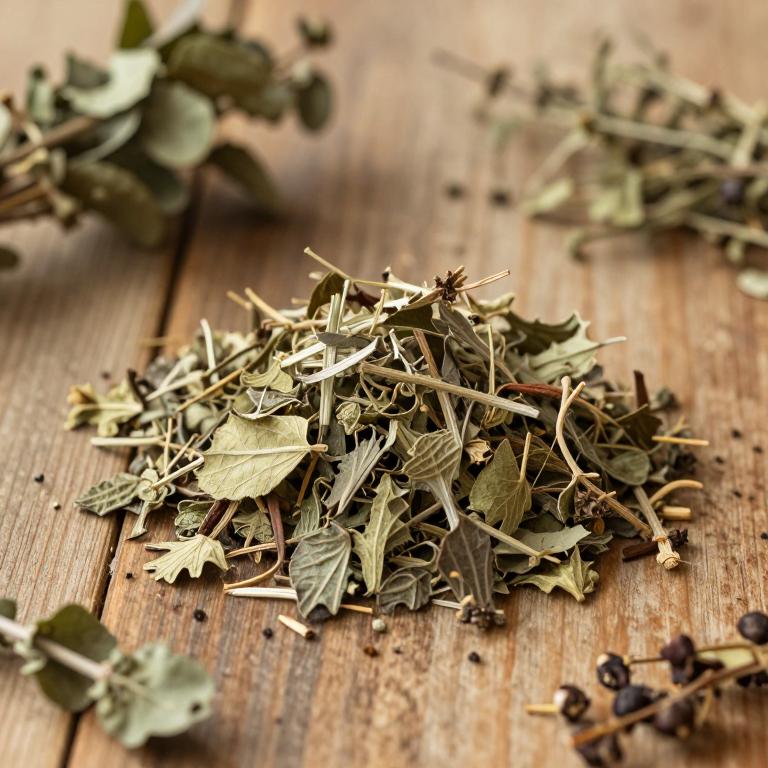
Names and Synonyms
Scientific Names
Accepted name
Alibertia edulisSynonyms
- Genipa edulis
- Cordiera edulis
- Amaioua edulis
Regional and Traditional Names
Spanish:
- canilla de venado
German:
- Wilde Guave
- Wilde Guave
Sources: Wikidata, Catalogue of Life
Taxonomical Classification
This plant belongs to the kingdom Plantae and the phylum Streptophyta, falling under the class Equisetopsida and subclass Magnoliidae. Within the order Gentianaales, it is classified under the family Rubiaceae. Specifically, it is identified by the genus Alibertia and the species Alibertia edulis.
| Rank | Classification |
|---|---|
| Kingdom | Plantae |
| Phylum | Streptophyta |
| Class | Equisetopsida |
| Subclass | Magnoliidae |
| Order | Gentianales |
| Family | Rubiaceae |
| Genus | Alibertia |
Sources: The World Checklist of Vascular Plants (WCVP)
Distribution
This plant exhibits a wide distribution across various regions of North and Central America. In Mexico, it can be found spanning the Gulf coast, the southwest, and the southeast portions of the country. Moving southward, its range extends into the tropical landscapes of Central America. Specifically, it is documented to grow within the borders of Belize. Finally, its geographical presence reaches as far south as Costa Rica.
| Region | Area |
|---|---|
| Mexico | Mexico Gulf |
| Mexico | Mexico Southwest |
| Mexico | Mexico Southeast |
| Central America | Belize |
| Central America | Costa Rica |
| Central America | El Salvador |
| Central America | Guatemala |
| Central America | Honduras |
| Central America | Nicaragua |
| Central America | Panamá |
Sources: The World Checklist of Vascular Plants (WCVP)
Botanical Identification
Ecology
The ecology of Alibertia edulis is characterized by its ability to thrive across a diverse range of environmental conditions and specialized ecosystems. It inhabits various landscapes, including Campinarana, Cerrado (latu sensu), Floresta Ciliar or Galeria, and Savana Amazônica, demonstrating a notable adaptability to different soil types and moisture levels within these biomes. In terms of altitudinal distribution, the species occupies a broad vertical gradient, ranging from sea level (0 m AMSL) up to a maximum elevation of 1200 m AMSL.
- Elevational range max:
- 1200 m AMSL
- Elevational range min:
- 0 m AMSL
- Habitat :
- Campinarana, Cerrado (lato sensu), Floresta Ciliar ou Galeria, Savana Amazônica
Life history
The life history of Alibertia edulis is characterized by a perennial lifecycle, allowing the individual to persist through multiple growing seasons and establish a long-term presence in its ecosystem. As a member of the phanerophyte life forms, specifically classified as both a phanerophyte and a nanophanerophyte, the plant maintains its photosynthetic organs on woody shoots that are elevated well above the ground level. This growth strategy ensures that its vital structures remain protected and capable of sustained development over many years.
- Life form :
- phanerophyte
- Lifecycle :
- perennial
Morphology
The morphology of Alibertia edulis is characterized by a woody growth form, specifically categorized as a tree. This species is a terrestrial plant that functions as an independent organism, meaning it is not a parasite. In terms of its structural habit, it is a self-supporting plant rather than a climber, liana, or vine, and it does not exhibit epiphytic behavior. The plant's stature varies significantly depending on environmental conditions, with an average height of approximately 4 m, though it can reach a maximum height of up to 13 m.
- Aquatic :
- terrestrial
- Climber :
- self-supporting
- Epiphyte :
- terrestrial
- Growth form :
- tree
- Parasite :
- independent
- Plant height max:
- 13 m
- Plant height mean:
- 4 m
- Woodiness :
- woody
Physiology
The physiology of Alibertia edulis is characterized by a C3 photosynthetic pathway, a standard mechanism for carbon fixation in many tropical woody species. Its leaf morphological and nutritional strategies are reflected in its leaf dry matter content (LDMC), which exhibits significant variability with a mean value of 414.6 mg/g, ranging from a minimum of 359.4 mg/g to a maximum of 469.8 mg/g. Furthermore, the plant maintains an average Specific Leaf Area (SLA) of 130.351 cm²/g, indicating its resource allocation strategy regarding leaf thickness and surface area. Regarding nutrient cycling, Alibertia edulis does not function as a nitrogen fixer.
- Leaf dry matter content (LDMC) max:
- 469.8 mg/g
- Leaf dry matter content (LDMC) mean:
- 414.6 mg/g
- Leaf dry matter content (LDMC) min:
- 359.4 mg/g
- Nitrogen fixer :
- no
- Photosynthetic pathway :
- C3
- Specific Leaf Area (SLA) mean:
- 130.351 cm²/g
Reproduction
The reproduction of Alibertia edulis is characterized by specific reproductive mechanisms and distinct morphological attributes of its progeny. Regarding its pollination biology, the plant exhibits a lack of self-fertilization, as the trait of self-fertilization is absent, suggesting a reliance on cross-pollination strategies to ensure genetic diversity. The resulting seeds are highly uniform in size, maintaining a consistent volume throughout the population. Specifically, the seed volume is constant, with a minimum, maximum, and mean value all measured at exactly 15 mm³, indicating a highly stabilized developmental process for its reproductive units.
- Seed volume max:
- 15 mm³
- Self fertilization :
- absent
Sources: Global Inventory of Floras and Traits (GIFT)
Plant Parts
Alibertia edulis has 1 reported plant parts identified across 1 scientific publications and several other databases that are studied for medicinal purposes. The most consistently reported plant part include leaf.
| Plant part | Supporting sources | Consensus |
|---|---|---|
| Leaf | 1 supporting sources | ★☆☆☆☆ |
Leaf
- Drug and chemical toxicology
Activities
Alibertia edulis has 3 reported activities identified across 1 scientific publications and several other databases. The most consistently reported activities include Cytotoxic, Genotoxic, Mutagenic.
| Activity | Supporting sources | Consensus |
|---|---|---|
| Cytotoxic | 1 supporting sources | ★☆☆☆☆ |
| Genotoxic | 1 supporting sources | ★☆☆☆☆ |
| Mutagenic | 1 supporting sources | ★☆☆☆☆ |
Cytotoxic
- Drug and chemical toxicology
Genotoxic
- Drug and chemical toxicology
Mutagenic
- Drug and chemical toxicology
Preparations
Alibertia edulis has 2 reported preparations identified across 1 scientific publications and several other databases. The most consistently reported preparations include Tea leaves, aqueous extract of A. edulis leaves (AEAE).
| Preparation | Supporting sources | Consensus |
|---|---|---|
| Tea leaves | 1 supporting sources | ★☆☆☆☆ |
| Aqueous extract of a. edulis leaves (aeae) | 1 supporting sources | ★☆☆☆☆ |
Tea leaves
- Drug and chemical toxicology
Aqueous extract of a. edulis leaves (aeae)
- Drug and chemical toxicology