Alhagi pseudalhagi
Alhagi pseudalhagi · Accepted scientific name
Scientific literature: Very Sparse (15 studies) · ★☆☆☆☆
, scientifically known as Alhagi pseudalhagi, is a resilient, thorny shrub commonly found in arid regions of Asia and the Middle East. Often referred to as camelthorn, this medicinal plant is highly valued in traditional medicine for its diverse therapeutic properties, particularly in treating inflammation, digestive issues, and skin ailments.
- Family
- Fabaceae
- Native range
- Europe
- Parts used
- Not available
- Common names
- Not available
- Scientific synonyms
- Hedysarum Pseudalhagi
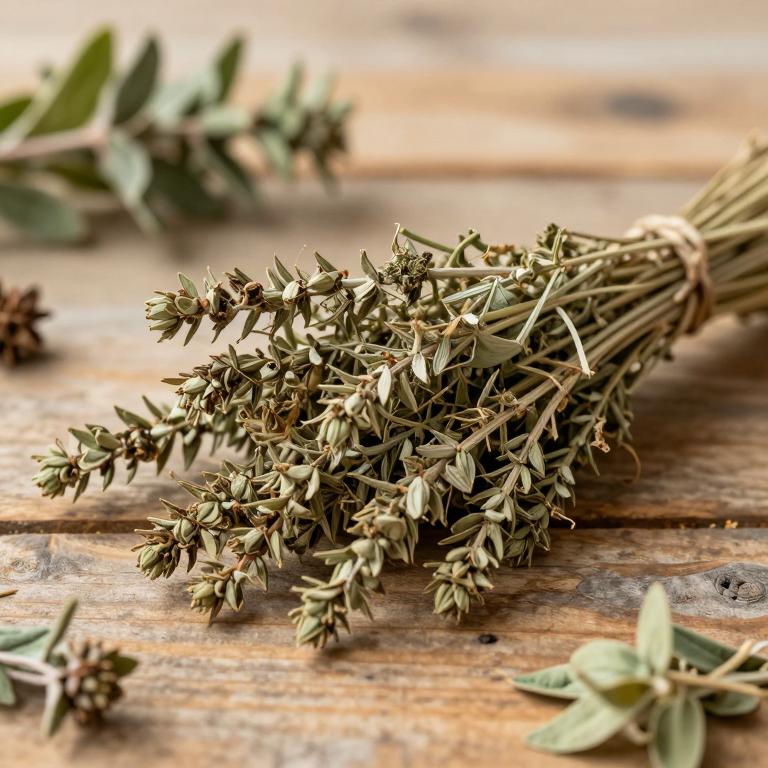
Names and Synonyms
Scientific Names
Accepted name
Alhagi pseudalhagiSynonyms
- Hedysarum pseudalhagi
Sources: Wikidata
Taxonomical Classification
This plant belongs to the kingdom Plantae and the phylum Streptophyta, falling under the class Equisetopsida and subclass Magnoliidae. It is classified within the order Fabales and the family Fabaceae. Specifically, it is identified by its genus, Alhagi.
| Rank | Classification |
|---|---|
| Kingdom | Plantae |
| Phylum | Streptophyta |
| Class | Equisetopsida |
| Subclass | Magnoliidae |
| Order | Fabales |
| Family | Fabaceae |
| Genus | Alhagi |
Sources: The World Checklist of Vascular Plants (WCVP)
Distribution
This plant exhibits a wide geographical distribution across several distinct regions. In Southeastern Europe, its presence is noted specifically within Greece. Moving to Northern Africa, the species can be found spanning across Algeria, Egypt, and Libya. Furthermore, its range extends into West Tropical Africa, where it is located in Niger. These diverse locations highlight the plant's ability to thrive in various Mediterranean and tropical environments.
| Region | Area |
|---|---|
| Southeastern Europe | Greece |
| Northern Africa | Algeria |
| Northern Africa | Egypt |
| Northern Africa | Libya |
| West Tropical Africa | Niger |
| Northeast Tropical Africa | Chad |
| Northeast Tropical Africa | Sudan-South Sudan |
| Southern Africa | Cape Provinces |
| Central Asia | Kazakhstan |
| Central Asia | Kirgizstan |
Sources: The World Checklist of Vascular Plants (WCVP)
Botanical Identification
Ecology
The ecology of Alhagi pseudalhagi is characterized by its remarkable adaptability to harsh and extreme environments, specifically thriving within desert, mountain, and saline landscapes, as well as sandy terrains. This species occupies a diverse vertical distribution across various landscapes, with an elevational range that spans from a minimum of 800 m AMSL to a maximum of 1700 m AMSL. On average, the plant is most commonly found at a mean elevation of 500 m AMSL, allowing it to colonize a wide variety of topographical niches ranging from low-lying arid basins to higher mountain slopes.
- Elevational range max:
- 1700 m AMSL
- Elevational range mean:
- 500 m AMSL
- Elevational range min:
- 800 m AMSL
- Habitat :
- desert, mountains, saline places, sand
Life history
The life history of Alhagi pseudalhagi is characterized by its classification as a perennial species, allowing it to persist in its environment over multiple growing seasons. As a long-lived plant, it develops extensive and deep-reaching root systems that enable it to withstand prolonged periods of drought and harsh arid conditions. Its life cycle involves a robust vegetative phase where it establishes a strong presence through its woody or semi-woody structure, followed by reproductive stages that occur periodically throughout its lifespan. This perennial nature ensures that the plant can recover from seasonal stressors and maintain a stable population within its ecological niche.
- Lifecycle :
- perennial
Morphology
The morphology of Alhagi pseudalhagi is characterized by a woody, self-supporting growth habit, typically manifesting as a shrub or subshrub. This terrestrial plant reaches a height ranging from a minimum of 0.3 m to a maximum of 0.6 m. It functions as an independent organism, neither acting as a parasite nor an epiphyte, and it maintains a self-supporting structure rather than growing as a climber, liana, or vine.
- Aquatic :
- terrestrial
- Climber :
- self-supporting
- Epiphyte :
- terrestrial
- Growth form :
- shrub
- Growth form :
- subshrub
- Parasite :
- independent
- Plant height max:
- 0.6 m
- Plant height min:
- 0.3 m
- Woodiness :
- woody
Physiology
The physiology of Alhagi pseudalhagi is characterized by specialized adaptations to arid and semi-arid environments, primarily driven by its metabolic processes. The plant utilizes a C3 photosynthetic pathway, which dictates its carbon fixation mechanism and dictates its water-use efficiency in varying thermal conditions. To compensate for the challenges of high evapotranspiration in its native habitats, the plant exhibits a highly developed root system capable of deep water extraction, supporting its metabolic requirements. Its physiological resilience is further augmented by osmotic adjustments that allow it to maintain cellular turgor under significant drought stress, ensuring that the enzymatic activities associated with its C3 metabolism remain functional even when soil moisture is limited.
- Photosynthetic pathway :
- C3
Reproduction
The reproduction of Alhagi pseudalhagi is characterized by a specific seasonal flowering period and highly uniform seed production. The flowering process typically begins in June and continues through August, although the timing can be variable depending on environmental conditions. During the reproductive phase, the plant produces seeds with a very consistent mass; the mean, maximum, and minimum seed mass are all recorded at 0.0052 g, indicating a lack of significant variation in individual seed weight within the species.
- Flowering time :
- Jun
- Flowering time :
- Aug
- Seed mass mean:
- 0.0052 g
Sources: Global Inventory of Floras and Traits (GIFT)
Chemicals
Alhagi pseudalhagi has 9 reported phytochemicals identified across 0 scientific publications and several other databases. The most consistently reported chemicals include 7,8-dihydroxyflavone, Alhagidin, Alhagitin, Hyperoside, Kaempferide.
| Chemical | Supporting sources | Consensus |
|---|---|---|
| 7,8-dihydroxyflavone | 1 supporting sources | ★☆☆☆☆ |
| Alhagidin | 1 supporting sources | ★☆☆☆☆ |
| Alhagitin | 1 supporting sources | ★☆☆☆☆ |
| Hyperoside | 1 supporting sources | ★☆☆☆☆ |
| Kaempferide | 1 supporting sources | ★☆☆☆☆ |
| Polysaccharide | 1 supporting sources | ★☆☆☆☆ |
| RUTIN | 1 supporting sources | ★☆☆☆☆ |
| TAXIFOLIN | 1 supporting sources | ★☆☆☆☆ |
| kaempferol | 1 supporting sources | ★☆☆☆☆ |
7,8-dihydroxyflavone
- Frontiers in pharmacology
Alhagidin
- Phytochemistry
Alhagitin
- Phytochemistry
Hyperoside
- Frontiers in pharmacology
Kaempferide
- Frontiers in pharmacology
Polysaccharide
- International journal of biological macromolecules
RUTIN
- Frontiers in pharmacology
TAXIFOLIN
- Frontiers in pharmacology
kaempferol
- Frontiers in pharmacology
Activities
Alhagi pseudalhagi has 1 reported activities identified across 0 scientific publications and several other databases. The most consistently reported activities include Antioxidant.
| Activity | Supporting sources | Consensus |
|---|---|---|
| Antioxidant | 1 supporting sources | ★☆☆☆☆ |
Antioxidant
- Phytotherapy research : PTR
Conditions
Alhagi pseudalhagi has 4 reported investigations on conditions identified across 0 scientific publications and several other databases. The most consistently reported conditions include Ulcerative Colitis, antioxidant, colitis, osteoporosis.
| Condition | Supporting sources | Consensus |
|---|---|---|
| Ulcerative colitis | 1 supporting sources | ★☆☆☆☆ |
| Antioxidant | 1 supporting sources | ★☆☆☆☆ |
| Colitis | 1 supporting sources | ★☆☆☆☆ |
| Osteoporosis | 1 supporting sources | ★☆☆☆☆ |
Ulcerative colitis
- Frontiers in pharmacology
Antioxidant
- Phytotherapy research : PTR
Colitis
- Frontiers in pharmacology
Osteoporosis
- International journal of biological macromolecules
Preparations
Alhagi pseudalhagi has 2 reported preparations identified across 0 scientific publications and several other databases. The most consistently reported preparations include APP90-2, methanol extracts.
| Preparation | Supporting sources | Consensus |
|---|---|---|
| App90-2 | 1 supporting sources | ★☆☆☆☆ |
| Methanol extracts | 1 supporting sources | ★☆☆☆☆ |
App90-2
- International journal of biological macromolecules
Methanol extracts
- Iranian journal of cancer prevention