Lowveld bead-string
Alchornea laxiflora · Accepted scientific name
Scientific literature: Very Sparse (22 studies) · ★☆☆☆☆
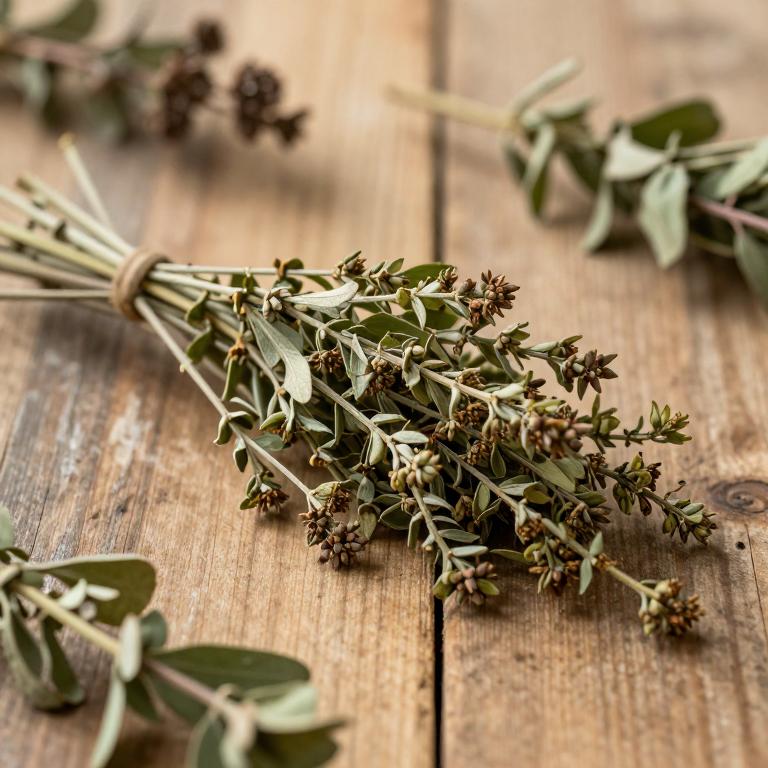
Lowveld bead-string, scientifically known as Alchornea laxiflora, is a resilient shrub native to Southern Africa. Renowned for its delicate, drooping white flowers, this plant holds significant ethnobotanical value. Traditionally, various parts are utilized in folk medicine to treat ailments such as skin infections, digestive issues, and inflammatory conditions.
Names and Synonyms
Common Names
- Lowveld Bead-string
- Venda Beadstring
- lowveld beadstring
Scientific Names
Accepted name
Alchornea laxifloraSynonyms
- Macaranga thonneri
- Lepidoturus laxiflorus
- Alchornea schlechteri
- Alchornea engleri
Sources: Wikidata, Catalogue of Life
Taxonomical Classification
This plant belongs to the kingdom Plantae and is classified within the phylum Streptophyta and the class Equisetopsida. As a member of the subclass Magnoliidae and the order Malpighiales, it is further categorized under the family Euphorbiaceae. Finally, its taxonomic identity is defined by the genus Alchornea.
| Rank | Classification |
|---|---|
| Kingdom | Plantae |
| Phylum | Streptophyta |
| Class | Equisetopsida |
| Subclass | Magnoliidae |
| Order | Malpighiales |
| Family | Euphorbiaceae |
| Genus | Alchornea |
Sources: The World Checklist of Vascular Plants (WCVP)
Distribution
This plant exhibits a diverse geographical distribution spanning across several regions of the African continent. In West Tropical Africa, its presence is documented in Guinea, Nigeria, and Sierra Leone. Moving toward the center of the continent, the species is also found within West-Central Tropical Africa. Specifically, its range extends into the Central African Republic and reaches as far as Burundi. Consequently, the distribution of Alchornea laxiflora covers a vast area of tropical habitats.
| Region | Area |
|---|---|
| West Tropical Africa | Guinea |
| West Tropical Africa | Nigeria |
| West Tropical Africa | Sierra Leone |
| West-Central Tropical Africa | Burundi |
| West-Central Tropical Africa | Central African Republic |
| West-Central Tropical Africa | Cameroon |
| West-Central Tropical Africa | Congo |
| West-Central Tropical Africa | Gabon |
| West-Central Tropical Africa | Gulf of Guinea Is. |
| West-Central Tropical Africa | Rwanda |
Sources: The World Checklist of Vascular Plants (WCVP)
Botanical Identification
Ecology
The ecology of Alcornhea laxiflora is characterized by its adaptation to diverse forest environments, where it can be found inhabiting both moist and dry forest ecosystems. This species demonstrates a broad altitudinal distribution, thriving across a significant elevational gradient that begins at 30 m AMSL and extends up to a maximum of 576 m AMSL.
- Elevational range max:
- 576 m AMSL
- Elevational range min:
- 30 m AMSL
- Habitat :
- moist or dry forest
Life history
The life history of Alchornea laxiflora is characterized by its classification as a perennial plant, allowing it to persist through multiple growing seasons. As a phanerophyte, it maintains its stems well above the ground level, though it can also be categorized under the nanophanerophyte life form depending on the specific environmental context and growth habit. This species exhibits a deciduous nature, shedding its foliage seasonally as part of its natural life cycle.
- Deciduousness :
- deciduous
- Life form :
- nanophanerophyte
- Life form :
- phanerophyte
- Lifecycle :
- perennial
Morphology
The morphology of Alchornea laxiflora is characterized by a woody growth form, specifically categorized as a tree. It is a terrestrial, independent plant that does not function as a parasite or an epiphyte. As a self-supporting species, it lacks the climbing habits of lianas or vines, maintaining a sturdy structural integrity. In terms of stature, the plant exhibits significant variation in height, with a minimum recorded height of 0.69 m, a mean height of approximately 5.17 m, and a maximum height reaching up to 6.10 m.
- Aquatic :
- terrestrial
- Climber :
- self-supporting
- Epiphyte :
- terrestrial
- Growth form :
- tree
- Parasite :
- independent
- Plant height max:
- 6.096074128 m
- Plant height mean:
- 5.16666666666667 m
- Plant height min:
- 0.69 m
- Woodiness :
- woody
Physiology
The physiology of Alchornea laxiflora is characterized by complex metabolic processes adapted to its specific ecological niche, particularly regarding its nutrient acquisition strategies. A key aspect of its physiological profile is its interaction with soil nutrients; specifically, this species is not a nitrogen fixer, meaning it lacks the symbiotic relationship with diazotrophic bacteria required to convert atmospheric nitrogen into bioavailable forms. Instead, it relies on the uptake of nitrates and ammonium present in the soil through its root system to support protein synthesis and cellular growth. Its metabolic pathways involve efficient carbon fixation through photosynthesis to drive energy production, alongside specialized secondary metabolite pathways that produce bioactive compounds. These chemical processes are integral to the plant's defense mechanisms and its overall physiological resilience in its natural habitat.
- Nitrogen fixer :
- no
Sources: Global Inventory of Floras and Traits (GIFT)
Plant Parts
Alchornea laxiflora has 3 reported plant parts identified across 5 scientific publications and several other databases that are studied for medicinal purposes. The most consistently reported plant part include leaf, root, stem.
| Plant part | Supporting sources | Consensus |
|---|---|---|
| Leaf | 3 supporting sources | ★★☆☆☆ |
| Root | 1 supporting sources | ★☆☆☆☆ |
| Stem | 1 supporting sources | ★☆☆☆☆ |
Leaf
- Clinical pharmacology and translational medicine
- Frontiers in veterinary science
- Frontiers in pharmacology
Root
- Frontiers in pharmacology
Stem
- Frontiers in pharmacology
Chemicals
Alchornea laxiflora has 5 reported phytochemicals identified across 5 scientific publications and several other databases. The most consistently reported chemicals include Fatty acids, Flavonoids, Terpenoids, Triterpenes, polyphenols.
| Chemical | Supporting sources | Consensus |
|---|---|---|
| Fatty acids | 1 supporting sources | ★☆☆☆☆ |
| Flavonoids | 1 supporting sources | ★☆☆☆☆ |
| Terpenoids | 1 supporting sources | ★☆☆☆☆ |
| Triterpenes | 1 supporting sources | ★☆☆☆☆ |
| polyphenols | 1 supporting sources | ★☆☆☆☆ |
Fatty acids
- Frontiers in pharmacology
Flavonoids
- Frontiers in pharmacology
Terpenoids
- Frontiers in pharmacology
Triterpenes
- Saudi journal of biological sciences
polyphenols
- Saudi journal of biological sciences
Activities
Alchornea laxiflora has 2 reported activities identified across 5 scientific publications and several other databases. The most consistently reported activities include Anticonvulsant, Inflammatory.
| Activity | Supporting sources | Consensus |
|---|---|---|
| Anticonvulsant | 1 supporting sources | ★☆☆☆☆ |
| Inflammatory | 1 supporting sources | ★☆☆☆☆ |
Anticonvulsant
- Epilepsy & behavior : E&B
Inflammatory
- Frontiers in pharmacology
Conditions
Alchornea laxiflora has 4 reported investigations on conditions identified across 5 scientific publications and several other databases. The most consistently reported conditions include Enterococcus faecalis, Escherichia coli, Staphylococcus aureus, mitochondria dysfunction.
| Condition | Supporting sources | Consensus |
|---|---|---|
| Enterococcus faecalis | 1 supporting sources | ★☆☆☆☆ |
| Escherichia coli | 1 supporting sources | ★☆☆☆☆ |
| Staphylococcus aureus | 1 supporting sources | ★☆☆☆☆ |
| Mitochondria dysfunction | 1 supporting sources | ★☆☆☆☆ |
Enterococcus faecalis
- Frontiers in veterinary science
Escherichia coli
- Frontiers in veterinary science
Staphylococcus aureus
- Frontiers in veterinary science
Mitochondria dysfunction
- Clinical pharmacology and translational medicine
Preparations
Alchornea laxiflora has 4 reported preparations identified across 5 scientific publications and several other databases. The most consistently reported preparations include leaves, organic and aqueous leaf extracts, root, stem.
| Preparation | Supporting sources | Consensus |
|---|---|---|
| Leaves | 2 supporting sources | ★☆☆☆☆ |
| Organic and aqueous leaf extracts | 1 supporting sources | ★☆☆☆☆ |
| Root | 1 supporting sources | ★☆☆☆☆ |
| Stem | 1 supporting sources | ★☆☆☆☆ |
Leaves
- Clinical pharmacology and translational medicine
- Frontiers in pharmacology
Organic and aqueous leaf extracts
- Frontiers in veterinary science
Root
- Frontiers in pharmacology
Stem
- Frontiers in pharmacology