Alchornea latifolia
Alchornea latifolia · Accepted scientific name
Scientific literature: Very Sparse (5 studies) · ★☆☆☆☆
, scientifically known as Alchornea latifolia, is a significant medicinal shrub valued in traditional pharmacology. Native to specific tropical regions, this plant is celebrated for its diverse therapeutic properties. Researchers study its bioactive compounds to explore potential applications in treating inflammation, infections, and various ailments, highlighting its botanical importance.
- Family
- Euphorbiaceae
- Native range
- Northern America
- Parts used
- Leaf
- Common names
- Not available
- Scientific synonyms
- Alchornea Similis · Alchornea Cyclophylla · 5 more
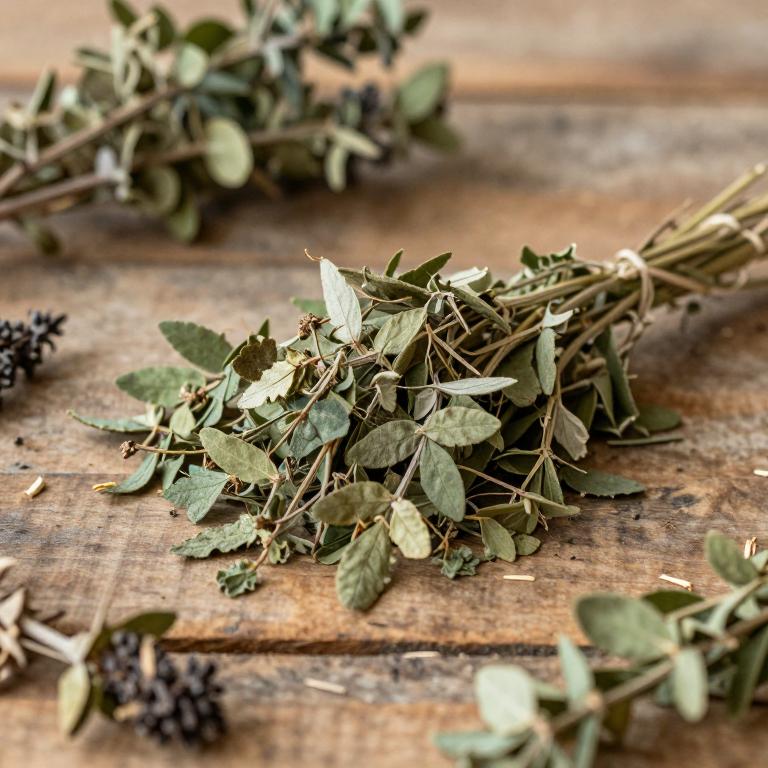
Names and Synonyms
Scientific Names
Accepted name
Alchornea latifoliaSynonyms
- Alchornea similis
- Alchornea cyclophylla
- Alchornea latifolia var. islaensis
- Alchornea haitiensis
- Alchornea platyphylla
- Alchornea polyantha
- Manettia serrata
Regional and Traditional Names
Spanish:
- palo mujer
- sarziello caspi
- cabeza de mico
- canelito
- carne de caballo
- gargantilla
- hoja ancho
- huampo
- machete vaina
- palo de puta
- sapotillo
- sarziella caspi
- toxcata
- Chasparrio
Sources: Wikidata, Catalogue of Life
Taxonomical Classification
This plant belongs to the kingdom Plantae within the phylum Streptophyta and the class Equisetopsida. As a member of the subclass Magnoliidae and the order Malpighiales, it is classified under the family Euphorbiaceae. Specifically, it is identified by the genus Alchornea and the species Alchornea latifolia.
| Rank | Classification |
|---|---|
| Kingdom | Plantae |
| Phylum | Streptophyta |
| Class | Equisetopsida |
| Subclass | Magnoliidae |
| Order | Malpighiales |
| Family | Euphorbiaceae |
| Genus | Alchornea |
Sources: The World Checklist of Vascular Plants (WCVP)
Distribution
This plant is widely distributed across several distinct regions within the country of Mexico. It can be found growing throughout the central part of Mexico, where it occupies various habitats. Its range also extends into the northeast and the gulf regions of the nation. Furthermore, the species is present in the southwest territories of Mexico. Finally, the geographical presence of this medicinal plant concludes in the southeast region.
| Region | Area |
|---|---|
| Mexico | Mexico Central |
| Mexico | Mexico Northeast |
| Mexico | Mexico Gulf |
| Mexico | Mexico Southwest |
| Mexico | Mexico Southeast |
| Central America | Belize |
| Central America | Costa Rica |
| Central America | El Salvador |
| Central America | Guatemala |
| Central America | Honduras |
Sources: The World Checklist of Vascular Plants (WCVP)
Botanical Identification
Ecology
The ecology of Alchornea latifolia is characterized by a diverse range of environmental conditions and specific forest associations. This species exhibits a broad altitudinal distribution, ranging from sea level (0 m AMSL) up to a maximum elevation of 2800 m AMSL, with a mean elevational range of approximately 2100 m AMSL. Its habitat preferences are centered within various forest ecosystems, where it can be found in riparian forests (Floresta Ciliar or Galeria), terra firme forests (Floresta de Terra Firme), and floodplain forests (Floresta de Várzea), demonstrating a significant capacity to adapt to different hydrological and soil regimes within these tropical forest structures.
- Elevational range max:
- 2800 m AMSL
- Elevational range mean:
- 2100 m AMSL
- Elevational range min:
- 0 m AMSL
- Habitat :
- Floresta Ciliar ou Galeria, Floresta de Terra Firme, Floresta de Várzea
Life history
The life history of Alchornea latifolia is characterized by its status as a perennial plant, allowing it to persist in its environment over multiple growing seasons. As a phanerophyte, it maintains its buds well above the ground level, typically manifesting as a woody shrub or small tree. This species exhibits an evergreen deciduousness, meaning it retains its foliage throughout the year, providing continuous photosynthetic activity and structural stability.
- Deciduousness :
- evergreen
- Life form :
- phanerophyte
- Lifecycle :
- perennial
Morphology
The morphology of Alchornea latiifolia is characterized by its robust growth form as a woody tree, reaching a mean height of 15.5 m and capable of attaining a maximum height of up to 25 m. This species is strictly terrestrial in its ecological habit, functioning as a non-aquatic and non-epiphytic plant that grows independently of any host, making it an independent organism rather than a parasite or an epiphyte. Unlike climbing species such as lianas or vines, it is a self-supporting plant that does not require external structures for its upward growth.
- Aquatic :
- terrestrial
- Climber :
- self-supporting
- Epiphyte :
- terrestrial
- Growth form :
- tree
- Parasite :
- independent
- Plant height max:
- 25 m
- Plant height mean:
- 15.5 m
- Woodiness :
- woody
Physiology
The physiology of Alchornea latifolia is characterized by a C3 photosynthetic pathway, which dictates its carbon fixation processes and metabolic efficiency. Its leaf structural composition is reflected in its leaf dry matter content (LDMC), which exhibits a mean value of 459.45 mg/g, with recorded fluctuations ranging from a minimum of 424.7 mg/g to a maximum of 494.2 mg/g. Additionally, the plant does not function as a nitrogen fixer, meaning it relies on external nitrogen sources from the soil rather than symbiotic atmospheric nitrogen fixation.
- Leaf dry matter content (LDMC) max:
- 494.2 mg/g
- Leaf dry matter content (LDMC) mean:
- 459.45 mg/g
- Leaf dry matter content (LDMC) min:
- 424.7 mg/g
- Nitrogen fixer :
- no
- Photosynthetic pathway :
- C3
Reproduction
The reproduction of Alchornea latiifolia is characterized by specific morphological and ecological strategies, beginning with its flowering mechanism which lacks self-fertilization, necessitating cross-pollination to ensure genetic diversity. The plant produces dry fruits that facilitate the release of its seeds. These seeds exhibit a consistent mass of 0.034 g, with both the minimum and maximum recorded values remaining at this steady measurement. In terms of physical dimensions, the seed length varies significantly, ranging from a minimum of 6 mm to a maximum of 30 mm, with a reported mean length of 3 mm. The seed volume is highly uniform, with a minimum, maximum, and mean value all measured at 35 mm³. Finally, the dispersal of these seeds follows a zoochorous syndrome, indicating that the plant relies on animals to aid in the distribution of its offspring throughout its habitat.
- Dispersal syndrome :
- zoochorous
- Fruit dryness :
- dry
- Seed length max:
- 30 mm
- Seed length mean:
- 3 mm
- Seed length min:
- 6 mm
- Seed mass mean:
- 0.034 g
- Seed volume max:
- 35 mm³
- Self fertilization :
- absent
Sources: Global Inventory of Floras and Traits (GIFT)
Plant Parts
Alchornea latifolia has 1 reported plant parts identified across 1 scientific publications and several other databases that are studied for medicinal purposes. The most consistently reported plant part include leaf.
| Plant part | Supporting sources | Consensus |
|---|---|---|
| Leaf | 1 supporting sources | ★☆☆☆☆ |
Leaf
- Fitoterapia
Chemicals
Alchornea latifolia has 4 reported phytochemicals identified across 1 scientific publications and several other databases. The most consistently reported chemicals include Epifriedelinol, Friedelin, Taraxerol, Taraxerone.
| Chemical | Supporting sources | Consensus |
|---|---|---|
| Epifriedelinol | 1 supporting sources | ★☆☆☆☆ |
| Friedelin | 1 supporting sources | ★☆☆☆☆ |
| Taraxerol | 1 supporting sources | ★☆☆☆☆ |
| Taraxerone | 1 supporting sources | ★☆☆☆☆ |
Epifriedelinol
- Fitoterapia
Friedelin
- Fitoterapia
Taraxerol
- Fitoterapia
Taraxerone
- Fitoterapia
Preparations
Alchornea latifolia has 1 reported preparations identified across 1 scientific publications and several other databases. The most consistently reported preparations include chloroform leaf extract.
| Preparation | Supporting sources | Consensus |
|---|---|---|
| Chloroform leaf extract | 1 supporting sources | ★☆☆☆☆ |
Chloroform leaf extract
- Fitoterapia