intermediate lady's-mantle
Alchemilla xanthochlora · Accepted scientific name
Scientific literature: Very Sparse (8 studies) · ★☆☆☆☆
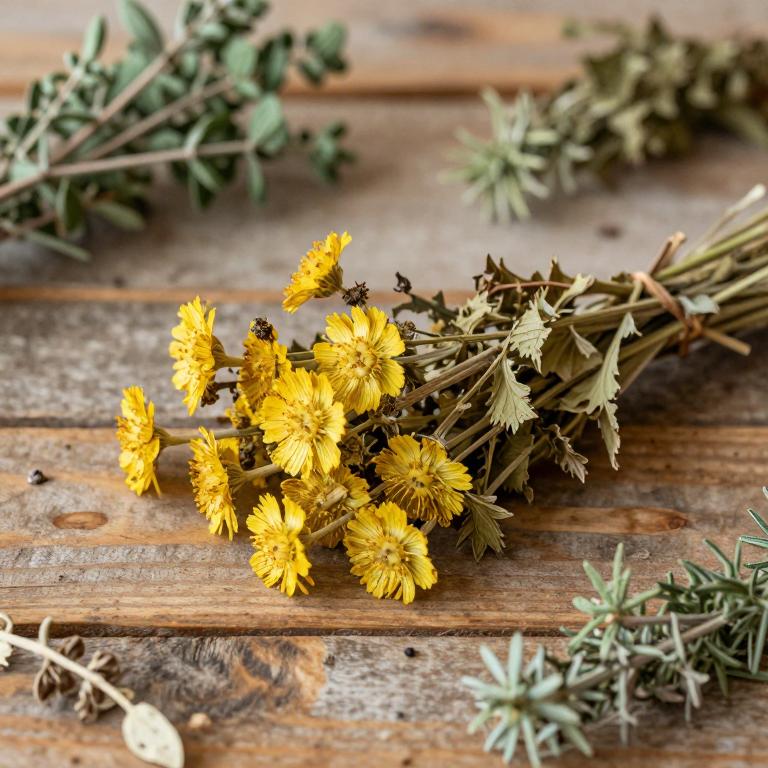
Intermediate lady's-mantle, scientifically known as Alchemilla xanthochlora, is a resilient perennial herb native to mountainous regions. Renowned for its distinctive yellowish-green foliage, this plant is valued in traditional herbalism. Its bioactive compounds offer potential therapeutic benefits, particularly in supporting digestive health and providing soothing anti-inflammatory properties.
Names and Synonyms
Common Names
- intermediate lady's-mantle
- pale lady's-mantle
- yellow-green lady's-mantle
- Lady's Mantle
- lady's-mantle
- lady’s mantle
Scientific Names
Accepted name
Alchemilla xanthochloraSynonyms
- Alchemilla pratensis var. amphitricha
- Alchemilla pratensis var. sericans
- Alchemilla sylvestris
- Alchemilla palmata subsp. pratensis
- Alchemilla pratensis
- Potentilla xanthochlora
- Alchemilla xanthochlora f. amphitricha
- Alchemilla vulgaris subsp. pratensis
- Alchemilla vulgaris subsp. pratensis
- Alchemilla vulgaris subvar. pratensis
- Alchemilla vulgaris f. pratensis
- Alchemilla xanthochlora f. adpressepilosa
- Alchemilla xanthochlora f. sericans
- Alchemilla vulgaris subsp. xanthochlora
- Alchemilla vulgaris var. sylvestris
- Alchemilla vulgaris subsp. sylvestris
- Alchemilla vulgaris proles sylvestris
- Alchemilla vulgaris var. pratensis
- Alchemilla vulgaris proles pratensis
Regional and Traditional Names
German:
- Gelbgrüner Frauenmantel
- Kleinblütiger Frauenmantel
- Gelbgrüner Frauenmantel
French:
- Alchémille Commune
- alchemille vert jaunâtre
- alchémille jaune vert
- alchémille vert jaunâtre
- Alchémille Commune
Sources: Wikidata, Catalogue of Life
Taxonomical Classification
This plant belongs to the kingdom Plantae and the phylum Streptophyta, falling under the class Equisetopsida and subclass Magnoliidae. Within the order Rosales and the family Rosaceae, it is specifically classified under the genus Alchemilla.
| Rank | Classification |
|---|---|
| Kingdom | Plantae |
| Phylum | Streptophyta |
| Class | Equisetopsida |
| Subclass | Magnoliidae |
| Order | Rosales |
| Family | Rosaceae |
| Genus | Alchemilla |
Sources: The World Checklist of Vascular Plants (WCVP)
Distribution
This plant exhibits a specific distribution pattern across the regions of Northern Europe. It can be found growing naturally in the territories of Denmark and Finland. Additionally, the species is present within the landscapes of Great Britain and Ireland. Its range also extends further north to include the country of Norway. These locations collectively define the documented geographical presence of Alchemilla xanthochlora.
| Region | Area |
|---|---|
| Northern Europe | Denmark |
| Northern Europe | Finland |
| Northern Europe | Great Britain |
| Northern Europe | Ireland |
| Northern Europe | Norway |
| Northern Europe | Sweden |
| Middle Europe | Austria |
| Middle Europe | Belgium |
| Middle Europe | Czechia-Slovakia |
| Middle Europe | Germany |
Sources: The World Checklist of Vascular Plants (WCVP)
Botanical Identification
Ecology
The ecology of Alchemilla xanthochlora is characterized by its preference for transitional environments, primarily thriving within forest edges and open meadows. These specific habitats provide the necessary balance of light availability and soil moisture required for its development. By occupying the margins between dense woodland and open grassy areas, the species benefits from the dappled sunlight and the nutrient-rich, often slightly acidic to neutral soil conditions typical of these ecotones. Its presence in meadows suggests an adaptation to semi-open landscapes where it can compete effectively with various herbaceous vegetation while remaining sheltered from extreme exposure by the proximity of forest structures.
- Habitat :
- forest edges, meadows
Life history
The life history of Alchemilla xanthochlora is characterized by a perennial lifecycle, allowing the plant to persist through multiple growing seasons. As a hemicryptophyte, its perennating buds are located at or just below the soil surface, protected by leaf litter or ground cover during unfavorable periods. This species exhibits a deciduous nature, shedding its foliage as part of its seasonal cycle.
- Deciduousness :
- deciduous
- Life form :
- hemicryptophyte
- Lifecycle :
- perennial
Morphology
The morphology of Alchemilla xanthochlora is characterized by its growth form as a non-woody herb, specifically categorized as a forb. This terrestrial plant is self-supporting rather than being a climber or a liana, and it functions as an independent organism without parasitic tendencies. In terms of its stature, the plant exhibits a variable height, with measurements ranging from a minimum of 0.15 m to a maximum of 0.8 m, maintaining an average plant height of approximately 0.415 m.
- Aquatic :
- terrestrial
- Climber :
- self-supporting
- Epiphyte :
- terrestrial
- Growth form :
- herb
- Growth form :
- forb
- Parasite :
- independent
- Plant height max:
- 0.8 m
- Plant height mean:
- 0.415 m
- Plant height min:
- 0.15 m
- Woodiness :
- non-woody
Physiology
The physiology of Alchemilla xanthochlora is characterized by a C3 photosynthetic pathway, reflecting its metabolic adaptation to its specific ecological niche. The plant exhibits a non-carnivorous nutritional strategy, relying entirely on autotrophic processes for organic carbon acquisition. Its foliar morphology is defined by a significant variation in leaf dimensions, with lengths ranging from a minimum of 8 cm to a maximum of 15 cm, while leaf widths vary between 3 cm and 10 cm, resulting in a mean leaf size of 73.6075 cm². Furthermore, the plant maintains a mean Specific Leaf Area (SLA) of 195.57 cm²/g, an indicator of its leaf mass per area and its physiological strategy regarding resource allocation and light interception efficiency.
- Carnivory :
- non-carnivorous
- Leaf length max:
- 15 cm
- Leaf length min:
- 8 cm
- Leaf size mean:
- 73.6075 cm²
- Leaf width max:
- 10 cm
- Leaf width min:
- 3 cm
- Photosynthetic pathway :
- C3
- Specific Leaf Area (SLA) mean:
- 195.57 cm²/g
Reproduction
The reproduction of Alchemilla xanthochlora involves both sexual and asexual processes, as asexual reproduction is present in this species. The flowering period typically commences in June and continues through August. During the reproductive phase, the plant produces fruits categorized as achenes, which are characterized by an indehiscent nature. The pollination syndrome is classified under the "other" category, suggesting specialized or non-standard mechanisms beyond typical wind or common insect pollination. Following fertilization, the dispersal of seeds is achieved through a hydrochorous syndrome, utilizing water as the primary medium for movement. The seeds themselves are extremely minute, with a mean mass of approximately 0.0003835 g, and a recorded mass range that reaches a maximum and minimum value of 0.00044 g.
- Dehiscence :
- indehiscent
- Dispersal syndrome :
- hydrochorous
- Flowering time :
- Jun
- Flowering time :
- Aug
- Fruit type :
- achene
- Pollination syndrome :
- other
- Reproduction asexual :
- present
- Seed mass max:
- 0.00044 g
- Seed mass mean:
- 0.0003835 g
Sources: Global Inventory of Floras and Traits (GIFT)
Chemicals
Alchemilla xanthochlora has 5 reported phytochemicals identified across 0 scientific publications and several other databases. The most consistently reported chemicals include Gibberellic acid (GA3), Quercetin 3-O-alpha-L-arabinopyranoside, Tannin, ellagic acid, quercetin 3-arabinopyranoside.
| Chemical | Supporting sources | Consensus |
|---|---|---|
| Gibberellic acid (GA3) | 1 supporting sources | ★☆☆☆☆ |
| Quercetin 3-O-alpha-L-arabinopyranoside | 1 supporting sources | ★☆☆☆☆ |
| Tannin | 1 supporting sources | ★☆☆☆☆ |
| ellagic acid | 1 supporting sources | ★☆☆☆☆ |
| quercetin 3-arabinopyranoside | 1 supporting sources | ★☆☆☆☆ |
Gibberellic acid (GA3)
- Scientific reports
Quercetin 3-O-alpha-L-arabinopyranoside
- Fitoterapia
Tannin
- Annales pharmaceutiques francaises
ellagic acid
- Annales pharmaceutiques francaises
quercetin 3-arabinopyranoside
- Fitoterapia
Conditions
Alchemilla xanthochlora has 2 reported investigations on conditions identified across 0 scientific publications and several other databases. The most consistently reported conditions include Seed dormancy, elastase.
| Condition | Supporting sources | Consensus |
|---|---|---|
| Seed dormancy | 1 supporting sources | ★☆☆☆☆ |
| Elastase | 1 supporting sources | ★☆☆☆☆ |
Seed dormancy
- Scientific reports
Elastase
- Annales pharmaceutiques francaises
Preparations
Alchemilla xanthochlora has 3 reported preparations identified across 0 scientific publications and several other databases. The most consistently reported preparations include KAR1, SW, undiluted SW.
| Preparation | Supporting sources | Consensus |
|---|---|---|
| Kar1 | 1 supporting sources | ★☆☆☆☆ |
| Sw | 1 supporting sources | ★☆☆☆☆ |
| Undiluted sw | 1 supporting sources | ★☆☆☆☆ |
Kar1
- Scientific reports
Sw
- Scientific reports
Undiluted sw
- Scientific reports