Purple-leaved False-thorn
Albizia antunesiana · Accepted scientific name
Scientific literature: Very Sparse (8 studies) · ★☆☆☆☆
Purple-leaved False-thorn, scientifically known as Albizia antunesiana, is a striking deciduous tree native to Southern Africa. Renowned for its distinctive foliage and medicinal properties, it is widely used in traditional healing. Its bark and leaves are frequently utilized to treat various ailments, including inflammation, skin conditions, and digestive issues.
- Family
- Fabaceae
- Native range
- Africa
- Parts used
- Leaf · Root
- Common names
- Purple-Leaved Albizia · Purple-Leaved False-Thorn · 1 more
- Scientific synonyms
- Not available
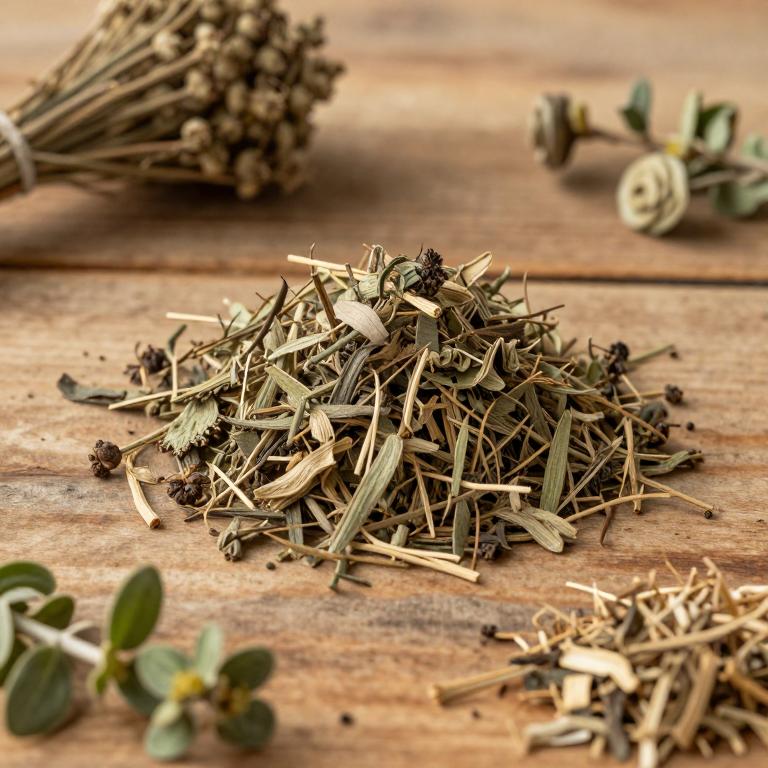
Names and Synonyms
Common Names
- Purple-Leaved Albizia
- Purple-Leaved False-Thorn
- Shavingbrush Albizia
Scientific Names
Accepted name
Albizia antunesianaSources: Wikidata, Catalogue of Life
Taxonomical Classification
This plant belongs to the kingdom Plantae and is classified within the phylum Streptophyta and the class Equisetopsida. As a member of the subclass Magnoliidae and the order Fabales, it is further nested within the family Fabaceae. Specifically, it is identified under the genus Albizia.
| Rank | Classification |
|---|---|
| Kingdom | Plantae |
| Phylum | Streptophyta |
| Class | Equisetopsida |
| Subclass | Magnoliidae |
| Order | Fabales |
| Family | Fabaceae |
| Genus | Albizia |
Sources: The World Checklist of Vascular Plants (WCVP)
Distribution
This plant is native to several distinct regions across the African continent. Within West-Central Tropical Africa, its presence is recorded in Burundi, Rwanda, and the Democratic Republic of the Congo. Moving toward the eastern part of the continent, it can also be found in Tanzania. Furthermore, its distribution extends into South Tropical Africa, specifically within the borders of Angola. Together, these locations highlight a broad range spanning from West-Central to Southern Africa.
| Region | Area |
|---|---|
| West-Central Tropical Africa | Burundi |
| West-Central Tropical Africa | Rwanda |
| West-Central Tropical Africa | DR Congo |
| East Tropical Africa | Tanzania |
| South Tropical Africa | Angola |
| South Tropical Africa | Malawi |
| South Tropical Africa | Mozambique |
| South Tropical Africa | Zambia |
| South Tropical Africa | Zimbabwe |
| Southern Africa | Botswana |
Sources: The World Checklist of Vascular Plants (WCVP)
Botanical Identification
Ecology
The ecology of Albizia antunesiana is characterized by its preference for forest habitats, where it plays a role in the structural complexity of the ecosystem. This species thrives within a specific altitudinal belt, typically found at elevations ranging from a minimum of 500 m AMSL to a maximum of 1250 m AMSL. Within these forested environments, its distribution is closely tied to these elevational gradients, which influence the moisture and temperature regimes necessary for its growth and survival.
- Elevational range max:
- 1250 m AMSL
- Elevational range min:
- 500 m AMSL
- Habitat :
- forest
Life history
The life history of Albizia antunesiana is characterized by its status as a perennial species, ensuring its long-term presence within its ecological niche. As a phanerophyte, the plant maintains its photosynthetic organs on elevated woody structures, specifically categorized under the phanerophyte life forms to describe its structural growth habit. Its seasonal development is marked by a deciduous nature, meaning it undergoes a period of leaf shedding, typically in response to seasonal climatic shifts or dry periods.
- Deciduousness :
- deciduous
- Life form :
- phanerophyte
- Lifecycle :
- perennial
Morphology
The morphology of Albizia antunesiana is characterized by a woody growth form that manifests primarily as a tree, though it can also present in a shrub habit. This species is a self-supporting plant, meaning it does not function as a climber, liana, or vine, and it operates as an independent organism rather than a parasite or epiphyte. As a terrestrial species, it occupies land-based habitats rather than aquatic or semiaquatic environments. In terms of stature, the plant exhibits significant variation in size, with heights ranging from a minimum of 0.4 m to a maximum of 20 m, maintaining an average plant height of approximately 15 m.
- Aquatic :
- terrestrial
- Climber :
- self-supporting
- Epiphyte :
- terrestrial
- Growth form :
- tree
- Growth form :
- shrub
- Parasite :
- independent
- Plant height max:
- 20 m
- Plant height mean:
- 15 m
- Plant height min:
- 0.4 m
- Woodiness :
- woody
Physiology
The physiology of Albizia antunesiana is characterized by a C3 photosynthetic pathway, which dictates its carbon fixation processes and metabolic efficiency in its natural habitat. Unlike plants that utilize C4 or CAM pathways to minimize photorespiration, this species relies on the direct fixation of atmospheric CO2 through the enzyme Rubisco during the Calvin cycle. Regarding its nutrient acquisition strategies, the plant is categorized as a non-nitrogen fixer, meaning it does not possess the specific symbiotic relationship with diazotrophic bacteria required to convert atmospheric nitrogen into bioavailable forms, relying instead on the uptake of nitrogenous compounds from the soil.
- Nitrogen fixer :
- no
- Photosynthetic pathway :
- C3
Reproduction
The reproduction of Albizia antunesiana is characterized by a combination of biotic pollination strategies and autochorous seed dispersal mechanisms. The pollination process is primarily biotic in nature, relying on animal vectors to facilitate the transfer of pollen. Specifically, the plant exhibits a pollination syndrome involving insects, with a specialized emphasis on bees as key pollinators. Regarding the distribution of its progeny, the species utilizes an autochorous dispersal syndrome, meaning it employs self-dispersal mechanisms to release its seeds, rather than relying on external agents like wind, water, or animals for the initial movement of the seeds away from the parent plant.
- Dispersal syndrome :
- autochorous
- Pollination syndrome :
- insect
- Pollination syndrome :
- bee
- Pollination syndrome :
- biotic
Sources: Global Inventory of Floras and Traits (GIFT)
Plant Parts
Albizia antunesiana has 2 reported plant parts identified across 2 scientific publications and several other databases that are studied for medicinal purposes. The most consistently reported plant part include leaf, root.
| Plant part | Supporting sources | Consensus |
|---|---|---|
| Leaf | 1 supporting sources | ★☆☆☆☆ |
| Root | 1 supporting sources | ★☆☆☆☆ |
Leaf
- Acta poloniae pharmaceutica
Root
- Acta poloniae pharmaceutica
Chemicals
Albizia antunesiana has 2 reported phytochemicals identified across 2 scientific publications and several other databases. The most consistently reported chemicals include coumarin, triterpenoids.
| Chemical | Supporting sources | Consensus |
|---|---|---|
| coumarin | 1 supporting sources | ★☆☆☆☆ |
| triterpenoids | 1 supporting sources | ★☆☆☆☆ |
coumarin
- Acta poloniae pharmaceutica
triterpenoids
- Acta poloniae pharmaceutica
Preparations
Albizia antunesiana has 3 reported preparations identified across 2 scientific publications and several other databases. The most consistently reported preparations include aqueous and ethanol extracts of the roots and leaves, ethanol and aqueous extracts of the leaf and root samples, ethanol root extract.
| Preparation | Supporting sources | Consensus |
|---|---|---|
| Aqueous and ethanol extracts of the roots and leaves | 1 supporting sources | ★☆☆☆☆ |
| Ethanol and aqueous extracts of the leaf and root samples | 1 supporting sources | ★☆☆☆☆ |
| Ethanol root extract | 1 supporting sources | ★☆☆☆☆ |
Aqueous and ethanol extracts of the roots and leaves
- Acta poloniae pharmaceutica
Ethanol and aqueous extracts of the leaf and root samples
- Acta poloniae pharmaceutica
Ethanol root extract
- Acta poloniae pharmaceutica