worm cure albizia
Albizia anthelmintica · Accepted scientific name
Scientific literature: Very Sparse (8 studies) · ★☆☆☆☆
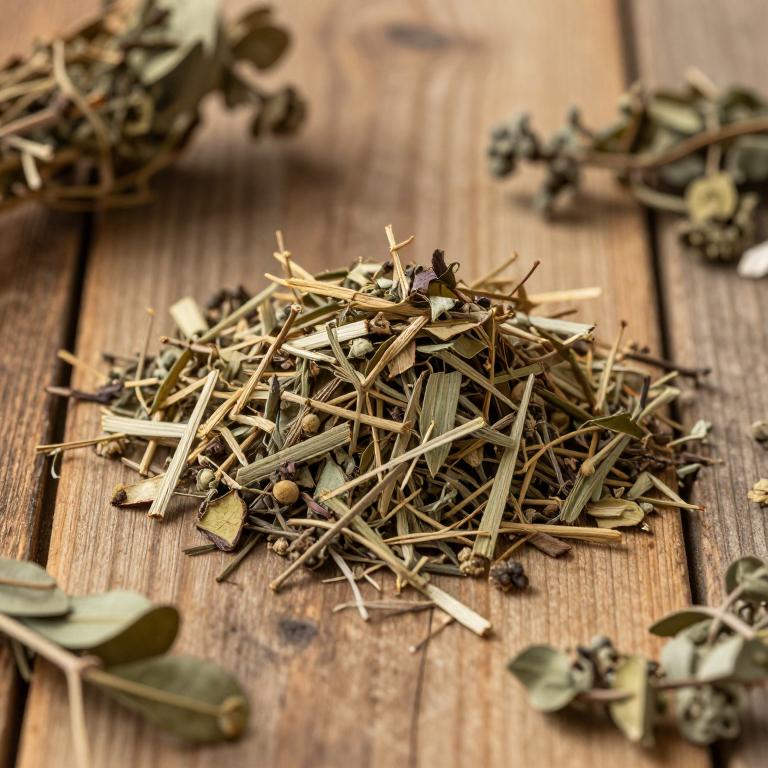
Worm cure Albizia, scientifically known as Albizia anthelmintiica, is a medicinal tree prized in traditional African medicine. Renowned for its potent anthelmintic properties, its bark and leaves are frequently utilized to expel intestinal parasites. This versatile plant serves as a vital natural remedy for promoting gastrointestinal health and wellness.
Names and Synonyms
Common Names
- Worm-bark False-thorn
- Worm-cure Albizia
- mucenna albizia
- Cherry-Blossom Tree
- Worm-bark False Thorn
- Wurm-Cure Albizia
- worm-cure false-thorn
- cherry blossom tree
- worm bark false thorn
- worm cure albizia
Scientific Names
Accepted name
Albizia anthelminticaSynonyms
- Acacia marlothii
- Albizia floribunda
- Besenna anthelmintica
- Feuilleea anthelmintica
- Acacia anthelmintica
- Albizia conjugatopinnata
- Albizia anthelmintica var. australis
- Albizia umbalusiana
- Albizia anthelmintica var. pubescens
Regional and Traditional Names
German:
- Wurmrindenbaum
Sources: Wikidata, Catalogue of Life
Taxonomical Classification
This plant belongs to the kingdom Plantae and the phylum Streptophyta, falling under the class Equisetopsida and subclass Magnoliidae. It is further classified within the order Fabales and the family Fabaceae. Finally, it is identified by the genus Albizia, specifically as the species Albizia anthelmintica.
| Rank | Classification |
|---|---|
| Kingdom | Plantae |
| Phylum | Streptophyta |
| Class | Equisetopsida |
| Subclass | Magnoliidae |
| Order | Fabales |
| Family | Fabaceae |
| Genus | Albizia |
Sources: The World Checklist of Vascular Plants (WCVP)
Distribution
This plant is primarily distributed across several regions within the tropical belt of Africa. In Northeast Tropical Africa, its presence is documented in Eritrea and Ethiopia. It can also be found extending through the territories of Somalia and the combined regions of Sudan and South Sudan. Furthermore, its range reaches into East Tropical Africa, specifically within the borders of Kenya. Collectively, these locations highlight a specific geographical footprint concentrated in the eastern portions of the continent.
| Region | Area |
|---|---|
| Northeast Tropical Africa | Eritrea |
| Northeast Tropical Africa | Ethiopia |
| Northeast Tropical Africa | Somalia |
| Northeast Tropical Africa | Sudan-South Sudan |
| East Tropical Africa | Kenya |
| East Tropical Africa | Tanzania |
| East Tropical Africa | Uganda |
| South Tropical Africa | Angola |
| South Tropical Africa | Malawi |
| South Tropical Africa | Mozambique |
Sources: The World Checklist of Vascular Plants (WCVP)
Botanical Identification
Ecology
The ecology of Albizia anthelmintiica is characterized by its ability to thrive across a diverse range of landscapes, spanning an elevational gradient from as low as 25 m AMSL to a maximum altitude of 1650 m AMSL. This species is highly adaptable to various environmental conditions, commonly inhabiting dry bushland and coastal bushland, as well as wooded or bushed grassland ecosystems. Additionally, it frequently establishes itself along the banks of seasonal rivers, where it can take advantage of periodic moisture availability within these distinct ecological niches.
- Elevational range max:
- 1650 m AMSL
- Elevational range min:
- 25 m AMSL
- Habitat :
- dry bushland, along seasonal rivers, wooded or bushed grassland, coastal bushland
Life history
The life history of Albizia anthelmintica is characterized by its nature as a perennial plant, allowing it to persist through multiple growing seasons and establish a long-term presence within its ecosystem. Its developmental cycle is marked by a deciduous growth habit, meaning it undergoes a seasonal shedding of its foliage, typically in response to dry periods or specific climatic shifts, before regenerating new leaves. This combination of a long-lived perennial structure and deciduous behavior enables the species to navigate seasonal environmental stresses while maintaining a continuous lifecycle over many years.
- Deciduousness :
- deciduous
- Lifecycle :
- perennial
Morphology
The morphology of Albizia anthelmintiica is characterized by its growth form as a woody tree, which is entirely self-supporting rather than being a climber. This independent, non-parasitic species is strictly terrestrial in its habitat, neither being aquatic nor an epiphyte. The plant exhibits significant variation in stature, with heights ranging from a minimum of 0.89 m to a maximum of 10.69 m, maintaining an average plant height of approximately 8 m.
- Aquatic :
- terrestrial
- Climber :
- self-supporting
- Epiphyte :
- terrestrial
- Growth form :
- tree
- Parasite :
- independent
- Plant height max:
- 10.69 m
- Plant height mean:
- 8 m
- Plant height min:
- 0.89 m
- Woodiness :
- woody
Physiology
The physiology of Albizia anthelmintica is characterized by its efficient metabolic processes and symbiotic capabilities. The plant utilizes a C3 photosynthetic pathway, which involves the direct fixation of atmospheric carbon dioxide through the Calvin cycle using the enzyme RuBisCO. In addition to its carbon assimilation strategy, the species functions as a nitrogen fixer; it maintains a symbiotic relationship with rhizobia bacteria within its root nodules, allowing it to convert atmospheric nitrogen into a bioavailable form, thereby enhancing its nutritional autonomy and contributing to soil fertility.
- Nitrogen fixer :
- yes
- Photosynthetic pathway :
- C3
Reproduction
The reproduction of Albizia anthelmintiica is characterized by a biotic pollination syndrome, relying primarily on insect vectors to facilitate the transfer of pollen. This biological interaction ensures the fertilization process necessary for seed development. Once fertilization is successful, the plant produces seeds with specific morphological characteristics; the seed mass within the species exhibits a range of variability, with a minimum recorded mass of 0.11187 g and a maximum of 0.15756 g. On average, the seeds maintain a mean mass of 0.13835 g, reflecting the energy investment allocated to each individual offspring during the reproductive cycle.
- Pollination syndrome :
- insect
- Pollination syndrome :
- biotic
- Seed mass max:
- 0.15756 g
- Seed mass mean:
- 0.13835 g
- Seed mass min:
- 0.11187 g
Sources: Global Inventory of Floras and Traits (GIFT)
Plant Parts
Albizia anthelmintica has 2 reported plant parts identified across 2 scientific publications and several other databases that are studied for medicinal purposes. The most consistently reported plant part include leaf, root.
| Plant part | Supporting sources | Consensus |
|---|---|---|
| Leaf | 1 supporting sources | ★☆☆☆☆ |
| Root | 1 supporting sources | ★☆☆☆☆ |
Leaf
- Archiv der Pharmazie
Root
- BMC complementary and alternative medicine
Chemicals
Albizia anthelmintica has 6 reported phytochemicals identified across 2 scientific publications and several other databases. The most consistently reported chemicals include ARSENIC, CHROMIUM, Flavonoids, LEAD, NICKEL.
| Chemical | Supporting sources | Consensus |
|---|---|---|
| ARSENIC | 1 supporting sources | ★☆☆☆☆ |
| CHROMIUM | 1 supporting sources | ★☆☆☆☆ |
| Flavonoids | 1 supporting sources | ★☆☆☆☆ |
| LEAD | 1 supporting sources | ★☆☆☆☆ |
| NICKEL | 1 supporting sources | ★☆☆☆☆ |
| Saponins | 1 supporting sources | ★☆☆☆☆ |
ARSENIC
- Analytica chimica acta
CHROMIUM
- Analytica chimica acta
Flavonoids
- Archiv der Pharmazie
LEAD
- Analytica chimica acta
NICKEL
- Analytica chimica acta
Saponins
- Archiv der Pharmazie
Preparations
Albizia anthelmintica has 3 reported preparations identified across 2 scientific publications and several other databases. The most consistently reported preparations include Extracts of the root barks, aqueous extracts of the dried powdered plant material, leaves.
| Preparation | Supporting sources | Consensus |
|---|---|---|
| Extracts of the root barks | 1 supporting sources | ★☆☆☆☆ |
| Aqueous extracts of the dried powdered plant material | 1 supporting sources | ★☆☆☆☆ |
| Leaves | 1 supporting sources | ★☆☆☆☆ |
Extracts of the root barks
- BMC complementary and alternative medicine
Aqueous extracts of the dried powdered plant material
- Journal of water and health
Leaves
- Archiv der Pharmazie