Alangium premnifolium
Alangium premnifolium · Accepted scientific name
Scientific literature: Very Sparse (2 studies) · ★☆☆☆☆
, scientifically known as Alangium premnifolium, is a versatile medicinal plant prized for its therapeutic properties. Renowned in traditional healing practices, it offers significant antioxidant and anti-inflammatory benefits. This aromatic species serves as a vital natural resource, providing holistic solutions for various health ailments through its potent bioactive compounds.
- Family
- Cornaceae
- Native range
- Asia-Temperate
- Parts used
- Leaf
- Common names
- Not available
- Scientific synonyms
- Marlea Premnifolia · Alangium Chinense Var. Nipponicum
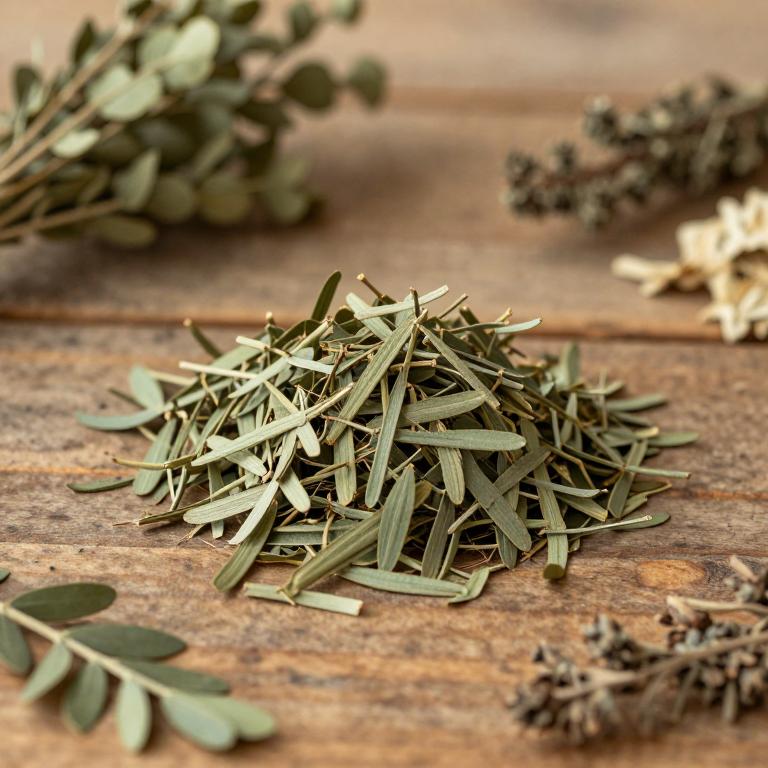
Names and Synonyms
Scientific Names
Accepted name
Alangium premnifoliumSynonyms
- Marlea premnifolia
- Alangium chinense var. nipponicum
Sources: Wikidata, Catalogue of Life
Taxonomical Classification
This plant, Alangium premnefolium, belongs to the kingdom Plantae and the phylum Streptophyta. It is classified under the class Equisetopsida and the subclass Magnoliidae within the order Cornales. Finally, it is a member of the family Cornaceae and the genus Alangium.
| Rank | Classification |
|---|---|
| Kingdom | Plantae |
| Phylum | Streptophyta |
| Class | Equisetopsida |
| Subclass | Magnoliidae |
| Order | Cornales |
| Family | Cornaceae |
| Genus | Alangium |
Sources: The World Checklist of Vascular Plants (WCVP)
Distribution
This plant is widely distributed across several key regions of East and Southeast Asia. Within China, its presence is specifically noted throughout the Southeast portion of the country. Moving toward Eastern Asia, the species can be found in Japan as well as the Nansei-shotō islands. Its range also extends into the Indo-China peninsula, where it inhabits parts of Myanmar. Additionally, the plant is documented to grow within the borders of Vietnam.
| Region | Area |
|---|---|
| China | China Southeast |
| Eastern Asia | Japan |
| Eastern Asia | Nansei-shoto |
| Indo-China | Myanmar |
| Indo-China | Vietnam |
Sources: The World Checklist of Vascular Plants (WCVP)
Botanical Identification
Life history
The life history of Alangium premnefolium is characterized by its classification as a phanerophyte, specifically exhibiting traits consistent with both the nanophanerophyte and phanerophyte life forms. As a phanerophyte, its regenerative buds are located on aerial shoots well above the soil surface, allowing the plant to maintain its structural integrity and reproductive capacity through various seasonal cycles. Depending on the specific environmental stressors and the height of its woody growth, it may fluctuate between being a nanophanerophyte, characterized by its relatively small shrubby stature, or a more robust phanerophyte. This life strategy enables the species to occupy stable niches where it can protect its growing points from immediate ground-level disturbances, ensuring a perennial existence through its woody architecture.
- Life form :
- phanerophyte
Morphology
The morphology of Alangium premnefolium is characterized by its growth form as a woody tree, exhibiting a robust and self-supporting structure. This species functions as an independent organism, neither acting as a parasite nor as an epiphyte, maintaining a primarily terrestrial existence across its habitats, though it can transition between aquatic, semiaquatic, and terrestrial environments. As a self-supporting tree, it does not exhibit the climbing or vine-like habits of lianas, instead relying on its woody stems and substantial trunk to maintain its upright stature.
- Aquatic :
- terrestrial
- Climber :
- self-supporting
- Epiphyte :
- terrestrial
- Growth form :
- tree
- Parasite :
- independent
- Woodiness :
- woody
Physiology
The physiology of Allium premnefolium is characterized by its metabolic processes and structural adaptations, most notably its reliance on the C3 photosynthetic pathway. In this pathway, the plant utilizes the enzyme Rubisco to fix atmospheric carbon dioxide directly into a three-carbon compound during the Calvin cycle, a process that typically occurs within the mesophyll cells. This C3 mechanism dictates the plant's water-use efficiency and its physiological response to varying light intensities and ambient temperatures. Alongside its carbon fixation strategy, the plant's physiological functions are driven by specialized cellular mechanisms that manage nutrient uptake and transpiration, ensuring metabolic stability and energy production necessary for its growth and medicinal potency.
- Photosynthetic pathway :
- C3
Sources: Global Inventory of Floras and Traits (GIFT)
Plant Parts
Alangium premnifolium has 1 reported plant parts identified across 1 scientific publications and several other databases that are studied for medicinal purposes. The most consistently reported plant part include leaf.
| Plant part | Supporting sources | Consensus |
|---|---|---|
| Leaf | 1 supporting sources | ★☆☆☆☆ |
Leaf
- Chemical & pharmaceutical bulletin
Chemicals
Alangium premnifolium has 1 reported phytochemicals identified across 1 scientific publications and several other databases. The most consistently reported chemicals include Roseoside.
| Chemical | Supporting sources | Consensus |
|---|---|---|
| Roseoside | 1 supporting sources | ★☆☆☆☆ |
Roseoside
- Chemical & pharmaceutical bulletin
Preparations
Alangium premnifolium has 1 reported preparations identified across 1 scientific publications and several other databases. The most consistently reported preparations include MeOH extract.
| Preparation | Supporting sources | Consensus |
|---|---|---|
| Meoh extract | 1 supporting sources | ★☆☆☆☆ |
Meoh extract
- Chemical & pharmaceutical bulletin