Ajuga parviflora
Ajuga parviflora · Accepted scientific name
Scientific literature: Very Sparse (11 studies) · ★☆☆☆☆
scientifically known as Ajuga parviflora, is a fascinating medicinal herb belonging to the Lamiaceae family. Found primarily in specific Asian terrains, this plant is valued in traditional medicine for its diverse therapeutic properties. Its unique phytochemical profile offers potential benefits for healing, making it a subject of botanical interest.
- Family
- Lamiaceae
- Native range
- Asia-Temperate
- Parts used
- Not available
- Common names
- Not available
- Scientific synonyms
- Bulga Parviflora · Bulga Brachystemon · 3 more
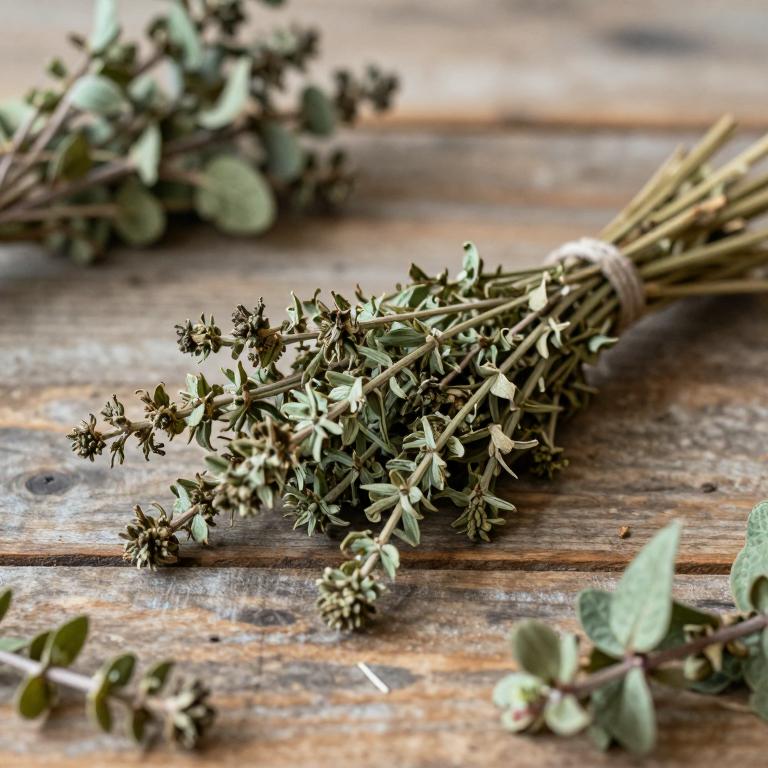
Names and Synonyms
Scientific Names
Accepted name
Ajuga parvifloraSynonyms
- Bulga parviflora
- Bulga brachystemon
- Ajuga depressa
- Ajuga brachystemon
- Ajuga parviflora var. depressa
Sources: Wikidata
Taxonomical Classification
This plant belongs to the kingdom Plantae and is classified under the phylum Streptophyta within the class Equisetopsida. Further taxonomic placement identifies it as a member of the subclass Magnoliidae and the order Lamiales. It is specifically categorized under the family Lamiaceae within the genus Ajuga.
| Rank | Classification |
|---|---|
| Kingdom | Plantae |
| Phylum | Streptophyta |
| Class | Equisetopsida |
| Subclass | Magnoliidae |
| Order | Lamiales |
| Family | Lamiaceae |
| Genus | Ajuga |
Sources: The World Checklist of Vascular Plants (WCVP)
Distribution
This plant exhibits a wide geographical distribution across several key regions of Asia. In Western Asia, it can be found growing within the borders of Afghanistan. Its presence is also significant throughout the Indian Subcontinent, where it inhabits India and Nepal. Additionally, the species is documented across Pakistan. Finally, its range extends into the specific ecological zone known as the West Himalaya.
| Region | Area |
|---|---|
| Western Asia | Afghanistan |
| Indian Subcontinent | India |
| Indian Subcontinent | Nepal |
| Indian Subcontinent | Pakistan |
| Indian Subcontinent | West Himalaya |
Sources: The World Checklist of Vascular Plants (WCVP)
Botanical Identification
Ecology
The ecology of Ajuga parviflora is characterized by its presence within specific montane habitats, where it thrives across a distinct altitudinal gradient. This species is typically found in mountainous regions, occupying an elevational range that extends from a minimum of 1000 m AMSL to a maximum of 2600 m AMSL. This vertical distribution suggests an adaptation to temperate or subalpine environmental conditions, allowing the plant to colonize diverse microclimates found within these mid-to-high altitude zones.
- Elevational range max:
- 2600 m AMSL
- Elevational range min:
- 1000 m AMSL
Life history
The life history of Ajuga parviflora is characterized by its classification as an annual plant, completing its entire developmental cycle from germination to seed production within a single growing season. As a therophyte, it survives the unfavorable periods of its environment through the production of resistant seeds, which remain dormant until conditions become suitable for the next generation to emerge. This strategic life cycle allows the species to exploit ephemeral resources and rapidly colonize available habitats before the onset of seasonal stress.
- Life form :
- therophyte
- Lifecycle :
- annual
Morphology
The morphology of Ajuga parviflora is characterized by its growth form as a herb, exhibiting a non-woody structure throughout its vegetative body. It functions as an independent organism, meaning it does not exhibit parasitic behavior, and is primarily a terrestrial plant rather than an epiphyte. While its habit is categorized under clambering traits, it is specifically self-supporting in both its liana and vine-like tendencies, functioning as a self-supporting rather than an obligatory or facultative climber.
- Climber :
- self-supporting
- Epiphyte :
- terrestrial
- Growth form :
- herb
- Parasite :
- independent
- Woodiness :
- non-woody
Reproduction
The reproduction of Ajuga parviflora is characterized by a distinct flowering period that spans a significant portion of the year, exhibiting considerable seasonal flexibility. The flowering cycle typically begins in March, though the onset can be variable depending on environmental conditions. This reproductive phase continues through a long duration, eventually reaching its conclusion in October. Because the flowering window is broad, the plant demonstrates a capacity for sustained reproductive activity throughout the warmer and transitional months, with the specific timing of bloom initiation and cessation being subject to annual variation.
- Flowering time :
- Mar
- Flowering time :
- Oct
Sources: Global Inventory of Floras and Traits (GIFT)
Chemicals
Ajuga parviflora has 7 reported phytochemicals identified across 0 scientific publications and several other databases. The most consistently reported chemicals include Flavonoids, Aminophenols, Glycosides, Phenols, Tannins.
| Chemical | Supporting sources | Consensus |
|---|---|---|
| Flavonoids | 2 supporting sources | ★☆☆☆☆ |
| Aminophenols | 1 supporting sources | ★☆☆☆☆ |
| Glycosides | 1 supporting sources | ★☆☆☆☆ |
| Phenols | 1 supporting sources | ★☆☆☆☆ |
| Tannins | 1 supporting sources | ★☆☆☆☆ |
| Terpenoids | 1 supporting sources | ★☆☆☆☆ |
| polyphenols | 1 supporting sources | ★☆☆☆☆ |
Flavonoids
- Microbial pathogenesis
- Pakistan journal of pharmaceutical sciences
Aminophenols
- Pakistan journal of pharmaceutical sciences
Glycosides
- Pakistan journal of pharmaceutical sciences
Phenols
- Microbial pathogenesis
Tannins
- Pakistan journal of pharmaceutical sciences
Terpenoids
- Pakistan journal of pharmaceutical sciences
polyphenols
- Pakistan journal of pharmaceutical sciences
Conditions
Ajuga parviflora has 3 reported investigations on conditions identified across 0 scientific publications and several other databases. The most consistently reported conditions include Citrobacter, Hepatitis C Virus, methicillin-resistant Staphylococcus aureus.
| Condition | Supporting sources | Consensus |
|---|---|---|
| Citrobacter | 1 supporting sources | ★☆☆☆☆ |
| Hepatitis c virus | 1 supporting sources | ★☆☆☆☆ |
| Methicillin-resistant staphylococcus aureus | 1 supporting sources | ★☆☆☆☆ |
Citrobacter
- Pakistan journal of pharmaceutical sciences
Hepatitis c virus
- Microbial pathogenesis
Methicillin-resistant staphylococcus aureus
- ACS omega
Preparations
Ajuga parviflora has 2 reported preparations identified across 0 scientific publications and several other databases. The most consistently reported preparations include Ajuga parviflora extract, methanol extract.
| Preparation | Supporting sources | Consensus |
|---|---|---|
| Ajuga parviflora extract | 1 supporting sources | ★☆☆☆☆ |
| Methanol extract | 1 supporting sources | ★☆☆☆☆ |
Ajuga parviflora extract
- ACS omega
Methanol extract
- Microbial pathogenesis