Manybracteole bugle
Ajuga integrifolia · Accepted scientific name
Scientific literature: Very Extensive (236 studies) · ★★★★★
Manybracteole bugle, scientifically known as Ajuga integrifolia, is a resilient perennial herb native to various regions. Characterized by its spreading habit and distinctive flowering spikes, this plant is valued in traditional herbalism. Its unique botanical features make it a subject of interest for both ecologists and medicinal researchers alike.
- Family
- Lamiaceae
- Native range
- Africa
- Parts used
- Leaf · Root
- Common names
- Manybracteole Bugle
- Scientific synonyms
- Ajuga Bracteosa Var. Alba · Ajuga Bracteosa Var. Canescens · 9 more
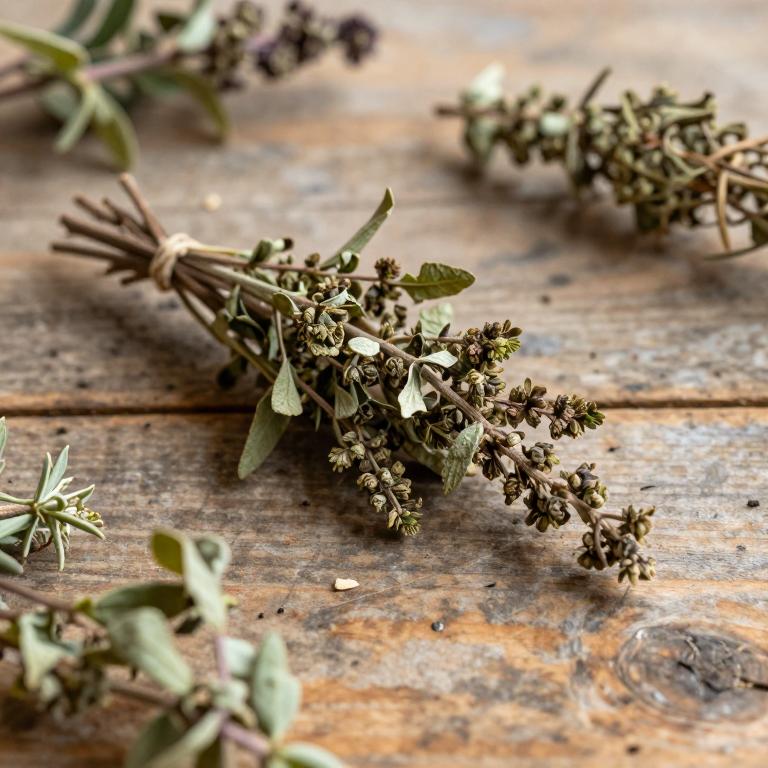
Names and Synonyms
Common Names
- Manybracteole bugle
Scientific Names
Accepted name
Ajuga integrifoliaSynonyms
- Ajuga bracteosa var. alba
- Ajuga bracteosa var. canescens
- Ajuga integrifolia var. canescens
- Ajuga hyosciami
- Ajuga densiflora
- Ajuga crenata
- Ajuga remota
- Ajuga remota var. canescens
- Ajuga alba
- Ajuga bracteosa f. alba
- Ajuga bracteosa var. densiflora
Sources: Wikidata, Catalogue of Life
Taxonomical Classification
This plant belongs to the kingdom Plantae and is classified under the phylum Streptophyta and class Equisetopsida. Within the subclass Magnoliidae, it is ordered under Lamiales and placed in the family Lamiaceae. Ultimately, Ajuga integrifolia is identified by the genus Ajuga.
| Rank | Classification |
|---|---|
| Kingdom | Plantae |
| Phylum | Streptophyta |
| Class | Equisetopsida |
| Subclass | Magnoliidae |
| Order | Lamiales |
| Family | Lamiaceae |
| Genus | Ajuga |
Sources: The World Checklist of Vascular Plants (WCVP)
Distribution
This plant exhibits a diverse geographical distribution spanning several regions of the African continent. In West-Central Tropical Africa, it can be found growing within the borders of Burundi and Rwanda. Its presence is also well-documented in the Democratic Republic of the Congo. Moving toward Northeast Tropical Africa, the species extends its range into Eritrea. Finally, it is also known to inhabit the highlands and landscapes of Ethiopia.
| Region | Area |
|---|---|
| West-Central Tropical Africa | Burundi |
| West-Central Tropical Africa | Rwanda |
| West-Central Tropical Africa | DR Congo |
| Northeast Tropical Africa | Eritrea |
| Northeast Tropical Africa | Ethiopia |
| Northeast Tropical Africa | Sudan-South Sudan |
| East Tropical Africa | Kenya |
| East Tropical Africa | Tanzania |
| East Tropical Africa | Uganda |
| Western Asia | Afghanistan |
Sources: The World Checklist of Vascular Plants (WCVP)
Botanical Identification
Ecology
The ecology of Ajuga integrifolia is defined by its ability to thrive within a diverse vertical distribution across mountainous terrains. This species occupies a broad altitudinal gradient, establishing itself in varied montane habitats ranging from lower slopes to high-altitude zones. Specifically, its ecological niche spans an elevational range starting from a minimum of 800 m AMSL and extending up to a maximum of 3500 m AMSL. This wide elevational breadth suggests a high degree of adaptability to fluctuating environmental conditions, including varying temperature regimes and atmospheric pressures found between these two distinct altitudes.
- Elevational range max:
- 3500 m AMSL
- Elevational range min:
- 800 m AMSL
Life history
The life history of Ajuga integrifolia is characterized by a distinct developmental strategy defined by its seasonal growth patterns and survival mechanisms. As a plant categorized by a lifecycle of annual, biennial, or perennial variations, its longevity can shift depending on environmental stability and resource availability. In terms of its morphological survival strategies, it exhibits a dual classification of life forms, functioning as both a hemicryptophyte and a therophyte. As a hemicryptophyte, it protects its perennating buds at or just below the soil surface, often utilizing organic matter for cover during dormant periods. Simultaneously, its classification as a therophyte indicates its ability to complete its life cycle through the production of seeds, which allows the species to persist through unfavorable conditions by remaining in a state of dormancy until more optimal growing seasons arrive.
- Life form :
- hemicryptophyte
- Life form :
- therophyte
- Lifecycle :
- annual
Morphology
The morphology of Ajuga integrifolia is characterized by its growth form as a non-woody herb. It functions as an independent organism, neither acting as a parasite nor an epiphyte, as it maintains a primarily terrestrial existence. While it can inhabit various moisture levels ranging from aquatic and semiaquatic environments to terrestrial habitats, it does not possess a climbing habit; instead, it is a self-supporting plant that lacks the structures of a liana or vine.
- Aquatic :
- terrestrial
- Climber :
- self-supporting
- Epiphyte :
- terrestrial
- Growth form :
- herb
- Parasite :
- independent
- Woodiness :
- non-woody
Reproduction
The reproduction of Ajuga integrifolia is characterized by a highly flexible flowering period and specific seed characteristics. The flowering cycle is remarkably extensive and variable, with the potential to begin as early as January and continue through to December, covering nearly the entire calendar year depending on environmental conditions. This prolonged flowering window ensures a broad opportunity for pollination and subsequent seed set. The resulting seeds are remarkably uniform in their physical properties; the seed mass exhibits no variance, with a minimum, mean, and maximum mass all recorded at exactly 0.00195 g. This consistency in seed mass suggests a highly standardized reproductive output during the plant's developmental cycles.
- Flowering time :
- Jan
- Flowering time :
- Dec
- Seed mass mean:
- 0.00195 g
Sources: Global Inventory of Floras and Traits (GIFT)
Plant Parts
Ajuga integrifolia has 5 reported plant parts identified across 18 scientific publications and several other databases that are studied for medicinal purposes. The most consistently reported plant part include leaf, root, flower, stem, seed.
| Plant part | Supporting sources | Consensus |
|---|---|---|
| Leaf | 7 supporting sources | ★★★★☆ |
| Root | 6 supporting sources | ★★★☆☆ |
| Flower | 2 supporting sources | ★☆☆☆☆ |
| Stem | 2 supporting sources | ★☆☆☆☆ |
| Seed | 1 supporting sources | ★☆☆☆☆ |
Leaf
- Brazilian journal of biology = Revista brasleira de biologia
- The Indian journal of medical research
- Steroids
- Microscopy research and technique
- BMC complementary medicine and therapies
View 2 additional sources
- Ethiopian medical journal
- Lasers in medical science
Root
- Brazilian journal of biology = Revista brasleira de biologia
- Journal of photochemistry and photobiology. B, Biology
- Steroids
- Lasers in medical science
- Physiology and molecular biology of plants : an international journal of functional plant biology
View 1 additional sources
- Current pharmaceutical biotechnology
Flower
- Steroids
- Lasers in medical science
Stem
- Brazilian journal of biology = Revista brasleira de biologia
- Steroids
Seed
- Lasers in medical science
Chemicals
Ajuga integrifolia has 74 reported phytochemicals identified across 18 scientific publications and several other databases. The most consistently reported chemicals include Flavonoids, Phenols, Tannins, Saponins, BETA-SITOSTEROL.
| Chemical | Supporting sources | Consensus |
|---|---|---|
| Flavonoids | 7 supporting sources | ★★★★☆ |
| Phenols | 4 supporting sources | ★★☆☆☆ |
| Tannins | 4 supporting sources | ★★☆☆☆ |
| Saponins | 3 supporting sources | ★★☆☆☆ |
| BETA-SITOSTEROL | 2 supporting sources | ★☆☆☆☆ |
| Glycosides | 2 supporting sources | ★☆☆☆☆ |
| Ponasterone A | 2 supporting sources | ★☆☆☆☆ |
| RUTIN | 2 supporting sources | ★☆☆☆☆ |
| Steroids | 2 supporting sources | ★☆☆☆☆ |
| Terpenes | 2 supporting sources | ★☆☆☆☆ |
Flavonoids
- Advances and applications in bioinformatics and chemistry : AABC
- Microbial pathogenesis
- BMC complementary and alternative medicine
- Journal of photochemistry and photobiology. B, Biology
- Heliyon
View 2 additional sources
- Molecules (Basel, Switzerland)
- Current pharmaceutical biotechnology
Phenols
- Microbial pathogenesis
- BMC complementary and alternative medicine
- Current pharmaceutical biotechnology
- Scientific reports
Tannins
- BMC complementary and alternative medicine
- Heliyon
- Journal of helminthology
- Current pharmaceutical biotechnology
Saponins
- BMC complementary and alternative medicine
- Heliyon
- Current pharmaceutical biotechnology
BETA-SITOSTEROL
- Dr. Duke
- Natural product letters
Glycosides
- Heliyon
- Current pharmaceutical biotechnology
Ponasterone A
- Dr. Duke
- Natural product communications
RUTIN
- Advances and applications in bioinformatics and chemistry : AABC
- Journal of photochemistry and photobiology. B, Biology
Steroids
- BMC complementary and alternative medicine
- Current pharmaceutical biotechnology
Terpenes
- Heliyon
- Journal of helminthology
Activities
Ajuga integrifolia has 75 reported activities identified across 18 scientific publications and several other databases. The most consistently reported activities include Antibacterial, Antioxidant, Antimalarial, Cytotoxic, Antidiabetic.
| Activity | Supporting sources | Consensus |
|---|---|---|
| Antibacterial | 6 supporting sources | ★★★☆☆ |
| Antioxidant | 5 supporting sources | ★★★☆☆ |
| Antimalarial | 3 supporting sources | ★★☆☆☆ |
| Cytotoxic | 3 supporting sources | ★★☆☆☆ |
| Antidiabetic | 2 supporting sources | ★☆☆☆☆ |
| 5-Alpha-Reductase-Inhibitor | 1 supporting sources | ★☆☆☆☆ |
| Aldose-Reductase-Inhibitor | 1 supporting sources | ★☆☆☆☆ |
| Anabolic | 1 supporting sources | ★☆☆☆☆ |
| Analgesic | 1 supporting sources | ★☆☆☆☆ |
| Androgenic | 1 supporting sources | ★☆☆☆☆ |
Antibacterial
- Dr. Duke
- Plants (Basel, Switzerland)
- PloS one
- Microscopy research and technique
- BMC complementary medicine and therapies
View 1 additional sources
- Scientific reports
Antioxidant
- Dr. Duke
- Microscopy research and technique
- BMC complementary medicine and therapies
- Current pharmaceutical biotechnology
- Scientific reports
Antimalarial
- Dr. Duke
- Journal of ethnopharmacology
- Evidence-based complementary and alternative medicine : eCAM
Cytotoxic
- Dr. Duke
- Plants (Basel, Switzerland)
- Microscopy research and technique
Antidiabetic
- Evidence-based complementary and alternative medicine : eCAM
- Current pharmaceutical biotechnology
5-Alpha-Reductase-Inhibitor
- Dr. Duke
Aldose-Reductase-Inhibitor
- Dr. Duke
Anabolic
- Dr. Duke
Analgesic
- Molecules (Basel, Switzerland)
Androgenic
- Dr. Duke
Conditions
Ajuga integrifolia has 7 reported investigations on conditions identified across 18 scientific publications and several other databases. The most consistently reported conditions include malaria, E. coli, Escherichia coli, Staphylococcus aureus, high blood pressure.
| Condition | Supporting sources | Consensus |
|---|---|---|
| Malaria | 2 supporting sources | ★☆☆☆☆ |
| E. coli | 1 supporting sources | ★☆☆☆☆ |
| Escherichia coli | 1 supporting sources | ★☆☆☆☆ |
| Staphylococcus aureus | 1 supporting sources | ★☆☆☆☆ |
| High blood pressure | 1 supporting sources | ★☆☆☆☆ |
| Hypertension | 1 supporting sources | ★☆☆☆☆ |
| Methicillin-resistant staphylococcus aureus | 1 supporting sources | ★☆☆☆☆ |
Malaria
- BMC complementary and alternative medicine
- Evidence-based complementary and alternative medicine : eCAM
E. coli
- BMC complementary medicine and therapies
Escherichia coli
- Scientific reports
Staphylococcus aureus
- Scientific reports
High blood pressure
- Advances and applications in bioinformatics and chemistry : AABC
Hypertension
- Advances and applications in bioinformatics and chemistry : AABC
Methicillin-resistant staphylococcus aureus
- Scientific reports
Preparations
Ajuga integrifolia has 29 reported preparations identified across 18 scientific publications and several other databases. The most consistently reported preparations include aqueous extracts, 70% ethanol extract, 70% ethanolic extract, 80 % methanol extracts, Ajuga bracteosa extract.
| Preparation | Supporting sources | Consensus |
|---|---|---|
| Aqueous extracts | 2 supporting sources | ★☆☆☆☆ |
| 70% ethanol extract | 1 supporting sources | ★☆☆☆☆ |
| 70% ethanolic extract | 1 supporting sources | ★☆☆☆☆ |
| 80 % methanol extracts | 1 supporting sources | ★☆☆☆☆ |
| Ajuga bracteosa extract | 1 supporting sources | ★☆☆☆☆ |
| Aqueous decoctions | 1 supporting sources | ★☆☆☆☆ |
| Adventitious and hairy root cultures | 1 supporting sources | ★☆☆☆☆ |
| Adventitious root suspension cultures | 1 supporting sources | ★☆☆☆☆ |
| Aqueous and ethanol extracts | 1 supporting sources | ★☆☆☆☆ |
| Aqueous and ethanol extracts of the leaves | 1 supporting sources | ★☆☆☆☆ |
Aqueous extracts
- East African medical journal
- Mini reviews in medicinal chemistry
70% ethanol extract
- Journal of ethnopharmacology
70% ethanolic extract
- Journal of ethnopharmacology
80 % methanol extracts
- BMC complementary and alternative medicine
Ajuga bracteosa extract
- PloS one
Aqueous decoctions
- Journal of ethnopharmacology
Adventitious and hairy root cultures
- Plants (Basel, Switzerland)
Adventitious root suspension cultures
- Physiology and molecular biology of plants : an international journal of functional plant biology
Aqueous and ethanol extracts
- Phytotherapy research : PTR
Aqueous and ethanol extracts of the leaves
- Ethiopian medical journal