Ajuga chamaepitys
Ajuga chamaepitys · Accepted scientific name
Scientific literature: Very Sparse (15 studies) · ★☆☆☆☆
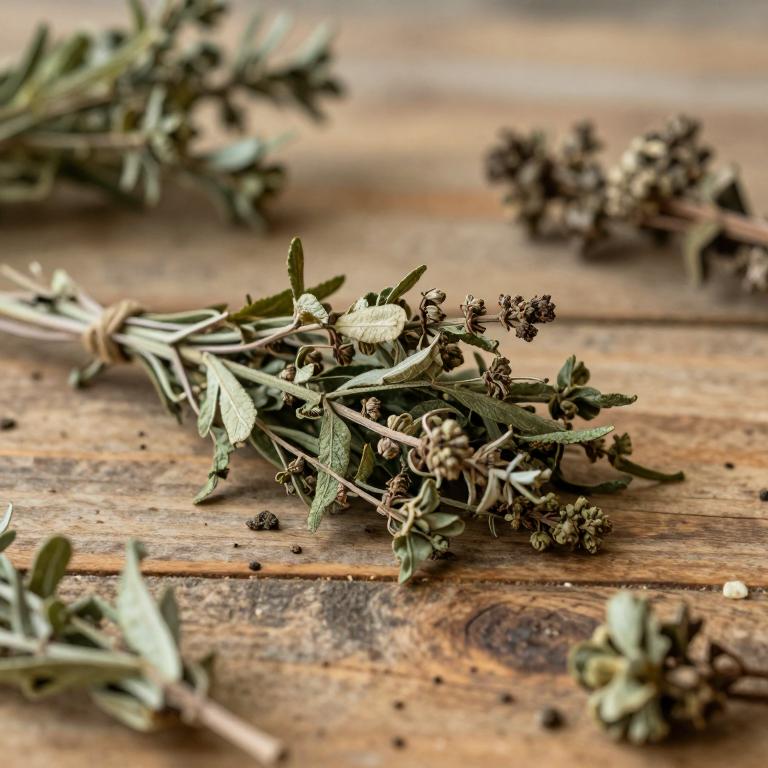
, scientifically known as Ajuga chamaepitys, is a perennial herb native to Europe and parts of Asia. Commonly called bugleweed, this plant features distinctive whorls of small, tubular flowers. Traditionally used in herbal medicine, it possesses various bioactive properties, often studied for its potential anti-inflammatory and antioxidant therapeutic effects.
- Family
- Not available
- Native range
- Europe
- Parts used
- Not available
- Common names
- Not available
- Scientific synonyms
- Not available
Names and Synonyms
Scientific Names
Accepted name
Ajuga chamaepitysDistribution
This plant is widely distributed across several regions of the European continent. In Northern Europe, its presence can be documented within the borders of Great Britain. Moving into Middle Europe, the species is found growing in the landscapes of Belgium and Germany. It also occupies territories within the Central European regions of Austria. Furthermore, the distribution extends through the Czechia-Slovakia area.
| Region | Area |
|---|---|
| Northern Europe | Great Britain |
| Middle Europe | Austria |
| Middle Europe | Belgium |
| Middle Europe | Czechia-Slovakia |
| Middle Europe | Germany |
| Middle Europe | Hungary |
| Middle Europe | Netherlands |
| Middle Europe | Poland |
| Middle Europe | Switzerland |
| Southwestern Europe | Baleares |
Sources: The World Checklist of Vascular Plants (WCVP)
Botanical Identification
Ecology
The ecology of Ajuga chamaepitys is characterized by its adaptability to diverse open and semi-open landscapes. It is frequently found inhabiting crop fields, meadows, mountains, and old fields, where it can establish itself in various stages of successional vegetation. This species thrives in environments that provide sufficient light and space, often colonizing disturbed or transitional areas such as abandoned agricultural lands and mountain slopes. Its presence in these varied habitats indicates a broad ecological tolerance for different soil conditions and elevations, allowing it to persist in both cultivated landscapes and more rugged, natural terrains.
- Habitat :
- crop fields, meadows, mountains, old fields
Life history
The life history of Ajuga chamaepitys is characterized by a variable lifecycle that can manifest as an annual, biennial, or perennial, depending on environmental conditions and local habitat stability. In terms of its structural growth strategy, the plant exhibits a dual classification of life forms; it functions as a chamaephyte, maintaining its buds close to the soil surface, while also displaying traits of a therophyte. This physiological flexibility allows it to navigate diverse ecological niches through varying seasonal responses. Furthermore, the species maintains an evergreen deciduousness, ensuring that its photosynthetic structures remain functional throughout much of the year, providing a consistent presence in its natural landscape.
- Deciduousness :
- evergreen
- Life form :
- chamaephyte
- Life form :
- therophyte
- Lifecycle :
- annual
Morphology
The morphology of Ajuga chamaepitys is characterized by a low-growing, non-woody growth form, specifically classified as a herb and a forb. This species is a terrestrial plant that functions as an independent organism, neither acting as a parasite nor an epiphyte. As a self-supporting plant, it does not exhibit climbing behaviors such as lianas or vines. In terms of stature, it is a relatively diminutive species with a plant height that varies significantly, ranging from a minimum of 0.05 m to a maximum of 0.37 m, with an average height of approximately 0.092 m.
- Aquatic :
- terrestrial
- Climber :
- self-supporting
- Epiphyte :
- terrestrial
- Growth form :
- herb
- Growth form :
- forb
- Parasite :
- independent
- Plant height max:
- 0.37 m
- Plant height mean:
- 0.092 m
- Plant height min:
- 0.05 m
- Woodiness :
- non-woody
Physiology
The physiology of Ajuga chamaepitys is characterized by a C3 photosynthetic pathway, which governs its carbon fixation processes and metabolic efficiency. The plant exhibits a non-carnivorous nutritional strategy, relying on soil-based nutrient uptake rather than the digestion of prey. Morphologically, its foliage is characterized by a mean leaf size of 0.705 cm², which contributes to a specific leaf area (SLA) with a mean value of 224.8 cm²/g, reflecting the structural density and resource allocation strategy of its leaf tissue.
- Carnivory :
- non-carnivorous
- Leaf size mean:
- 0.705 cm²
- Photosynthetic pathway :
- C3
- Specific Leaf Area (SLA) mean:
- 224.8 cm²/g
Reproduction
The reproduction of Ajuga chamaepitys is driven by sexual processes, as both self-fertilization and asexual reproduction are absent. The flowering period typically begins in May and continues through September, though the timing can be variable. The plant relies on biotic pollination, specifically utilizing an insect-based pollination syndrome where bees play a primary role in the transfer of pollen. Once fertilization occurs, the plant produces dry fruits that utilize an autochorous dispersal syndrome, meaning the seeds are dispersed via autochory. The resulting seeds are quite small, with a mean mass of approximately 0.0014575 g and a recorded range between 0.0014575 g and 0.0017 g.
- Dispersal syndrome :
- autochorous
- Flowering time :
- May
- Flowering time :
- Sep
- Fruit dryness :
- dry
- Pollination syndrome :
- insect
- Pollination syndrome :
- bee
- Pollination syndrome :
- biotic
- Reproduction asexual :
- absent
- Seed mass max:
- 0.0017 g
- Seed mass mean:
- 0.0014575 g
- Self fertilization :
- absent
Sources: Global Inventory of Floras and Traits (GIFT)
Chemicals
Ajuga chamaepitys has 7 reported phytochemicals identified across 0 scientific publications and several other databases. The most consistently reported chemicals include AJUGAPITIN, Ajugalactone, CHAMAEPITIN, Cyasterone, Makisterone A.
| Chemical | Supporting sources | Consensus |
|---|---|---|
| AJUGAPITIN | 1 supporting sources | ★☆☆☆☆ |
| Ajugalactone | 1 supporting sources | ★☆☆☆☆ |
| CHAMAEPITIN | 1 supporting sources | ★☆☆☆☆ |
| Cyasterone | 1 supporting sources | ★☆☆☆☆ |
| Makisterone A | 1 supporting sources | ★☆☆☆☆ |
| Makisterone B | 1 supporting sources | ★☆☆☆☆ |
| beta-Ecdysone | 1 supporting sources | ★☆☆☆☆ |
AJUGAPITIN
- Dr. Duke
Ajugalactone
- Dr. Duke
CHAMAEPITIN
- Dr. Duke
Cyasterone
- Dr. Duke
Makisterone A
- Dr. Duke
Makisterone B
- Dr. Duke
beta-Ecdysone
- Dr. Duke
Activities
Ajuga chamaepitys has 7 reported activities identified across 0 scientific publications and several other databases. The most consistently reported activities include Anabolic, Antigonadotrophic, Hypocholesterolemic, Juvabional, Lipolytic.
| Activity | Supporting sources | Consensus |
|---|---|---|
| Anabolic | 1 supporting sources | ★☆☆☆☆ |
| Antigonadotrophic | 1 supporting sources | ★☆☆☆☆ |
| Hypocholesterolemic | 1 supporting sources | ★☆☆☆☆ |
| Juvabional | 1 supporting sources | ★☆☆☆☆ |
| Lipolytic | 1 supporting sources | ★☆☆☆☆ |
| Pesticide | 1 supporting sources | ★☆☆☆☆ |
| Proteinogenic | 1 supporting sources | ★☆☆☆☆ |
Anabolic
- Dr. Duke
Antigonadotrophic
- Dr. Duke
Hypocholesterolemic
- Dr. Duke
Juvabional
- Dr. Duke
Lipolytic
- Dr. Duke
Pesticide
- Dr. Duke
Proteinogenic
- Dr. Duke