Ajania nubigena
Ajania nubigena · Accepted scientific name
Scientific literature: Very Sparse (11 studies) · ★☆☆☆☆
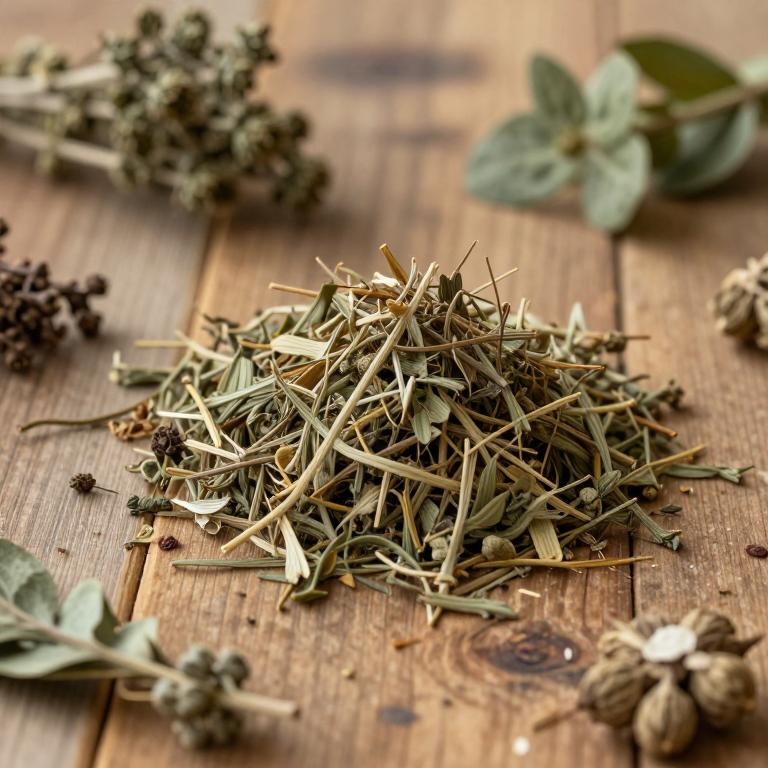
Ajania nubigena, scientifically known as Ajania nubigena, is a perennial herb cherished in traditional medicine. Native to East Asia, this resilient plant is valued for its aromatic properties and therapeutic potential. Often used to treat respiratory ailments and inflammation, it serves as a vital component in various herbal remedies.
- Family
- Asteraceae
- Native range
- Asia-Temperate
- Parts used
- Not available
- Common names
- Not available
- Scientific synonyms
- Chrysanthemum Nubigenum · Dendranthema Nubigenum · 1 more
Names and Synonyms
Scientific Names
Accepted name
Ajania nubigenaSynonyms
- Chrysanthemum nubigenum
- Dendranthema nubigenum
- Tanacetum nubigenum
Sources: Wikidata
Taxonomical Classification
This plant belongs to the kingdom Plantae and the phylum Streptophyta, falling under the class Equisetopsida and subclass Magnoliidae. Within the order Asterales, it is classified under the family Asteraceae and the genus Ajania. Ultimately, its specific taxonomic identity is defined as Ajania nubigena.
| Rank | Classification |
|---|---|
| Kingdom | Plantae |
| Phylum | Streptophyta |
| Class | Equisetopsida |
| Subclass | Magnoliidae |
| Order | Asterales |
| Family | Asteraceae |
| Genus | Ajania |
Sources: The World Checklist of Vascular Plants (WCVP)
Distribution
This plant is widely distributed across several distinct regions within the Asian continent. In China, its range extends through the South-Central and North-Central provinces. It is also found prominently within the high-altitude landscapes of Tibet. Moving into the Indian Subcontinent, the species inhabits the East Himalaya region. Additionally, its geographical presence includes the mountainous terrain of Nepal.
| Region | Area |
|---|---|
| China | China South-Central |
| China | China North-Central |
| China | Tibet |
| Indian Subcontinent | East Himalaya |
| Indian Subcontinent | Nepal |
| Indian Subcontinent | West Himalaya |
Sources: The World Checklist of Vascular Plants (WCVP)
Botanical Identification
Ecology
The ecology of Ajania nubigena is defined by its specialized adaptation to high-altitude alpine environments, where it thrives within a specific vertical niche. This species is primarily found in extreme montane zones, occupying an elevational range that spans from a minimum of 3,600 m AMSL to a maximum of 4,800 m AMSL. The distribution of the plant is centered around a mean elevation of approximately 4,000 m AMSL, indicating its preference for the subnival or alpine tundra belts. Such an ecological profile suggests a high tolerance for low atmospheric pressure, intense ultraviolet radiation, and significant temperature fluctuations characteristic of high-mountain ecosystems.
- Elevational range max:
- 4800 m AMSL
- Elevational range mean:
- 4000 m AMSL
- Elevational range min:
- 3600 m AMSL
Life history
The life history of Ajania nubigena is characterized by its classification as a perennial species, allowing it to persist through multiple growing seasons. As a perennial plant, it avoids the complete die-off experienced by annuals, instead establishing a long-term presence within its ecological niche. This life cycle enables the plant to accumulate resources over several years, contributing to its ability to withstand varying environmental conditions and ensuring its continued survival and reproductive potential across successive seasons.
- Lifecycle :
- perennial
Morphology
The morphology of Ajania nubigena is characterized by a low-growing, woody stature, typically functioning as a subshrub. It maintains a relatively modest plant height with a mean of approximately 0.3 m. As a self-supporting plant, it does not exhibit climbing behavior and grows as a terrestrial species rather than an epiphyte. Its structure is defined by its woody nature, providing the necessary stability for its subshrub growth form.
- Climber :
- self-supporting
- Epiphyte :
- terrestrial
- Growth form :
- shrub
- Growth form :
- subshrub
- Plant height mean:
- 0.3 m
- Woodiness :
- woody
Physiology
The physiology of Ajania nubigena is characterized by specialized adaptive mechanisms that allow it to thrive in high-altitude environments, particularly through its morphological structures and metabolic processes. Its vegetative growth is defined by distinct leaf dimensions, where the foliage exhibits a highly compact structure with a leaf width mean of 1 cm and a leaf length mean of 1 cm. This small, uniform surface area is a physiological adaptation to minimize transpirational water loss and reduce exposure to intense ultraviolet radiation common in alpine habitats. The plant's metabolic activity is supported by the production of diverse secondary metabolites, which serve as essential defense mechanisms against environmental stressors and herbivory. These biochemical pathways are tightly integrated with its morphological traits, ensuring that the compact leaf structure functions efficiently in carbon fixation and nutrient cycling despite the physiological constraints imposed by cold temperatures and fluctuating moisture levels.
- Leaf length mean:
- 1 cm
- Leaf width mean:
- 1 cm
Sources: Global Inventory of Floras and Traits (GIFT)
Chemicals
Ajania nubigena has 7 reported phytochemicals identified across 0 scientific publications and several other databases. The most consistently reported chemicals include Anthraquinones, Flavonoids, Linalool oxide acetate, Polyphenolic, Saponins.
| Chemical | Supporting sources | Consensus |
|---|---|---|
| Anthraquinones | 1 supporting sources | ★☆☆☆☆ |
| Flavonoids | 1 supporting sources | ★☆☆☆☆ |
| Linalool oxide acetate | 1 supporting sources | ★☆☆☆☆ |
| Polyphenolic | 1 supporting sources | ★☆☆☆☆ |
| Saponins | 1 supporting sources | ★☆☆☆☆ |
| Terpenoids | 1 supporting sources | ★☆☆☆☆ |
| luteolin | 1 supporting sources | ★☆☆☆☆ |
Anthraquinones
- Integrative medicine research
Flavonoids
- Integrative medicine research
Linalool oxide acetate
- Journal of ethnopharmacology
Polyphenolic
- Integrative medicine research
Saponins
- Integrative medicine research
Terpenoids
- Integrative medicine research
luteolin
- PLoS neglected tropical diseases
Activities
Ajania nubigena has 2 reported activities identified across 0 scientific publications and several other databases. The most consistently reported activities include Anthelmintic, Antimalarial.
| Activity | Supporting sources | Consensus |
|---|---|---|
| Anthelmintic | 1 supporting sources | ★☆☆☆☆ |
| Antimalarial | 1 supporting sources | ★☆☆☆☆ |
Anthelmintic
- PLoS neglected tropical diseases
Antimalarial
- PLoS neglected tropical diseases
Conditions
Ajania nubigena has 2 reported investigations on conditions identified across 0 scientific publications and several other databases. The most consistently reported conditions include Schistosoma mansoni, malaria.
| Condition | Supporting sources | Consensus |
|---|---|---|
| Schistosoma mansoni | 1 supporting sources | ★☆☆☆☆ |
| Malaria | 1 supporting sources | ★☆☆☆☆ |
Schistosoma mansoni
- PLoS neglected tropical diseases
Malaria
- PLoS neglected tropical diseases
Preparations
Ajania nubigena has 2 reported preparations identified across 0 scientific publications and several other databases. The most consistently reported preparations include crude extracts, ethanol extract.
| Preparation | Supporting sources | Consensus |
|---|---|---|
| Crude extracts | 1 supporting sources | ★☆☆☆☆ |
| Ethanol extract | 1 supporting sources | ★☆☆☆☆ |
Crude extracts
- Journal of ethnopharmacology
Ethanol extract
- Integrative medicine research