Ajania fruticulosa
Ajania fruticulosa · Accepted scientific name
Scientific literature: Very Sparse (3 studies) · ★☆☆☆☆
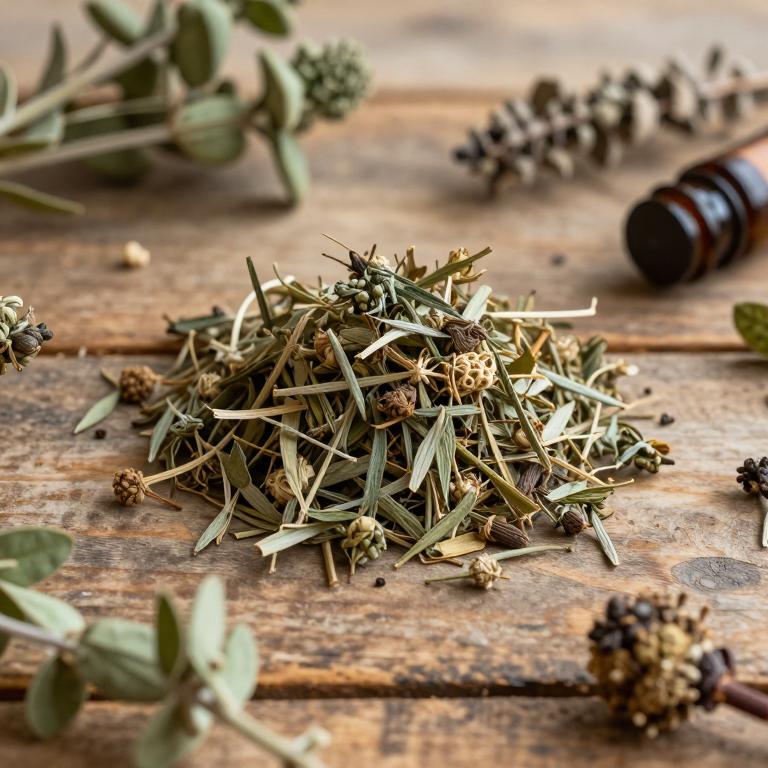
Ajania fruticulosa, scientifically known as Ajania fruticulosa, is a perennial medicinal herb prized in traditional practices. Renowned for its aromatic properties, this plant is frequently utilized for its anti-inflammatory and antimicrobial qualities. It plays a significant role in herbal remedies, offering natural therapeutic benefits for various health conditions.
- Family
- Asteraceae
- Native range
- Asia-Temperate
- Parts used
- Leaf
- Common names
- Not available
- Scientific synonyms
- Chrysanthemum Aureoglobosum · Pyrethrum Heldreichianum · 9 more
Names and Synonyms
Scientific Names
Accepted name
Ajania fruticulosaSynonyms
- Chrysanthemum aureoglobosum
- Pyrethrum heldreichianum
- Chrysanthemum neofruticulosum
- Pyrethrum athanasia
- Tanacetum aureoglobosum
- Tanacetum tomentosum
- Ajania aureoglobosa
- Ajania fruticulosa var. kuenlunica
- Ajania fruticulosa var. ramosissima
- Artemisia athanasia
- Tanacetum fruticulosum
Sources: Wikidata, Catalogue of Life
Taxonomical Classification
This plant belongs to the kingdom Plantae and the phylum Streptophyta within the class Equisetopsida. It is further classified under the subclass Magnoliidae and the order Asterales. Ultimately, it is a member of the family Asteraceae and the genus Ajania.
| Rank | Classification |
|---|---|
| Kingdom | Plantae |
| Phylum | Streptophyta |
| Class | Equisetopsida |
| Subclass | Magnoliidae |
| Order | Asterales |
| Family | Asteraceae |
| Genus | Ajania |
Sources: The World Checklist of Vascular Plants (WCVP)
Distribution
This plant exhibits a broad geographical distribution across several key regions of Asia. In the northern reaches of its range, it can be found in the Tuva region of Siberia. Moving southward into Central Asia, its presence extends through both Kazakhstan and Tajikistan. The species also inhabits parts of Western Asia, specifically within the country of Iran. Finally, its distribution continues into China, where it is located in Inner Mongolia.
| Region | Area |
|---|---|
| Siberia | Tuva |
| Central Asia | Kazakhstan |
| Central Asia | Tadzhikistan |
| Western Asia | Iran |
| China | Inner Mongolia |
| China | China North-Central |
| China | Qinghai |
| China | China Southeast |
| China | Tibet |
| China | Xinjiang |
Sources: The World Checklist of Vascular Plants (WCVP)
Botanical Identification
Ecology
The ecology of Ajania fruticulosa is characterized by its ability to thrive in rugged, high-altitude environments, specifically within habitats such as mountains, steppes, and stony places. This species exhibits a broad vertical distribution, spanning an elevational range that begins at 550 m AMSL and reaches a maximum altitude of 4400 m AMSL. Across its natural distribution, it maintains a mean elevation of approximately 2475 m AMSL, reflecting its adaptation to the diverse climatic and soil conditions found in montane and semi-arid landscapes.
- Elevational range max:
- 4400 m AMSL
- Elevational range mean:
- 2475 m AMSL
- Elevational range min:
- 550 m AMSL
- Habitat :
- mountains, steppe, stony places
Life history
The life history of Ajania fruticulososa is characterized by its status as a perennial species, allowing it to persist through multiple growing seasons and establish a stable presence within its natural habitat. Throughout its developmental stages, the plant exhibits a deciduous nature, shedding its foliage in response to seasonal changes or environmental stressors, which plays a critical role in its survival strategy and resource management.
- Deciduousness :
- deciduous
- Lifecycle :
- perennial
Morphology
The morphology of Ajania fruticulosa is characterized by its growth form as a woody subshrub. This self-supporting plant grows in a terrestrial habitat and functions as an independent organism, rather than a parasite. In terms of stature, it is a relatively low-growing species with a plant height that typically ranges from a minimum of 0.06 m to a maximum of 0.4 m, maintaining an average height of approximately 0.24 m.
- Aquatic :
- terrestrial
- Climber :
- self-supporting
- Growth form :
- herb
- Growth form :
- subshrub
- Parasite :
- independent
- Plant height max:
- 0.4 m
- Plant height mean:
- 0.24 m
- Plant height min:
- 0.06 m
- Woodiness :
- woody
Physiology
The physiology of Ajania fruticulosa is characterized by a C3 photosynthetic pathway, which dictates its carbon fixation processes and metabolic efficiency within its ecological niche. The vegetative morphology, particularly the leaf structure, exhibits significant dimensional variability that influences its light interception and gas exchange capabilities. The leaves possess a minimum length of 0.5 cm and a maximum length of 3 cm, with a calculated mean leaf length of 1.75 cm. In terms of transverse dimensions, the leaf width ranges from a minimum of 1 cm to a maximum of 2.5 cm, providing a structural framework that supports its physiological functions and overall metabolic demands.
- Leaf length max:
- 3 cm
- Leaf length mean:
- 1.75 cm
- Leaf length min:
- 0.5 cm
- Leaf width max:
- 2.5 cm
- Leaf width min:
- 1 cm
- Photosynthetic pathway :
- C3
Reproduction
The reproduction of Ajania fruticulosa is characterized by bisexual flowers, ensuring that individual plants possess both male and female reproductive organs. The flowering period is concentrated in the month of August, marking both the start and the end of its seasonal bloom. Following fertilization, the plant produces very small fruits with a consistent length across the population; both the minimum, maximum, and mean fruit lengths are measured at approximately 0.1 cm. The dispersal of these fruits follows an anemochorous syndrome, meaning they are primarily dispersed by the wind to colonize new areas.
- Dispersal syndrome :
- anemochorous
- Flowering time :
- Aug
- Fruit length max:
- 0.1 cm
- Reproduction sexual :
- bisexual
Sources: Global Inventory of Floras and Traits (GIFT)
Plant Parts
Ajania fruticulosa has 1 reported plant parts identified across 1 scientific publications and several other databases that are studied for medicinal purposes. The most consistently reported plant part include leaf.
| Plant part | Supporting sources | Consensus |
|---|---|---|
| Leaf | 1 supporting sources | ★☆☆☆☆ |
Leaf
- Natural product research
Chemicals
Ajania fruticulosa has 2 reported phytochemicals identified across 1 scientific publications and several other databases. The most consistently reported chemicals include 1,8-Cineole, MYRCENE.
| Chemical | Supporting sources | Consensus |
|---|---|---|
| 1,8-Cineole | 1 supporting sources | ★☆☆☆☆ |
| MYRCENE | 1 supporting sources | ★☆☆☆☆ |
1,8-Cineole
- Natural product research
MYRCENE
- Natural product research
Preparations
Ajania fruticulosa has 1 reported preparations identified across 1 scientific publications and several other databases. The most consistently reported preparations include essential oils from leaves.
| Preparation | Supporting sources | Consensus |
|---|---|---|
| Essential oils from leaves | 1 supporting sources | ★☆☆☆☆ |
Essential oils from leaves
- Natural product research